







 Vietnam Mortgage Surge Pushes Homes Out of Reach
 Lithuanian Apartment Prices Accelerate Across Major Cities
 London Flats Lose Value Ahead of Leasehold Reform
 Construction of the Batumi–Sarpi Highway Begins in Georgia
 Baltic Property Investment Accelerates in 2026
 Hong Kong and Singapore Renew Their Expat Rivalry
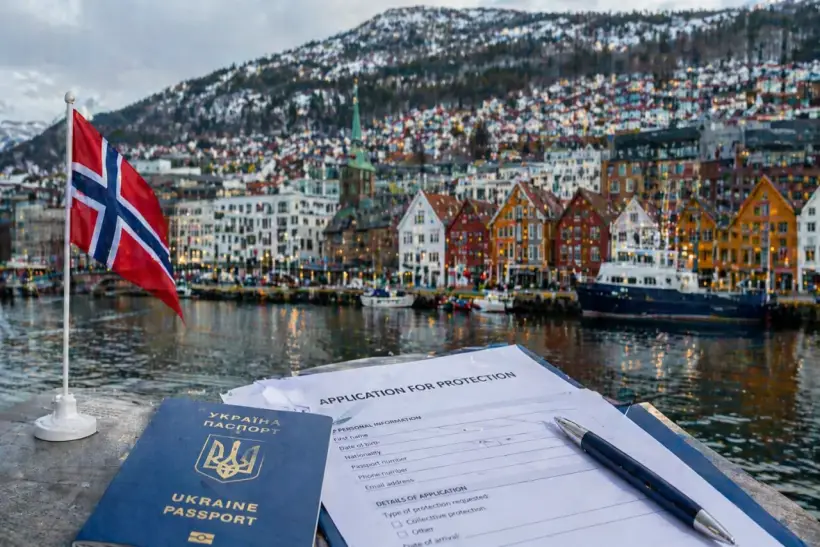
Norway continues to offer temporary collective protection to Ukrainians in 2026, but new restrictions are reshaping access to the program, reflecting mounting pressure on housing, public services and integration systems.
Entry rules and application process
Ukrainians can still enter Norway without a visa if they intend to apply for protection, and in some cases may cross the border even without a biometric passport.
Upon arrival, applicants must register with the police or at the National Registration Center, where identity checks, fingerprinting and registration are carried out.
Collective protection allows authorities to process applications without individual assessments, enabling faster access to accommodation and basic services.
Scale of the program
Since 2022, more than 85,000 Ukrainians have received temporary protection in Norway, making it the largest host among Nordic countries.
Major urban centers such as Oslo, Bergen and Trondheim have become key hubs for Ukrainian refugees, increasing pressure on local infrastructure.
New restrictions in 2026
A major policy shift excludes most Ukrainian men aged 18–60 from collective protection. Their cases are now assessed individually under stricter asylum rules.
The changes apply only to new applicants and do not affect those already holding protection.
Exceptions remain for minors, elderly individuals, those exempt from military service and caregivers of children.
Support system and integration
Applicants receive access to temporary housing, food and basic necessities upon arrival.
The support framework includes financial aid, education opportunities, language courses and employment assistance, largely coordinated by municipalities.
Temporary status and long-term uncertainty
Collective protection is granted for one year and can be extended, but it does not automatically lead to permanent residence.
Time spent under this status typically does not count toward permanent residency requirements, limiting long-term settlement prospects.
Policy shift toward controlled migration
Authorities cite rising arrivals and strain on housing and services as key reasons for tightening rules.
The government aims to ensure migration remains “controlled and sustainable,” aligning Norway’s intake with neighboring countries.
According to experts at International Investment, Norway is moving from emergency protection toward a managed migration framework, prioritizing integration capacity over open access. The critical takeaway is that while support remains significant, access to protection is becoming more selective, with long-term implications for mobility and residency pathways.
FAQ
Who qualifies for collective protection in Norway in 2026?
Mainly women, children and men outside the restricted age group or with exemptions.
Can Ukrainians enter without a visa?
Yes, if they intend to apply for protection.
Is a passport required?
Not always, depending on the purpose of entry.
Does collective protection lead to permanent residence?
No, it does not directly provide a pathway.
What changed in 2026?
Restrictions on men aged 18–60 and stricter eligibility criteria.