







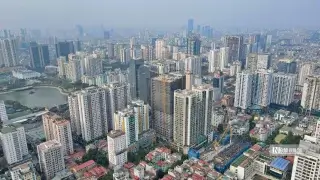
 Vietnam Mortgage Surge Pushes Homes Out of Reach
 Lithuanian Apartment Prices Accelerate Across Major Cities
 London Flats Lose Value Ahead of Leasehold Reform
 Construction of the Batumi–Sarpi Highway Begins in Georgia
 Baltic Property Investment Accelerates in 2026
 Hong Kong and Singapore Renew Their Expat Rivalry
Philippines removes LPG and kerosene taxes

Philippine President Ferdinand Marcos Jr. said on April 13, 2026 that the government is removing excise taxes on liquefied petroleum gas and kerosene as part of a broader effort to contain food inflation and reduce household fuel costs amid another jump in global energy prices. Bloomberg first reported the move, and it was later confirmed by the Presidential Communications Office and the Philippine News Agency.
Marcos said the measure is intended not only to lower household fuel expenses but also to keep food prices in check, since energy costs quickly feed into transport, storage and preparation costs across the food chain. He also said the government plans to lower tariffs on some farm imports, reduce transport costs for food products and work with producers to keep prices of basic goods stable at least through the end of April.
Philippines suspends excise tax on LPG and kerosene
The official government statement says the excise tax on liquefied petroleum gas and kerosene was lifted in response to the current energy emergency. The Philippine News Agency added that Marcos invoked the authority granted to him under Republic Act No. 12316. That law, approved in 2026, allows the president to suspend or reduce excise taxes on petroleum products under specified oil-price conditions.
According to Deloitte’s summary of the measure, Republic Act No. 12316 permits a suspension or reduction of petroleum-product excise taxes when the average Dubai crude price reaches $80 a barrel for one month. Any suspension can last for no more than three months at a time and no more than one calendar year in total, after which the tax rates automatically revert to the levels stated in the Tax Code. That makes the current policy a temporary anti-inflation step rather than a permanent tax rewrite.
How much LPG and kerosene prices may fall
Marcos said the removal of the excise tax should lower LPG prices by about 3.36 pesos per kilogram, or roughly 37 pesos per standard tank, while kerosene prices could fall by 5.60 pesos per liter. Those expected reductions were repeated by local media and official channels after the announcement. For consumers, the move means direct relief on fuels that are widely used for cooking and day-to-day household needs.
Liquefied petroleum gas is especially important for low- and middle-income households because it remains a common cooking fuel, while kerosene still matters for some vulnerable households and small businesses. That is why the administration is presenting the decision as both a social-protection and inflation-management measure.
Why Manila links fuel taxes to food inflation
The government’s central argument is that food prices in the Philippines depend not only on harvests and imports, but also on transport and preparation costs. Marcos said all of the newly announced measures are centered on keeping food prices down. In the administration’s view, rising global oil prices after failed Iran-related talks and renewed energy-market tension could quickly spill over into the cost of basic goods.
That linkage matters politically in the Philippines, where food inflation is highly sensitive. The tax decision is therefore being paired with trade measures as well: the president said tariffs on some agricultural imports will be lowered and producers are being asked to help prevent a sharp increase in the prices of basic commodities.
What the tax cut could cost the Philippine budget
Fuel-tax relief comes with a fiscal cost. In March, the Bureau of Customs warned that a broad suspension of excise taxes and value-added tax on petroleum products could reduce government revenue by at least 330 billion pesos, or around 30% to 40% of the agency’s annual collections. Separately, Inquirer reported that the Department of Finance estimated that suspending fuel excise taxes alone could cost 136 billion pesos in 2026.
That helps explain why the current action is limited to LPG and kerosene rather than extended immediately across the full fuel complex. Bloomberg said Marcos and his cabinet are still discussing additional ways to keep prices under control, including a possible wider halt in oil excise taxes, but for now the government has moved only on the two fuels seen as most directly sensitive for households.
What the move means for the Philippine economy
For the broader economy, the decision signals a more interventionist approach to managing imported inflation. The government is trying to cushion households, contain food-price pressure and prevent a wider rise in inflation expectations at a time when the Philippines remains highly exposed to global oil and liquefied gas prices.
The effectiveness of the move will depend on whether the tax relief remains temporary and targeted or has to be expanded if energy prices stay elevated for longer. If fuel costs remain high, policymakers will have to balance household relief, food-price stability and fiscal losses more carefully.
As International Investment experts report, the removal of excise taxes on LPG and kerosene in the Philippines is a fast and politically clear support tool for households, but its lasting inflation impact will depend on whether the government can also contain transport costs, imported food prices and budget losses at the same time.
FAQ
What taxes did the Philippines remove?
The government removed excise taxes on liquefied petroleum gas and kerosene.
When was the decision announced?
President Ferdinand Marcos Jr. announced it on April 13, 2026.
Why did the Philippines cut LPG and kerosene taxes?
To reduce household fuel costs and help contain food inflation.
How much are prices expected to fall?
Authorities said LPG prices could fall by about 3.36 pesos per kilogram, or 37 pesos per tank, and kerosene by 5.60 pesos per liter.
What law allows the president to do this?
Republic Act No. 12316 allows the president to suspend or reduce fuel excise taxes when world oil prices meet specified thresholds.
Does the measure include gasoline and diesel?
As of April 13, 2026, the official announcement covered LPG and kerosene only, while broader fuel-tax options remain under discussion.