







 How Ukraine’s New-Build Housing Market Has Changed Over Four Years
 European Prime Rents Rise as Property Yields Turn Higher
 The Most Expensive Airlines in Europe in 2026
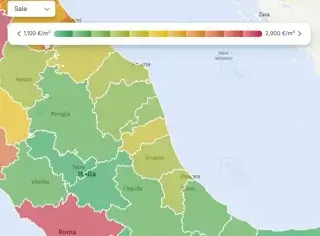 Housing Prices in Italy Reach a Two-Year High
 Travellers Increasingly Choose Cooler Scandinavia
 Serbia Property Sales Decline as Transaction Value Rises
Philippines Warns on Corporate Currency Risk

Philippine financial regulators warned that the country’s largest companies face rising foreign-exchange risks as major conglomerates approach about 1.6 trillion pesos, or roughly $26 billion, in debt maturities over the next three years. The warning puts the peso, refinancing costs and bank exposure at the center of the country’s financial-stability debate.
Big companies face a debt maturity wall
Philippine regulators have flagged one of the most sensitive risks facing the economy: large conglomerates are approaching a heavy debt-payment cycle, with part of their obligations exposed to foreign-currency movements. Bloomberg reported that major companies face about 1.6 trillion pesos, or roughly $26 billion, in maturities over the next three years.
Such a concentration of repayments is often called a maturity wall. It means a large amount of debt must be repaid or refinanced within a short period. The risk for companies is not only the size of the amount, but also the possibility that new borrowing will be more expensive than old funding, especially when interest rates remain elevated and investors demand higher returns.
Financial stability in this case depends on three variables: whether companies can generate enough cash flow, whether banks and capital markets are willing to roll over funding, and how the peso trades against the U.S. dollar. When debt is denominated in foreign currency, a weaker peso automatically raises the local-currency cost of servicing it.
Foreign-exchange risk is the main pressure channel
Foreign-exchange risk is the possibility of losses caused by changes in exchange rates. For a Philippine company that earns most of its revenue in pesos but must service dollar debt, every decline in the local currency increases the effective debt burden.
Bangko Sentral ng Pilipinas, the country’s central bank, listed the exchange rate at 61.635 pesos per U.S. dollar on June 5, 2026. At that level, the currency composition of corporate liabilities becomes especially important: the nominal amount of a dollar payment may stay unchanged, but its cost in pesos can rise if the local currency weakens further.
The issue is not limited to individual borrowers. Large Philippine conglomerates often operate across several sectors, including property, infrastructure, power, telecommunications, retail, banking and transport. If one group faces refinancing stress, the effects can spread to suppliers, banks, bondholders and contractors.
The central bank is balancing inflation and debt
The Philippine central bank is in a difficult position. Higher rates help contain inflation and make the peso more attractive to investors. At the same time, expensive money raises refinancing costs for companies and makes debt service more difficult.
In early June, the overnight reverse repurchase rate, the central bank’s main monetary-policy instrument, stood at 4.50%. The overnight lending rate was 5.00%, while the overnight deposit rate was 4.00%. These rates set the reference point for the cost of short-term money in the banking system.
If the central bank has to keep rates high because of pressure on the peso or renewed inflation, the corporate sector will have less room to refinance cheaply. If rates are cut too quickly, that could increase pressure on the currency and raise the cost of dollar liabilities. That trade-off turns corporate maturities into a systemic issue rather than a narrow accounting matter.
External debt raises the importance of the peso
According to Bangko Sentral ng Pilipinas, the country’s external debt stood at $147.65 billion at the end of 2025. External debt includes obligations owed to nonresidents and can belong to both the public and private sectors.
A high level of external debt does not automatically signal a crisis. The key variables are maturity profile, currency composition, the share of short-term obligations, international reserves and the economy’s capacity to generate foreign currency through exports, remittances, tourism and investment.
The Philippines traditionally receives support from remittances sent by citizens working abroad. Those inflows provide foreign currency and help finance imports. Corporate debt, however, can create separate peaks in dollar demand, especially if maturities fall during periods of market volatility.
Banks are the key transmission channel
The country’s financial risk depends on who holds the corporate liabilities. If much of the debt is held by domestic banks, repayment problems could weaken loan books. If the debt is in the bond market, the pressure may shift to institutional investors, pension funds, insurers and corporate bondholders.
The Financial Stability Coordination Council has previously emphasized the need to map links among companies, banks and capital markets. That matters because large conglomerates often have complex structures, including subsidiaries, cross-guarantees, intragroup loans and project-finance vehicles.
Refinancing risk is particularly sensitive for companies with peso income and dollar costs. In infrastructure and energy, it can appear through imported equipment, fuel, foreign-currency loans and long-term contracts. In property, it can appear through leverage and buyer demand. In telecommunications, it can come from capital spending on equipment and networks.
Markets will focus on the repayment calendar
Investors will assess not only the total amount due, but also the timing of maturities. If large payments cluster in the same quarters, companies may compete with each other for liquidity. That can raise issuance costs and add pressure to the currency market.
Hedging will become a critical issue. Hedging means protecting against adverse exchange-rate moves. Companies can use currency derivatives, retain dollar revenues, negotiate currency covenants with lenders or issue peso debt. But these tools carry costs and do not always eliminate the risk.
The situation is complicated by the Philippines’ status as an emerging market exposed to global capital flows. Higher U.S. yields, geopolitical risks, more expensive oil and lower investor appetite for risk can increase capital outflows and pressure the peso. In that scenario, corporate debt becomes a link between the currency market, banks and the real economy.
Corporate debt becomes a test for the economy
The Philippine economy still has growth potential supported by domestic consumption, demographics, services, infrastructure projects and remittances. But the debt burden of major companies shows a vulnerability in a model where expansion has partly depended on active capital raising.
If companies can roll over liabilities without a sharp rise in borrowing costs, the risk may remain manageable. If the peso weakens while rates and risk premiums rise, some borrowers could see their credit metrics deteriorate. That may limit investment, delay projects and make banks more cautious.
For the government and regulators, the key task is to prevent corporate currency risk from becoming systemic banking risk. That requires monitoring short-term maturities, improving transparency on debt structures, stress-testing companies and banks, and maintaining sufficient foreign-currency liquidity.
As experts at International Investment report, the Philippine warning matters not simply because of the $26 billion figure, but because it comes during a period of expensive money and a weak currency. The critical risk is that even solvent companies may face higher debt costs because of peso movements and refinancing conditions. For investors, the signal is to look beyond earnings and focus on the currency structure of liabilities, maturity calendars and dependence on bank funding.