







 How Ukraine’s New-Build Housing Market Has Changed Over Four Years
 European Prime Rents Rise as Property Yields Turn Higher
 The Most Expensive Airlines in Europe in 2026
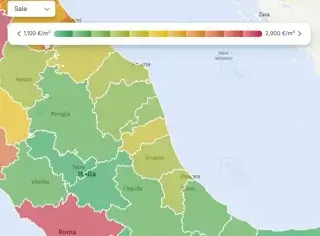 Housing Prices in Italy Reach a Two-Year High
 Travellers Increasingly Choose Cooler Scandinavia
 Serbia Property Sales Decline as Transaction Value Rises
Portugal Debates a Housing Bubble

Portugal’s housing market has returned to the center of public debate after an expat discussion questioned whether prices have become detached from local incomes. Official data show not a collapse, but the opposite: record price growth in 2025, higher transaction volumes and early signs of stress in affordability, housing quality and late-year sales momentum.
A Reddit thread captured buyer fatigue
A discussion in the PortugalExpats community on Reddit began with a blunt claim that Portugal’s housing market is a bubble and that sellers continue to ask inflated prices for average and poorly renovated homes. The author linked the price surge to weak affordability for Portuguese households, limited supply, foreign demand and government support for young buyers.
The thread matters less as a source of market data than as a signal of sentiment. It brought together two opposing views. One argues that prices have moved too far away from Portuguese wages and must eventually correct. The other argues that the market does not need to be anchored only to local incomes if demand comes from foreign buyers, migrants, investors and wealthier households.
For a news assessment, the central question is not whether every expensive listing is a bubble. It is whether price growth is supported by transactions, credit, incomes, supply and external demand. On those measures, Portugal’s market looks overheated, but official data do not yet point to a classic crash.
Prices hit records and transactions did not disappear
Portugal’s national statistics office recorded a 17.6% increase in the house price index in 2025. That was 8.5 percentage points higher than in 2024 and the strongest rise in the available series. Existing homes rose by 18.9%, while new dwellings increased by 14.2%.
The number of homes sold reached 169,812, up 8.6% from 2024. The total value of transactions was €41.2 billion, 21.7% higher than a year earlier. These figures do not support the idea of a market where buyers have disappeared. Demand remained strong enough to support both prices and transaction volumes.
Still, the data include an important crack. In the final quarter of 2025, transactions fell by 4.7% from the previous quarter. That does not mean the whole market has turned, but it is consistent with claims that some listings may be sitting longer, especially homes needing renovation or properties outside the most liquid locations.
Existing homes are rising faster than new supply
The gap between price growth for existing and new dwellings highlights one of Portugal’s main problems. Existing homes rose faster than new homes, even though older stock often requires renovation and may have problems with damp, insulation, plumbing, parking, energy performance and condominium management.
That fuels buyer frustration. When an apartment in an old building is priced close to a new-build unit, while repair and efficiency costs fall on the buyer, the market can feel unfair. But the price of older stock may reflect location, scarcity and seller expectations rather than physical quality.
In Lisbon, Porto, Cascais, the Algarve, Madeira and several coastal municipalities, prices often reflect not only the dwelling itself but also access to jobs, transport, schools, tourism demand, short-term rentals and foreign buyers. That makes the market less tied to average national wages and more dependent on external capital flows.
Supply shortages remain a fundamental driver
Banco de Portugal has said that residential price growth has been supported by slow supply adjustment, demand from resident and non-resident foreigners, higher household disposable income and the recent cycle of falling interest rates. That distinction matters: the regulator is describing not pure speculation, but a mix of constrained supply and durable demand.
Construction is not changing the balance quickly enough. Preliminary data for 2025 show that building permits increased by 2.3%, but estimated completed works fell by 8.8% compared with 2024. That means actual delivery of new housing may lag even when more projects are being approved.
Portugal’s supply problem is linked to licensing, construction costs, labour shortages, inheritance disputes, old housing stock and constraints in historic centres. More cranes on the skyline do not automatically mean affordable homes will quickly appear in the areas where demand is strongest.
Foreign demand changes the pricing logic
One of the main conflicts in the debate concerns foreign buyers. For local residents, prices look detached from Portuguese salaries. For sellers and developers, the reference point is often not average domestic income, but the purchasing power of buyers from the United States, the United Kingdom, Brazil, France, Germany, China and other markets.
Portugal remains attractive because of safety, climate, quality of life, past tax and migration regimes, English-language services in major cities, international schools, air connectivity and remote-work options. In that environment, housing in Lisbon or on the coast competes not only with the domestic market, but also with property in other global cities.
Foreign demand is not unlimited, however. If Lisbon prices approach levels seen in larger and richer cities, some buyers will compare Portugal with alternatives in Spain, Italy, France or the United States. That does not necessarily imply a nationwide fall, but it can hurt overpriced and low-quality properties first.
Government support may have strengthened demand
Another factor is support for young buyers. Portugal has introduced tools that reduce initial barriers for some households, including exemptions from certain taxes and public guarantees. These measures help buyers enter the market, but they do not create new apartments immediately.
When demand support is introduced into a supply-constrained market, part of the benefit can be capitalized into prices. This is a common housing-policy problem: subsidies help individual families buy, but when housing is scarce, they can also support sellers and increase competition for the same stock.
For younger buyers, the risk is that they enter the market at record prices and take on large mortgage commitments. If rates rise again, incomes slow or liquidity weakens in some locations, the financial burden could become heavier. Banking indicators still look resilient, but social affordability remains the weak point.
Banks do not yet look like the center of the bubble
A classic housing bubble often comes with excessive credit risk, aggressive mortgage lending and a high share of loans with large loan-to-value ratios. Portugal’s picture is more complex. The central bank has noted that real estate represents a significant share of bank assets, but mortgage risks are mitigated by a low share of loans with high loan-to-value and high debt-service ratios.
That does not eliminate the risk of a price correction. It means that a cooling market would not automatically become a banking crisis. A more likely scenario is segmentation: good properties in strong locations retain demand, while outdated, overpriced and poorly located homes face more negotiation and longer selling periods.
For investors, this is the key point. The risk is not only in the national house price index. It is in the quality of the individual asset. A home with strong energy performance, transport access, clean legal status and a liquid location will behave differently from an old apartment with problems priced as if the market will stay hot forever.
A correction may start before the index falls
Portugal’s market can cool without an immediate fall in average prices. The first signals are usually longer selling times, more negotiation, withdrawn listings, a gap between asking prices and transaction prices, and weaker interest in flawed properties.
That is what online participants meant when they referred to unrealistic asking prices. Price indexes capture completed transactions, not every listing. Sellers may continue to ask high prices, but statistics will change only when deals close at lower levels or stop happening in specific segments.
In 2026, the most important indicators will be transaction volumes, mortgage rates, bank appraisals, completed housing supply, foreign demand and listing times. If supply improves slightly while buyers become more cautious, the market may shift from broad-based growth to selective pressure on weaker assets.
Housing has become a political risk
Housing in Portugal has moved beyond real estate and become a political issue. High prices affect young families, renters, tourism workers, students, migrants, municipalities and small businesses. If workers cannot live near jobs, services, transport, hotels, restaurants and the urban economy are affected.
Rising prices also intensify the conflict between Portugal’s investment appeal and housing affordability for residents. For the state, the balance is difficult: foreign capital, tourism and migration support the economy, but they also put pressure on housing and infrastructure.
Portugal needs more than demand restrictions. It needs faster supply: licensing reform, renovation of vacant stock, affordable rental housing, infrastructure in peripheral areas and transparent rules for short-term rentals. Without that, the bubble debate will return even when sales statistics remain strong.
As experts at International Investment report, Portugal’s housing market cannot be honestly described with the single word “bubble”: official data show real demand, record transactions and a fundamental supply shortage. The critical risk is that prices have moved far beyond the income capacity of many local buyers, while demand support without faster supply may deepen the imbalance. For investors, the conclusion is to buy not “Portugal” in general, but specific liquidity: location, building quality, legal clarity, energy efficiency and a realistic price.