







read also
 Australia’s Spring Auctions Rise but Remain Well Below 2025
 Number of Foreigners Holding Turkish Residence Permits Exceeds 1.27 Million
 Demand from Russian Tourists for Holidays in Georgia Rises by 20–25%
 Montenegro Property Buying Costs in 2026
 Four in Ten Companies Would Not Choose Slovakia
 Gulf Countries Prepare Unified Tourist Visa
Luxury Real Estate in 2026: How the Preferences of Wealthy Buyers Are Changing
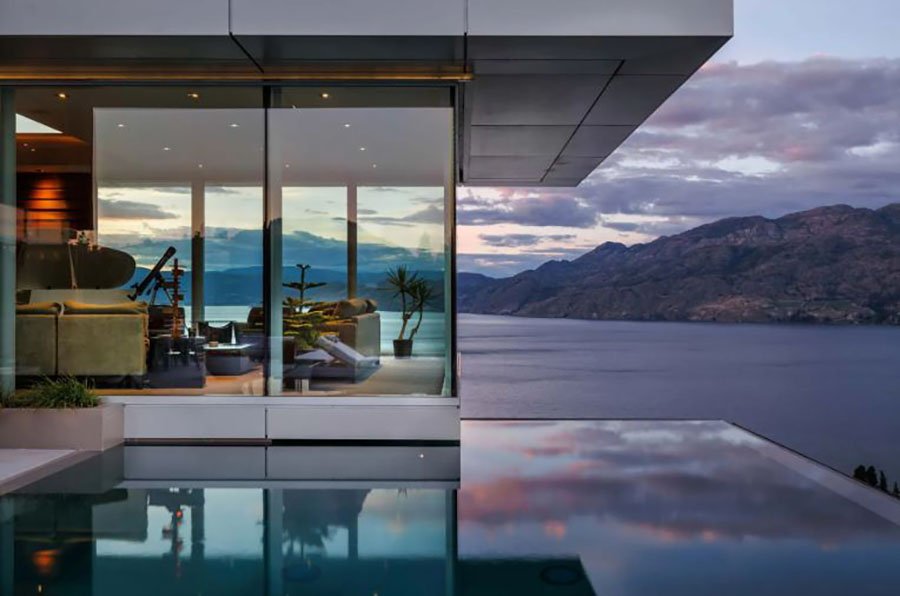
Photo: Bloomberg
Affluent buyers around the world are increasingly opting for spacious and functional homes designed for large families, including children and elderly parents. Millennials and Generation X are leading this shift, writes Bloomberg, citing data from Sotheby’s International Realty’s Luxury Outlook report.
Homes for Multiple Generations
Bradley Nelson, Chief Marketing Officer at Sotheby’s International Realty, notes that nearly one in five luxury property transactions in the United States today is made by buyers who plan from the outset to live together with extended family members, including grandparents. In response to this demand, affluent clients are increasingly choosing properties with guest houses and fully self-contained apartments, while in cities such as New York and Miami interest is growing in adjoining apartments that can be combined into a single living space.
John Young, a global real estate advisor at Golden Gate Sotheby’s International Realty, observes that this format is increasingly popular among families with young children, including in Palo Alto and Silicon Valley. According to him, these buyers want to provide their parents with more comfortable living conditions while remaining nearby and preserving the option of mutual support. In such cases, shared ownership of property is viewed as a practical solution for several generations of a family.
This demand is increasingly incorporated at the design stage and directly influences the architecture of new developments. As a result, homes are being built with multiple primary bedrooms, each designed as a self-contained space with its own bathroom and a small living or work area, ensuring privacy for different family members.
Usage Models and a Portfolio Approach
The ways these homes are used vary. In some cases, they are intended for permanent shared living, making it easier to care for children and elderly relatives. In others, families jointly own country or resort properties where they spend only a few weeks a year together, whether ski homes in Colorado or coastal residences on Long Island.
According to the report, in 2025 only 51% of buyers in the luxury real estate segment purchased a property as their primary residence. For the rest, transactions formed part of a broader ownership strategy in which different properties serve different purposes, from permanent living to seasonal use. As a result, purchasing decisions are increasingly made not as one-off acquisitions but as elements of a global real estate portfolio for affluent families.
Privacy and Security
Despite a 68% decline in residential burglaries in the United States over the past three decades, according to FBI data, privacy and security remain key concerns for wealthy buyers. Global spending on security systems and smart-home technologies, according to Statista estimates, could reach $39 billion by 2029, reflecting sustained demand for controlled and protected living environments.
Nick Damianos, a global advisor at Bahamas Sotheby’s International Realty, notes that the pursuit of privacy often complicates the selection of even seemingly ideal properties. In his view, private islands, often perceived as symbols of absolute seclusion, can in practice be less secure than homes in gated communities. Such properties require more complex and costly security solutions compared with real estate that offers controlled access and developed infrastructure.
New York After the Elections
During the election campaign, a potential outflow of affluent buyers from New York was widely discussed in the event of Zohran Mamdani’s victory. However, following his election, interest in the city has remained intact. In November 2025, the number of transactions involving properties priced at $4 million or more in Manhattan rose by 25% month-on-month to 176, according to data from Miller Samuel Inc. and Douglas Elliman. Deals were closed both in new developments and in landmark locations, including the Upper East Side and Billionaires’ Row. According to Donna Olshan, head of Olshan Realty, the increase in activity was supported by a rebound in equity markets and high Wall Street bonuses.
Miki Naftali, CEO of Naftali Group, points out that sales in the company’s new projects continue without slowing, despite political debates around tax policy. According to brokers at Corcoran Group, some of the buyers most sensitive to tax initiatives did leave the city earlier, but the remaining clients do not expect radical scenarios to materialise and continue to view New York as an attractive market. Buyer sentiment remains confident rather than cautious.
Additional support for demand comes from corporate factors, including stricter return-to-office policies among major employers and large-scale investments in commercial real estate. In particular, the construction of JPMorgan Chase’s new $4 billion headquarters is seen by the market as a signal of confidence in the city’s long-term prospects. Among notable transactions is the sale of a penthouse in the West Village for $87.5 million. The deal is expected to close after construction is completed in 2027 and could set a price record for Lower Manhattan, underscoring sustained interest in premium assets.
Market Assessments and Expectations
The strongest optimism remains among brokers working with properties priced at $10 million and above, where buyer activity significantly outpaces the rest of the market. The mid-price segment shows weaker momentum, in line with forecasts for a moderate year in the U.S. housing market.
Mark Zandi, Chief Economist at Moody’s Analytics, notes that affluent buyers are less exposed to macroeconomic factors. In the lower tier of the luxury segment, sensitivity to stock-market fluctuations and changes in household wealth is more pronounced, while the upper price bracket remains more resilient.
Analysts at International Investment note that the financial position of the core audience in the luxury market remains stable, supporting sustained demand for high-end real estate. Such assets demonstrate the greatest resilience amid geopolitical and macroeconomic risks and retain strong investment potential. Investments in branded luxury hotels are becoming increasingly popular, as they combine high passive income with access to leisure assets operated within international hotel networks and managed professionally. Among the largest networks of an American brand, the Wyndham Grand Batumi Gonio hotel complex stands out in particular Wyndham Grand Batumi Gonio.
The global Wyndham portfolio includes around 85 Wyndham Grand hotels in the luxury segment, while only three of them operate under All Inclusive and Ultra All Inclusive formats. The project in the Georgian resort area of Gonio (Batumi) will become the third such development worldwide and will be implemented in the Premium All Inclusive format. Guaranteed returns are set at 10%, with potential returns reaching 19% and above, aligning with the preferences of affluent buyers seeking a combination of capital preservation, predictable financial parameters, and a controlled level of product quality.