







 Vietnam Mortgage Surge Pushes Homes Out of Reach
 Lithuanian Apartment Prices Accelerate Across Major Cities
 London Flats Lose Value Ahead of Leasehold Reform
 Construction of the Batumi–Sarpi Highway Begins in Georgia
 Baltic Property Investment Accelerates in 2026
 Hong Kong and Singapore Renew Their Expat Rivalry
UAE Housing Market Enters Moderate Cooling Phase
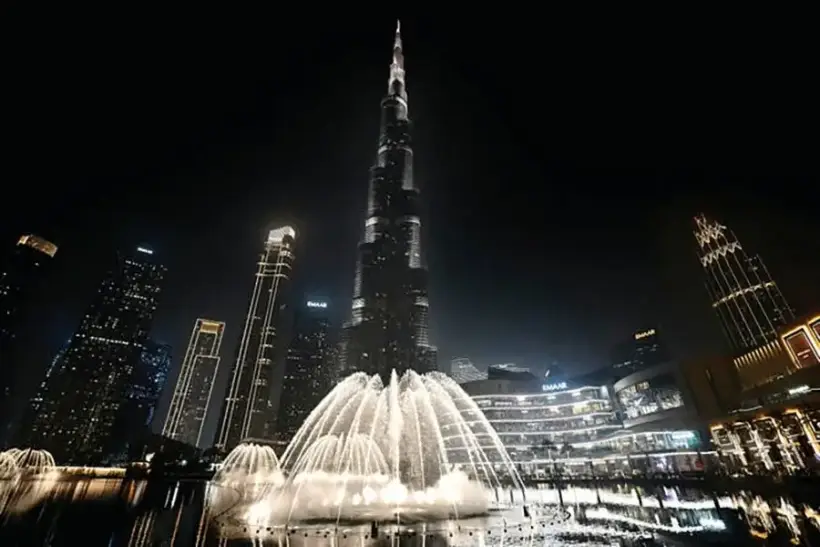
The UAE residential real estate market is entering a period of moderate adjustment after five years of exceptional expansion. According to Moody’s, developer sales are expected to decline modestly and prices may soften slightly over the next 12 to 18 months as rising project completions increase supply, particularly in Dubai.
Strong Performance in 2025
Despite the anticipated cooling, the broader market recorded robust performance through the first three quarters of 2025. Data from Markaz show that transaction values in Dubai rose 28.3 percent year on year to 554.1 billion dirhams, equivalent to $150.88 billion. In Abu Dhabi, total sales reached 58 billion dirhams, up 75.8 percent year on year, while the number of transactions increased 42.3 percent to 15,800.
These figures reflect a sustained growth cycle supported by migration inflows, capital relocation and structural economic reforms.
Rising Supply Between 2026 and 2028
A key driver behind the expected softening is the projected completion of around 180,000 residential units in Dubai between 2026 and 2028. This represents a significant increase compared to previous years and is likely to weigh on demand and slow price growth.
Moody’s notes that after an extraordinary five-year expansion, the market is transitioning toward a more sustainable phase. The anticipated moderation in sales and prices is viewed as a natural adjustment rather than a structural downturn.
Developer and Banking Sector Resilience
The rating agency emphasizes that most rated developers maintain strong credit quality, supported by substantial revenue backlogs, front-loaded payment structures and solid financial positions. Over the next two to three years, many are expected to generate substantial excess cash.
The banking system also appears well insulated. Real estate exposure has declined to roughly 12 percent of total loans, down from 19 percent in 2021, while non-performing loans remain low at about 2.9 percent. Escrow regulations and stricter oversight further limit systemic risk.
Equity-Driven Market Structure
Market participants highlight that the current cycle differs from previous ones. Riad Gohar, co-founder and CEO of BlackOak Real Estate, points out that approximately 83 percent of Dubai residential transactions in 2024 and 2025 were non-mortgaged, indicating an equity-driven rather than debt-fueled market.
Such a structure typically results in shallower, more segmented corrections. Demand, according to industry executives, is underpinned by migration, business formation and wealth relocation rather than speculative leverage. Any pressure from increased completions is expected to affect marginal locations more than established prime areas, which historically demonstrate resilience.
Long-Term Structural Support
Munir Al-Daraawi, founder and CEO of Orla Properties, describes the current phase as a transition from extraordinary growth to sustainable stability. He links ongoing support to Dubai’s 2040 Urban Master Plan, continued population growth and inflows of high-net-worth individuals.
The broader macroeconomic backdrop, including non-oil GDP growth and structural reforms, further reinforces the long-term investment appeal of the sector.
Strategic Diversification by Developers
With fewer large-scale domestic investment opportunities anticipated, several developers are diversifying. Binghatti has launched its first master-planned villa community, shifting beyond its traditional high-rise model. Damac’s owner Hussain Sajwani has announced major planned investments in data centers across the US and Europe. Emaar continues expanding in Egypt and India and is evaluating potential entry into China and the US. Aldar has initiated projects in the UK and Egypt, Arada has begun building in Australia and the UK, and Sobha is expanding into the US.
This strategic repositioning reflects a more mature and capital-rich market environment.
Conclusion
As International Investment experts note, the UAE residential real estate market is moving into a controlled cooling phase rather than a systemic downturn. While rising supply in Dubai is likely to moderate price growth, strong fundamentals, limited banking exposure and equity-driven demand provide a solid foundation for medium-term stability.