







 Vietnam Mortgage Surge Pushes Homes Out of Reach
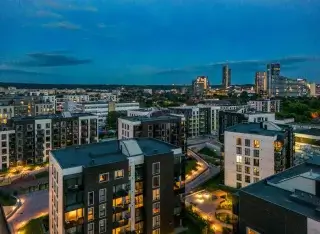 Lithuanian Apartment Prices Accelerate Across Major Cities
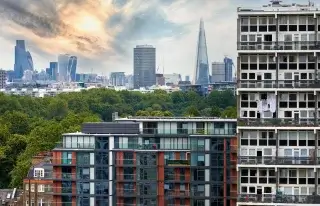 London Flats Lose Value Ahead of Leasehold Reform
 Construction of the Batumi–Sarpi Highway Begins in Georgia
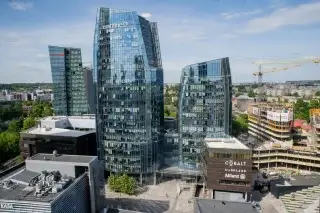 Baltic Property Investment Accelerates in 2026
 Hong Kong and Singapore Renew Their Expat Rivalry
Bulgaria’s housing market enters a calmer phase

Bulgaria’s property market slowed after a rapid 2025 boom
Bulgaria’s housing market entered a calmer phase in early 2026 after the strong growth of 2025. Logos Press reports that the market began to slow after a period of fast expansion, with analysts describing a transition from investment frenzy to a more rational stage of buyer behavior. According to the article, transactions fell by about 10% while supply increased by 25%, giving buyers more time to decide and reducing pressure from sellers.
That shift makes sense in the context of Bulgaria’s completed euro transition. European Commission and EU materials confirm that Bulgaria adopted the euro on January 1, 2026 and became the euro area’s 21st member. As a result, the logic of buying property urgently “before the euro arrives” stopped functioning as an independent demand catalyst once the transition became a fact rather than an expectation.
Why the “euro effect” is fading
Logos Press identifies the weakening of the “eurozone effect” as the first major reason for the cooling. In 2025, many investors and owner-occupiers accelerated purchases in anticipation of stronger price growth after euro adoption. By the start of 2026, much of that effect had already been priced in or pulled forward, and the market began to return to more ordinary decision-making in which location, product quality and financing costs matter more than the one-off currency event itself.
That does not imply a crash. It implies normalization. When a large macro event dominates buyer psychology, transactions happen faster and with more urgency. Once the event has passed, the market becomes less emotional, sellers face more competition and buyers become more selective. That is the phase Logos Press describes as calmer and more rational.
Mortgage lending is still supporting Bulgaria’s housing market
Cooling transaction volumes do not mean credit support has disappeared. The Logos Press article says mortgage lending increased by 14% and that the average mortgage rate remains around 2.47%. I was not able to directly verify that exact 2.47% figure through a fresh primary BNB release in open format, so it is best treated as a market estimate cited by the article rather than as a directly confirmed state statistic.
What is officially confirmed is the broader and more important point: mortgage lending remains extremely strong. Bulgarian National Bank data reported by BTA show that housing loans to households reached EUR 17.299 billion at the end of February 2026, up 27.8% from a year earlier. That suggests the housing market still benefits from abundant credit support even as buyer activity becomes more selective.
Official housing statistics still point to a high market base
To interpret the current slowdown correctly, the broader base matters. Bulgaria’s National Statistical Institute says its House Price Index is compiled from full transaction prices and, since 2022, uses administrative-source data to improve coverage. That means Bulgaria is entering 2026 not from stagnation but after several years of strong price growth, with the market already carrying a much higher price base than before the euro-related surge.
Supplementary market analysis tells the same story. Reviews based on Bulgarian market and banking data indicate that house-price growth in 2025 remained in double digits while mortgage rates stayed very low by European standards. This is not the same as a fresh state release for the current month, but it supports the idea that the market is cooling after a boom rather than falling into outright stress.
Buyers are becoming more cautious and taking longer to decide
A second part of the shift is behavioral. Logos Press says rising supply has reduced pressure from sellers and given buyers more time to think. That is a key market signal. In a hot market, transactions happen quickly and limited supply pushes households to act immediately. When supply rises and urgency fades, the market becomes more balanced even if prices remain elevated.
This makes the market less frantic, but not necessarily cheap. Bulgaria still has strong mortgage growth, which means purchasing power has not vanished. It is simply being driven less by fear of missing out and more by household budgeting and actual housing utility. That is why experts cited by Logos Press recommend that monthly loan repayments should not exceed roughly 30% of net family income.
Local imbalances have not disappeared
Even as the broader market cools, some segments remain overheated. Logos Press highlights very high garage prices in Sofia, ranging from EUR 50,000 to EUR 100,000. The reason is a structural shortage of parking spaces, which has turned garages into a distinct micro-investment asset with its own supply-demand logic.
That is important for understanding the market as a whole. Late-stage booms rarely cool evenly. The mainstream housing segment may slow while scarce urban micro-assets such as garages, parking spaces or especially well-located units continue to hold a premium. So when speaking of a Bulgarian housing slowdown, it is more accurate to talk about a phase change than a synchronized decline across all asset types.
What Bulgaria’s slowdown means for 2026
The most likely conclusion for 2026 is that Bulgaria’s property market is moving from an emotional euro-driven phase into a normalization phase. On one side, the main speculative catalyst has been exhausted because euro adoption has already happened. On the other, mortgage lending remains strong enough to reduce the probability of a sharp and immediate price reversal. This creates a market in which the key variables are no longer fresh records in prices, but transaction speed, buyer choice and the durability of credit-supported demand.
As International Investment experts note, Bulgaria’s housing market is going through a classic post-event repricing of expectations. The emotional premium attached to euro adoption has faded, but the fundamental support of cheap mortgages and an already elevated price base remains in place. If lending growth stays strong, the market may move into a more moderate and sustainable growth phase. If supply continues rising faster than demand, 2026 is likely to look less like a crisis year and more like a longer, calmer sideways market.
FAQ on Bulgaria’s housing market
Why is Bulgaria’s housing market slowing in 2026
Because the “euro effect” is fading. Many purchases were brought forward into 2025 ahead of euro adoption, and after January 1, 2026 that motivation weakened significantly.
Is it true that transactions fell by about 10%
That estimate comes from Logos Press via a market source. It should be treated as a market-based assessment rather than a directly confirmed official state series.
Is mortgage lending still supporting the Bulgarian market
Yes. Officially reported BNB data show housing loans to households rose 27.8% year on year to EUR 17.299 billion by the end of February 2026.
Is the average mortgage rate really around 2.47%?
That figure is cited by Logos Press as a market estimate. I did not directly verify it in a fresh open-format official release, but it is consistent with broader market reporting that Bulgarian mortgage rates remain very low by European standards.
Does the slowdown mean home prices in Bulgaria are about to fall sharply?
The available evidence does not make that the base case. It looks more like normalization after a boom, while mortgage lending growth remains very strong.