







 Vietnam Mortgage Surge Pushes Homes Out of Reach
 Lithuanian Apartment Prices Accelerate Across Major Cities
 London Flats Lose Value Ahead of Leasehold Reform
 Construction of the Batumi–Sarpi Highway Begins in Georgia
 Baltic Property Investment Accelerates in 2026
 Hong Kong and Singapore Renew Their Expat Rivalry
Egypt’s Building Boom Is Reshaping the Country
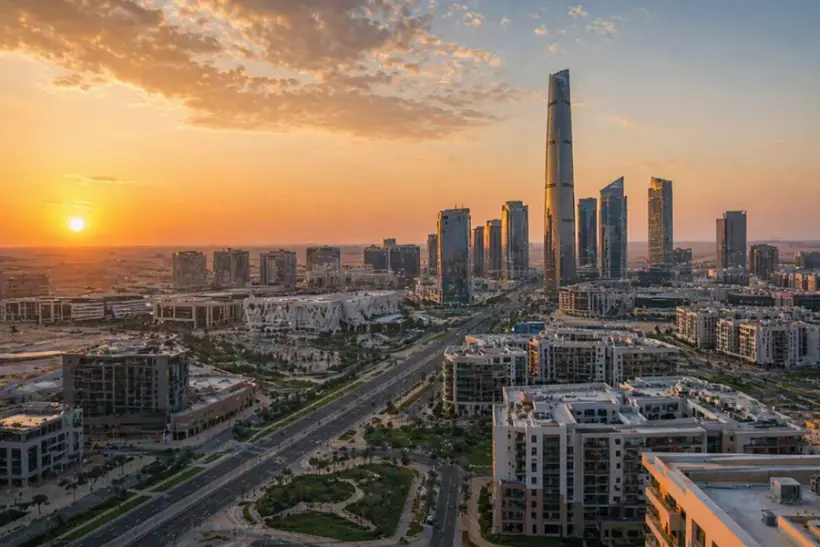
Egypt is accelerating one of its largest urban restructuring efforts in recent years, expanding new cities, relocating administrative functions away from congested Cairo, boosting housing construction, and attracting tens of billions of dollars into coastal and capital-region developments. According to Bloomberg, the sector has become a key indicator of the country’s economic strategy, with large-scale districts, highways, and megaprojects reshaping housing demand, infrastructure, and investment flows.
Construction sector expands to a new scale
The construction boom is reshaping Egypt’s modern urban landscape. According to Knight Frank, projects worth around $120 billion are currently under development, with roughly $50.8 billion directly linked to construction. Public investment in housing, transport, energy, and new cities remains the main driver, alongside increasing participation from private and foreign capital.
A central framework is Egypt Vision 2030, the country’s long-term sustainable development strategy. Within this plan, new cities and infrastructure upgrades are treated as structural economic transformation rather than isolated developments.
New cities reshape national urban policy
The most prominent example is the new administrative capital east of Cairo. According to the Arab Urban Development Institute, the project is designed for around 6.5 million residents, with space for more than 30 ministries and approximately 55,000 employees. The project reflects an attempt to redistribute functions from Cairo and build a new center for government administration.
Expansion is not limited to flagship developments. Egypt’s real estate market platform reports 593 priority projects in housing, utilities, and urban communities. These include transport corridors, waterfronts, residential districts, and infrastructure upgrades across the country.
Mass housing remains a core pillar
Egypt’s Central Agency for Public Mobilization and Statistics (CAPMAS) reports 158,900 housing units completed in fiscal year 2023/2024, highlighting the scale of mass housing delivery alongside megaprojects.
The government also announced plans for 400,000 new housing units in 2025, followed by a second phase including 25,012 additional units. The housing push reflects both demographic pressure and the use of construction as an economic and social policy tool.
Research project Marsad Omran notes that the public sector continues to dominate formal housing output, with volumes exceeding the private sector for a second consecutive year.
Coastal megaprojects attract major capital
A second growth engine is coastal development, particularly on Egypt’s northern shoreline. One of the largest examples is Ras El Hekma. ADQ announced in 2024 a $35 billion investment package, including $24 billion for development rights and $11 billion in converted deposits for broader national projects.
The deal is widely viewed as a turning point in foreign financing, particularly from Gulf investors, and has become a key reference point for Egypt’s liquidity and development pipeline.
How construction is reshaping the economy
Construction now serves multiple functions: expanding housing supply, relocating administrative centers, generating employment, and supporting industries from cement and steel to logistics and transport.
Mordor Intelligence estimates the sector at $54.87 billion in 2026, rising to $80.54 billion by 2031. While forecasts vary, the scale reflects the importance of construction in Egypt’s economic structure.
At the same time, the country remains exposed to currency pressures, external financing needs, and structural reforms. The International Monetary Fund noted in April 2026 that Egypt has built stronger buffers against external shocks compared with previous years, an important factor for long-term development projects.
What changes for real estate
The real estate market is shifting from concentrated growth in Cairo toward a multi-center model. Demand and investment are increasingly distributed between the new administrative capital, coastal zones, satellite cities, and state-led housing programs. This is reshaping pricing patterns, rental markets, infrastructure pressure, and investment strategies.
Analysts at International Investment note that Egypt’s construction boom is no longer a set of isolated megaprojects. It represents a broad urban restructuring process driven by the state, reinforced by foreign capital, and increasingly divided into distinct market segments with different demand dynamics.
FAQ
What is driving Egypt’s building boom in 2026?
Egypt is expanding new cities, housing programs and infrastructure projects. Industry estimates suggest projects under execution total around $120 billion, with $50.8 billion concentrated in construction.
Why is the New Administrative Capital so important?
It is planned for about 6.5 million residents and more than 30 ministries, making it a central part of Egypt’s effort to redistribute functions away from Greater Cairo.
How much housing is Egypt building?
CAPMAS said 158,900 housing units were completed in fiscal year 2023/2024, while the government also announced a 400,000-unit housing offering for 2025.
What is Ras El-Hekma?
It is a major Mediterranean coastal development backed by a $35 billion investment package led by ADQ, making it one of the biggest development deals in Egypt’s history.
How is the boom affecting Egypt’s property market?
It is shifting demand and investment across Cairo, the new capital, coastal zones and new cities, increasing the importance of infrastructure, planning and foreign capital.