







 Vietnam Mortgage Surge Pushes Homes Out of Reach
 Lithuanian Apartment Prices Accelerate Across Major Cities
 London Flats Lose Value Ahead of Leasehold Reform
 Construction of the Batumi–Sarpi Highway Begins in Georgia
 Baltic Property Investment Accelerates in 2026
 Hong Kong and Singapore Renew Their Expat Rivalry
Czech Housing Market Returns to Growth
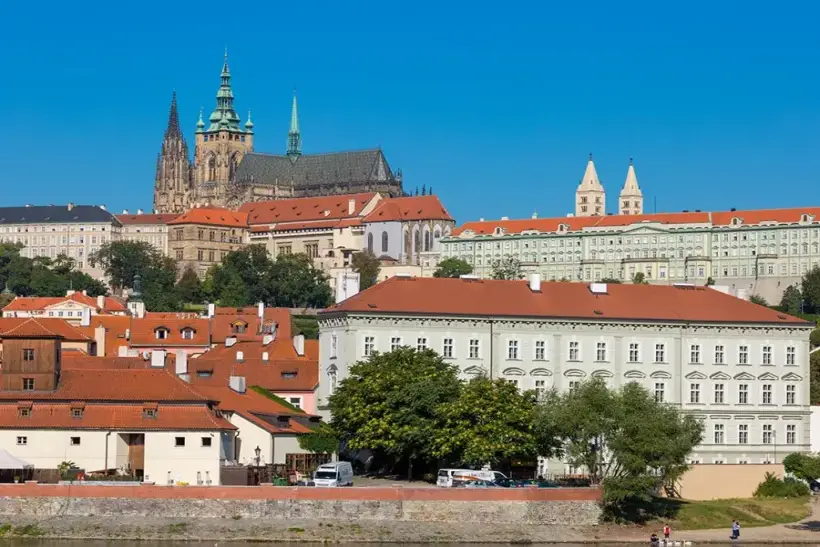
The Czech residential property market has moved back into a growth phase after a period of cooling caused by expensive mortgages and weaker buyer activity. In 2026, the key drivers are limited supply, recovering demand, high construction costs and gradually improving financing conditions. Prague remains the center of price pressure, while housing affordability has become one of the country’s most serious economic challenges.
Home prices rise again after correction
The Czech property market has recovered faster than many expected. The Czech National Bank said housing activity started rising again after the 2022–2023 slowdown, while the residential House Price Index was 4.1% higher year on year in the second quarter of 2024 and 120% above its 2015 level.
By 2026, the recovery has turned into a more sustained expansion. The main driver is not a sharp rise in household incomes, but a chronic supply shortage. New housing construction remains slow, permitting procedures are lengthy, and demand is concentrated in Prague, Brno and commuter areas around major cities.
Prague remains the pressure point
Prague is still the country’s most expensive and supply-constrained residential market. Buyers compete for a limited stock of new developments and high-quality existing apartments, especially in districts with strong transport links, developed infrastructure and resilient rental demand.
Deloitte’s housing affordability data show that the Czech Republic remains one of Europe’s least affordable markets for home ownership, with a standard new dwelling requiring the equivalent of 13.3 gross annual salaries.
That gap is reshaping demand. Buyers with capital and mortgage access remain active, while young families and parts of the middle class are delaying purchases or moving into the rental market.
Mortgages support demand but not affordability
Falling interest rates after the inflation shock have brought some buyers back. The Czech National Bank said demand for housing loans has been supported by expectations of a market recovery, lower mortgage rates and improved household confidence.
Yet mortgages remain expensive compared with the era of ultra-low rates. Lower borrowing costs do not fully offset rising apartment prices, especially in Prague. Buyers still face larger down payments, stricter income checks and greater sensitivity to the length of rate fixation.
Construction shortage deepens imbalance
The core structural problem is the shortage of new housing. Developers face high land prices, elevated construction costs, labour constraints and long administrative procedures. In Prague, large projects can take years to move through the approval process, limiting the market’s ability to respond to demand.
Private market analysts expect housing demand in 2026 to remain focused on Prague, Brno and surrounding municipalities, where urbanisation, investment demand and limited supply continue to support price growth.
This creates a persistent cycle: limited supply raises prices, higher prices reduce affordability, and lower affordability pushes more households toward renting.
Rental market benefits from unaffordable ownership
Rising purchase prices are pushing more households into rental housing. This is especially visible in Prague, where home ownership has become unattainable for many young professionals and families. Investors still view apartments as defensive assets, although rental yields do not always keep pace with purchase prices.
Demand is increasingly focused on energy-efficient units, apartments near metro stations and properties with lower future maintenance costs. Buyers are also paying closer attention to technical condition, legal documentation and renovation expenses.
Investors return more selectively
After the period of expensive financing, investors are re-entering the market, but with more caution. Small apartments in central Prague remain liquid, but high prices reduce potential yields. Larger units and peripheral locations require more detailed return calculations.
Commercial real estate is moving unevenly. Cushman & Wakefield’s 2026 outlook for the Czech Republic says office supply in Greater Prague remains high and vacancy may increase slightly to about 4.5%, while development activity is becoming more selective and focused on proven high-demand hubs.
No quick cooling in sight
The combination of limited construction, recovering mortgage demand and expectations of further price growth makes a sharp correction unlikely. Still, the market remains vulnerable to interest rates, inflation, banking regulation and a slowdown in economic growth.
For buyers, 2026 is becoming a year of difficult choices. Waiting may mean facing even higher prices, but buying too quickly with expensive credit can increase long-term debt pressure. For investors, the key issue is no longer only capital appreciation, but net returns after taxes, maintenance, vacancies and renovation costs.
According to experts at International Investment, the Czech housing market has moved from post-crisis recovery into a new cycle of scarcity-driven growth. The critical conclusion is that the country is not facing a short-term overheating episode, but a structural housing shortage: without faster construction and simpler permitting, prices are likely to keep outpacing the purchasing power of many households.
FAQ
What is happening in the Czech housing market in 2026?
The market is growing again after a cooling period. The main drivers are limited housing supply, recovering mortgage demand and strong buyer concentration in Prague and other major cities.
Why is Prague housing so expensive?
Prague combines high demand, limited supply, long permitting procedures and a strong rental market. These factors support prices even when mortgages are costly.
Will Czech housing become more affordable?
Affordability is unlikely to improve significantly without faster construction and stronger income growth. Lower mortgage rates help, but they do not fully offset rising prices.
Is buying property in Czechia still attractive in 2026?
It can be attractive for long-term buyers with stable income and careful due diligence. Short-term investment has become riskier because entry prices are high.
Which locations are most in demand?
Prague remains the main demand center. Brno, commuter towns and locations with strong transport links are also active.