







 China Nears a Decision on Fresh Stimulus
 Fines for Illegal Rentals in Spain Reach €800,000
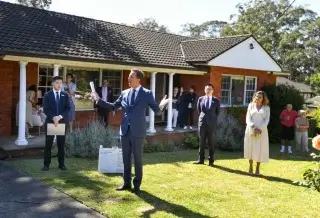 Australia’s Spring Auctions Rise but Remain Well Below 2025
 Number of Foreigners Holding Turkish Residence Permits Exceeds 1.27 Million
 Demand from Russian Tourists for Holidays in Georgia Rises by 20–25%
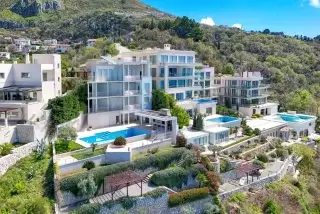 Montenegro Property Buying Costs in 2026
Genoa Leads Italy’s Rental Returns
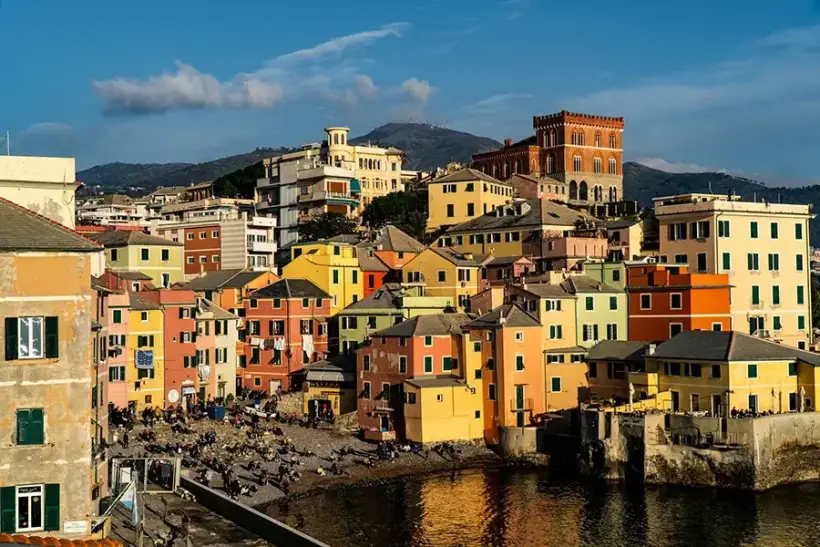
Genoa has become one of Italy’s most visible real estate markets for rental investors. According to Genoa B&B, the Ligurian capital now outperforms Rome and Milan in gross rental yields, exceeding 7.5%, while the city’s tourist flow was forecast to reach 3.5 million visits by the end of 2025.
Genoa property yields move ahead of Milan and Rome
Italy’s housing market is usually seen through Milan, Rome, Florence and Venice, but Genoa has become a separate investment case in 2025–2026. The city combines relatively low entry prices, rising tourism, limited supply in historic districts and growing interest in coastal property.
According to Immobiliare.it, the average asking price for homes in Genoa reached €1,781 per square meter in March 2026, up 5.26% from March 2025. Average asking rents rose to €10.46 per square meter per month, an 8.06% annual increase; the highest sale prices were recorded in Quarto, Quinto and Sant’Ilario at €3,387 per square meter, while the lowest were in Bolzaneto, Pontedecimo, Rivarolo and Certosa at €977 per square meter.
That spread explains why Genoa has become attractive for income-focused buyers. In Milan, purchase prices are already close to levels seen in Europe’s largest capitals, while in Genoa rents are rising faster than entry prices. For investors, this is an unusual combination: yields are supported not by falling asset values, but by stronger rental demand and still-accessible acquisition costs.
Tourism strengthens the short-term rental market
Genoa is gradually moving beyond its old role as a transit city between Milan, the Ligurian coast and the French Riviera. Tourism, the port economy, cruise routes, universities and business travel create mixed rental demand, from short stays to long-term leases for students and professionals.
Short-term rentals are especially relevant in the historic center, the Old Port, Carignano, Castelletto, Albaro, Foce and Nervi. In these areas, returns depend not only on size and renovation quality, but also on proximity to transport, tourist routes, the waterfront and business districts.
Idealista showed several hundred long-term rental listings in Genoa in early May 2026, including homes advertised from €220 per month, highlighting the broad range of supply and the city’s continued affordability compared with Milan and Florence.
Urban renewal changes the investment case
Genoa was undervalued for years. Its population was shrinking, its industrial base weakened and the city lost ground to Milan in capital, jobs and global visibility. The shift accelerated after the infrastructure response that followed the 2018 collapse of the Morandi Bridge.
The Financial Times reported that the tragedy became a catalyst for a wider recovery program, including the San Giorgio bridge, urban projects by architect Renzo Piano, the Waterfront di Levante redevelopment, plans for a high-speed rail link to Milan by 2030 and infrastructure investment totaling €6.49 billion.
For real estate, this means Genoa is gradually moving from the category of a cheap old port city to that of an urban recovery market. Investors are buying not only current rental income, but also the possibility of future revaluation in districts linked to transport, the waterfront and regeneration projects.
Coastal districts define the premium segment
Genoa is not a uniform market. In the historic center and semi-central districts, investors search for yield; in Albaro, Nervi, Quarto, Quinto and Sant’Ilario, a more expensive coastal segment is taking shape. Buyers there pay for sea views, neighborhood status, building quality and scarcity.
Unlike Milan, where the premium market is already expensive and requires a much higher entry budget, Genoa still offers a wider range of prices. That makes the city attractive to buyers seeking a combination of Italian lifestyle, coastal location and investment logic.
Still, price growth in the best districts is already visible. The higher the quality of the asset, the less Genoa looks like a cheap alternative and the more it behaves like a standalone market with constrained supply. For investors, this makes asset selection crucial: a 7.5% yield is not automatic for every apartment in the city.
High yields remain, but risks are rising
The 7.5% figure refers to gross yield, meaning the ratio between annual rental income and the purchase price, without accounting for taxes, maintenance, vacancy periods, property management fees, insurance, or general upkeep costs. The net yield after all expenses is therefore lower.
Numbeo reflects a similar logic: based on user-contributed data, gross rental yield in central Genoa is around 5.2%, while outside the city center it reaches about 10.3%. This highlights a strong dependence on location and entry price. Actual net profitability is also significantly lower.
Short-term rentals add their own risks: seasonality, tourist-rental regulation, guest registration requirements, hotel competition and the need for professional management. For long-term rentals, key variables include tenant quality, building condition and exit liquidity.
Genoa benefits from a lower starting point
Genoa’s main advantage is its low base relative to other major Italian cities. Milan has become too expensive for many private investors, Rome requires careful district-by-district navigation and legal checks, while Florence and Venice are more exposed to tourism regulation. Genoa still offers a lower entry point while demand is rising.
Best Yield Finder’s May 2026 update assigned Genoa province a market score of 86 out of 100, rating it as a good market based on investability, price momentum, rental demand and sales demand.
But a low base does not remove risk. Genoa still faces demographic constraints, complex geography, old housing stock and sharp differences between neighborhoods. Buying into a building with poor technical condition can quickly erode rental returns through maintenance and renovation costs.
Investors see Genoa as an early-cycle market
Genoa is attractive because it has not yet been fully repriced. The city benefits from tourism, infrastructure upgrades, international interest in coastal Italy and comparatively affordable housing. Yet it is no longer a hidden market: rising prices, the arrival of international agencies and foreign media attention point to a more competitive phase.
The most resilient strategy is not buying any cheap apartment, but selecting assets with clear demand: near the historic center, universities, transport, the sea or business districts. In short-term rentals, management and legal compliance are decisive; in long-term rentals, tenant quality and building condition matter more.
As experts at International Investment report, Genoa has become one of Italy’s clearest examples of a secondary city being repriced. The market still offers higher yields than Milan and Rome, but it now requires professional asset selection. An investor buying only cheap square meters risks illiquidity and repairs; an investor analyzing district quality, rental demand and future infrastructure gains access to one of Northern Italy’s most promising residential markets.
FAQ
Why is Genoa leading Italian real estate yields?
Genoa combines low purchase prices, rising tourism, strong rental demand and limited quality supply in central and coastal districts.
What is the rental yield in Genoa?
According to Genoa B&B, gross rental yields exceed 7.5%. In some districts, this figure may be higher or lower depending on purchase prices, rental rates, taxes, and property management costs. Actual net returns, taking all expenses into account, are around 5%, and even lower when vacancy periods are factored in.
How much does property cost in Genoa in 2026?
In March 2026, the average asking price was €1,781 per square meter, but prices ranged from below €1,000 in some peripheral areas to more than €3,000 in prime coastal districts.
Where should investors buy in Genoa?
Short-term rental investors often look at the historic center, Old Port, Carignano, Castelletto, Foce and Nervi. Long-term rental investors focus on transport, universities and business areas.
What are the main risks?
The main risks are old housing stock, renovation costs, short-term rental seasonality, tourism regulation and large differences in liquidity between districts.