








Hungary Draws Buyers Again
Hungary’s housing market has received an unexpected post-election signal: overall foreign demand remains below last year’s level, but interest from the United States, Switzerland, the United Kingdom and several smaller European markets has risen sharply. For Budapest, that means renewed attention to liquid districts; for the wider country, it is a test of whether demand can become transactions despite high prices, limited supply and expensive credit.
Foreign demand is returning unevenly
Daily News Hungary reported an unexpected shift in foreign demand for Hungarian residential property after the recent elections. Overall international enquiries remain lower than earlier levels, but several wealthy markets have shown strong gains. According to ingatlan.com, the platform typically records 3,000 to 4,000 weekly phone enquiries from abroad for homes listed for sale, while the post-election week brought a visible change in source markets. Swiss interest rose by more than 25% from the previous month and more than 43% year on year; demand from the United States increased 37% in a week and reached about one and a half times its previous annual level.
For Hungary, this is an important signal: the foreign buyer has not disappeared, but has become more selective. The market no longer looks like a broad wave of demand from all directions. Instead, interest is concentrated among buyers looking for relative value, political and economic stabilisation, access to Central Europe and a potential recovery in liquidity.
Budapest remains the main magnet
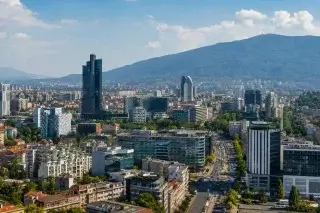
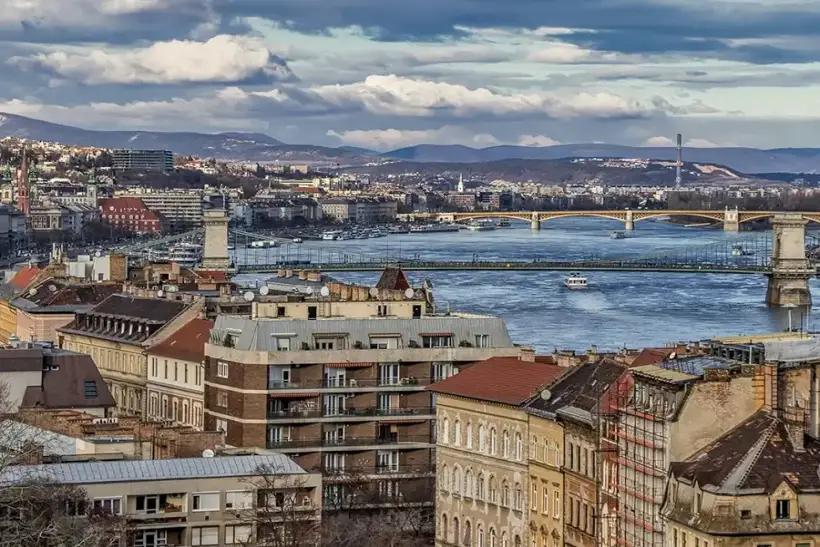
The capital still dominates foreign interest. About 30% of all enquiries from abroad target Budapest, especially Districts II, VI and XIII; Districts III and XI are also in demand. Outside the capital, Debrecen, Győr, Szeged and Pécs are attracting attention, along with border cities and university hubs. The geography shows that demand is still driven by liquidity, transport access, education, jobs and a clear rental base.
For investors, this means Hungary is no longer only a central Budapest story. Regional cities are drawing more attention because of universities, industry, logistics and lower entry prices. Still, the capital remains the primary market where foreign buyers expect faster resale, stronger rental demand and better capital preservation.
Prices have already outpaced incomes
The renewed interest is appearing in a market that has already repriced sharply. Global Property Guide said the Hungarian National Bank’s house price index rose 21.29% year on year nationwide in the third quarter of 2025 and 16.29% in real inflation-adjusted terms. Budapest was stronger, with prices up 26.15% year on year, while the Pest region posted a much weaker 8.74% increase.
That creates a two-sided picture. For owners and sellers, the market looks strong: prices are rising, foreigners are watching Hungary again and limited supply supports valuations. For buyers, the situation is harder: price growth has already reduced part of the investment appeal, while affordability for local households has deteriorated. Demand can increase in enquiries without immediately turning into completed sales.
State programs supported the market
Housing policy has been one of the key drivers of the latest cycle. In 2025, Hungary shifted support toward owner-occupiers through the Otthon Start, or Home Start, program, which offered first-time buyers fixed-rate mortgages at 3%. Market data suggest that this mechanism strengthened demand in late 2025, although its effect in 2026 may be less intense because some buyers already moved earlier.
Such programs help revive transactions, but they also have side effects. If housing supply grows slowly, subsidised credit increases purchasing power and pushes prices higher. That is especially sensitive for apartments that qualify for the program and for districts where new, good-quality housing is scarce.
Supply is not keeping up
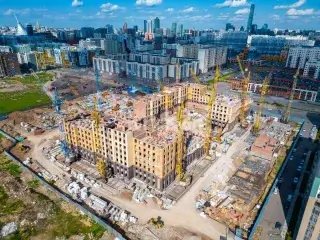
The market’s central structural problem is limited construction. In January–September 2025, Hungary completed 7,490 dwellings, down 14% year on year, while building permits rose 37.08% to 19,947. In Budapest, 2,509 homes were completed, down 9.13%, but 7,841 permits were issued, a rise of more than 131%.
That points to a future supply recovery, but not an immediate easing. A permit is not a finished apartment. Months or years can pass between approval, construction start, financing, sales and delivery. As a result, the 2026 market may remain tight: demand is already active, while new homes will arrive with a lag.
Mortgages remain expensive despite subsidies
Interest rates remain one of the main constraints. The Hungarian central bank’s base rate has stayed at 6.50% since September 2024, while the average rate on new housing loans reached 8.00% in December 2025, up 1.25 percentage points from a year earlier. Subsidised loans help specific buyer groups, but market financing is still expensive.
This matters for real demand. A buyer may enquire about a flat, compare districts and follow listings, but the final decision depends on monthly payments, down payments, household income and job confidence. Foreign buyers with cash or external financing have an advantage over local households dependent on Hungarian mortgages.
Foreigners may not all be investors
One important feature of the current demand is the blurred line between foreign investors and Hungarians living abroad. Some enquiries from Switzerland, the UK, Germany, Austria or the U.S. may come from the Hungarian diaspora considering a return, a family home purchase or a long-term link to the country. That changes the economic meaning of demand: such buyers are not necessarily coming for speculative returns; they may support the labour market, consumption and long-term demographics.
For the state, this distinction matters. If demand comes only from external investors, it may worsen affordability. If part of the demand reflects returning Hungarians, the effect may be broader: returning capital, skilled workers, entrepreneurs and household spending.
High prices widen the buyer-seller gap
At the same time, the gap between seller expectations and buyer budgets is widening. In Budapest, properties priced around HUF 100 million, or about €275,000, have become a psychological benchmark: roughly 40% of listings fall into this category, but only a quarter of buyers are searching at that level. In the premium segment, the threshold is even higher, with luxury homes in prestigious Districts I, II and V typically starting above HUF 200 million.
That slows transactions. Demand exists, but not for every asset and not at every price. Homes that fit state-subsidy rules, are in good condition, energy-efficient and located in liquid districts have an advantage. Overpriced units, properties needing major renovation or homes with weak transport access may take longer to sell.
What it means for investors
For investors, Hungary’s 2026 property market is not a simple growth story but a selection market. Rising interest from the U.S. and Switzerland shows that Hungary is again being viewed as a possible Central European entry point. But rapid price growth, expensive mortgages and tight supply require discipline.
The most resilient assets are likely to be in Budapest locations with strong transport links, a clear rental base and good building quality. In regional cities, markets linked to universities, industry, healthcare and logistics are attractive. The riskiest purchases are those based only on further price growth without a clear calculation of rent, tax, renovation costs and resale liquidity.
As reported by experts at International Investment, the current rise in interest in Hungarian property should not be treated as a full market reversal until enquiries become confirmed transactions. The critical risk is that foreign demand may support prices in liquid districts without solving the deeper problems of affordability and weak supply. If construction does not accelerate and mortgages remain expensive, Hungary may get a more active market for capital-rich buyers, but an even harder one for local families.