










Wizz Air’s Profit Is Hit by Iran War
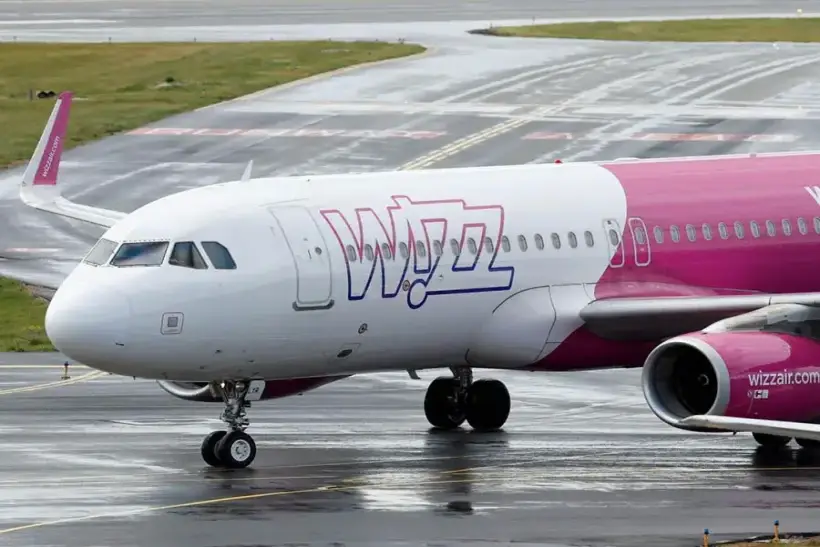
European budget airline Wizz Air saw annual profit almost disappear after the Middle East conflict hit routes, fuel costs and currency exposure, even as passenger traffic and revenue rose, showing the aviation sector’s central tension: demand for cheap flights remains strong, but geopolitics and technical disruption can quickly erase margins.
Wizz Air profit was almost wiped out
Wizz Air ended its 2026 financial year with a sharp profit decline despite higher revenue and record passenger traffic. Bloomberg reported that the budget carrier’s earnings were slashed by the Iran conflict, which affected Middle East routes, fuel costs and visibility for the year ahead.
Net profit for the year to March 31, 2026, was about €1.3 million, down from €213.9 million a year earlier. Operating profit fell by about 17% to €139.7 million. Revenue rose to €5.69 billion, while passenger numbers increased to 69.7 million. The figures show that Wizz Air’s problem is not a collapse in demand, but a rise in costs and external constraints that have become increasingly expensive for a low-cost model.
Wizz Air is a Hungary-founded airline headquartered in Geneva and listed on the London Stock Exchange. It operates as a low-cost carrier, meaning it sells the basic flight at a low fare and earns a large share of revenue from ancillary services such as baggage, seat selection, priority boarding, food, booking changes and other paid options.
The Middle East crisis hit routes and fuel
In March, Wizz Air warned investors that the Middle East crisis would reduce net profit for the 2026 financial year by about €50 million. Around one third of the impact was linked to the suspension of certain scheduled services to the region, with the rest caused by adverse macroeconomic factors, including jet fuel prices and the dollar-euro exchange rate.
Fuel remains one of the largest costs for airlines. Even a small move in oil prices quickly affects flight economics, especially when tickets have already been sold and carriers cannot immediately pass new costs on to passengers. For Wizz Air, the dollar also matters because jet fuel and several industry payments are linked to the US currency, while much of the company’s revenue is generated in euros and local Central and Eastern European currencies.
Airspace closures or restrictions around conflict zones add another layer of cost. Aircraft must fly longer routes, burn more fuel, spend more time in the air and operate more complicated schedules. For a low-cost airline, where profitability depends on high aircraft utilisation and fast turnarounds, such disruption is especially damaging.
The company withheld full-year guidance
Wizz Air did not issue full financial guidance for the 2027 financial year, citing limited visibility across trading seasons, uncertainty linked to the Iran conflict and the closure of the Strait of Hormuz. For investors, that was a significant signal: management is not prepared to give a firm profit outlook even while passenger demand remains strong.
The Strait of Hormuz is a narrow sea route between the Persian Gulf and the Gulf of Oman through which a large share of global oil supplies moves. Its closure or threatened closure affects not only energy markets but also airlines, because fuel expectations can change faster than carriers can adjust schedules and fares.
Withholding guidance does not mean business has stopped. Wizz Air still expects capacity growth in the coming quarters, but it warned of weaker revenue per available seat kilometre in the first quarter of the new financial year. This metric measures revenue relative to seats and distance flown; investors use it to assess how effectively an airline monetises its network.
More passengers did not mean more profit
Wizz Air carried 69.7 million passengers during the year, more than in the previous period. That confirms resilient demand for affordable flights in Europe, especially in Central and Eastern Europe, Italy, the UK and Mediterranean leisure markets.
But higher passenger traffic does not guarantee higher profit. The low-cost model works only with strict cost control, high load factors, dense schedules, low unit costs and strong ancillary revenue. When routes get longer, fuel becomes more expensive, aircraft are grounded and demand becomes less predictable, operating leverage starts to work against the carrier.
The Wall Street Journal reported that Wizz Air maintained revenue and passenger growth, but net profit fell close to zero and the company held back from full guidance because of fuel prices, airspace disruption and longer flight routes. For the market, this means that even a large airline with growing traffic can be vulnerable when external costs rise faster than revenue.
Pratt & Whitney engines remain a separate problem
Geopolitics has compounded a long-running technical crisis. Wizz Air has for several years been affected by issues with Pratt & Whitney engines, forcing some Airbus A320neo and A321neo aircraft into additional inspections and repairs. That limits available capacity, reduces schedule flexibility and can force the airline to use more expensive operating solutions.
The Times reported that about 40 Wizz Air aircraft were grounded because of engine problems while the company was also dealing with the fallout from the Iran conflict. For a low-cost carrier, that level of grounded capacity is particularly painful: each aircraft needs to operate several flights a day to spread fixed costs across as many passengers as possible.
The technical issue also weakens the response to geopolitical disruption. If part of the fleet is unavailable, the airline cannot quickly move aircraft to more profitable or less risky routes. That reduces its ability to capture recovering demand in some markets and offset losses in others.
Abu Dhabi is no longer the same growth platform
Wizz Air had previously built up its Middle East exposure, including operations in Abu Dhabi. But higher regional risk and changing route economics have made that segment more difficult. The company is reshaping its network, focusing more on core European markets and more predictable routes.
Reducing exposure to the Middle East may lower future volatility, but it also limits part of the growth opportunity. The region gave Wizz Air access to longer routes, leisure demand and connections between its European network and fast-growing markets in the Gulf, the Caucasus and Central Asia.
The challenge is that network diversification requires capital, aircraft and a stable geopolitical environment. When all three are under pressure, growth strategy becomes more cautious.
Demand for cheap flights remains strong
Despite the profit fall, demand for budget air travel in Europe remains resilient. Consumers continue to search for cheaper fares amid high living costs, and low-cost carriers retain an advantage over traditional airlines on short- and medium-haul routes.
Wizz Air has strong positions in Central and Eastern Europe, where competition from legacy carriers is weaker and price sensitivity is higher. It is also expanding in Italy, the UK and Spain, where strong leisure demand supports load factors, especially during the summer season.
However, price-sensitive customers limit the airline’s ability to raise fares quickly. If Wizz Air passes fuel and currency costs too aggressively into ticket prices, some demand may shift to competitors or be delayed. The carrier must therefore balance load factors with yield.
Shares remain under investor pressure
The profit decline has kept pressure on Wizz Air’s shares. Investors are assessing not only the latest result but also the company’s ability to rebuild margins after technical, fuel and geopolitical shocks. In this environment, markets are watching free cash flow, liquidity, aircraft delivery schedules, the return of grounded planes and fuel-hedging costs.
Hedging is a financial tool used to protect against unfavourable price moves. Airlines often use it to fix part of their future fuel or currency exposure. If a company has locked in some purchases at lower prices, it is temporarily protected from market spikes. But hedging usually covers only part of future needs and does not solve the problem over the long term.
For Wizz Air, the central question is no longer just how quickly demand recovers, but whether the airline can turn scale back into profit. Passenger growth alone is not enough if each additional flight carries higher fuel, currency and operating risk.
European airlines received a broader warning
Wizz Air’s situation matters for the wider European airline market. The Middle East conflict affects not only carriers flying directly to the region. It changes fuel costs, route structures, insurance costs, flight times and passenger behaviour. Even companies with limited direct exposure feel the consequences through oil, currencies and consumer expectations.
For low-cost carriers, the risk is especially acute. Their competitive advantage is based on low seat costs and high aircraft utilisation. Anything that lengthens flights, reduces fleet availability or forces network changes directly weakens the model.
[11.06.2026 14:20] Darovska Батуми: Traditional airlines are also under pressure, but they often have more ways to offset costs through premium cabins, long-haul routes, corporate demand and loyalty programmes. Budget carriers have less pricing flexibility.
Wizz Air must prove the model is resilient
The next stage for Wizz Air will depend on three factors: the normalisation of Middle East routes, the return of grounded aircraft and the ability to keep costs under control. If the conflict continues to affect fuel and airspace, profit recovery may take longer than the market expects.
The company also has strengths. It remains one of Europe’s largest low-cost carriers, operates a young Airbus fleet, has a recognised brand in its region and continues to carry record passenger numbers. These factors provide a base for recovery if the external environment stabilises.
But the financial year showed that scale no longer guarantees profitability. For airlines, the new normal is not only competing for passengers but also managing geopolitical risk, fuel, currency exposure, technical constraints and investor confidence.
As experts at International Investment report, Wizz Air’s profit collapse should not be explained only by the Iran war: the conflict accelerated weaknesses that already existed in the airline’s model. The critical risk is the combination of three pressures: grounded aircraft, expensive fuel and weaker demand visibility. If Wizz Air cannot quickly return planes to service and restore revenue per seat, passenger growth will look less like a guarantee of recovery and more like an additional strain on the system.
FAQ: Wizz Air profit and the Middle East crisis
What happened to Wizz Air’s profit?
Wizz Air sharply reduced net profit in the 2026 financial year. It fell to about €1.3 million from €213.9 million a year earlier, even though revenue and passenger numbers increased.
Why did the Iran conflict affect Wizz Air?
The conflict led to route suspensions, higher jet fuel prices, currency risk and changes to flight paths. These factors increased airline costs and reduced visibility over future earnings.
What is a low-cost airline?
A low-cost airline sells the basic flight at a low fare and earns a significant share of revenue from extra services such as baggage, seat selection, priority boarding and booking changes.
Why did Wizz Air withhold full-year guidance?
The company cited uncertainty across trading seasons, the Iran conflict and the closure of the Strait of Hormuz. These conditions make it harder to assess fuel, demand, routes and profitability.
How did engine problems affect Wizz Air?
Issues with Pratt & Whitney engines forced part of the fleet to remain grounded. That reduced schedule flexibility, limited capacity and raised costs, especially for a dense low-cost operating model.
Does the profit decline mean demand for flights is weak?
No. Wizz Air carried 69.7 million passengers, showing strong demand. The main issue is that higher costs and external disruption absorbed almost all the profit.
What will matter most for Wizz Air’s recovery?
The key factors will be the return of grounded aircraft, stabilisation of fuel prices, normalisation of routes and recovery in revenue per available seat kilometre.