







 Latvia’s Residence Permits for Real Estate to Be Abolished from September 15
 Egypt Prepares New Law for Property Developers
 Young Japanese Buyers Turn to 50-Year Mortgages
 Argentina Narrows Tourism Gap as Arrivals Rise
 Seattle Luxury Housing Loses Its Former Momentum
 The World’s Strongest Passports for Travel, Living and Investment
Premium housing in Bosnia has risen to €5,000 per square meter
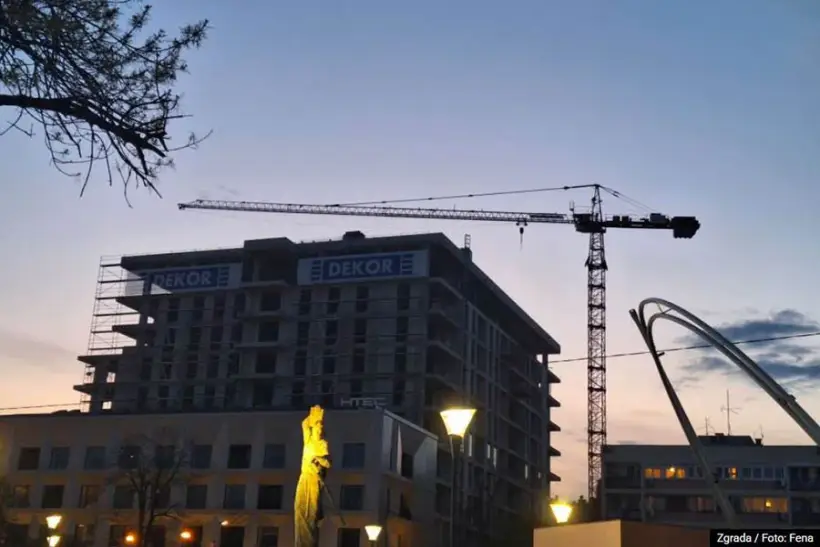
The real estate market in Bosnia and Herzegovina remains active. In the first quarter of 2026, prices for new developments increased and the number of property transactions also rose. In the premium segment in some cities, the price per square meter reaches €5,100, Pogled.ba reports, citing data from the country’s Statistical Agency.
Features of the real estate market in Bosnia and Herzegovina
New developments: 20% price growth
Buyers continue to expect a price decline, but forecasts have not materialized. The average price of new apartments in Bosnia and Herzegovina in the first quarter of 2026 increased by 20.4% compared to the same period in 2025, reaching 3,701 convertible marks (€1,890) per sq. m.
The number of sales on the primary market increased by 59.4% compared to the same period in 2025. Compared to the average level, the figure rose by 13.5%. The total area of sold new developments also increased by 60.9% and 14.9% respectively.
The most expensive and in-demand housing
Berin Kumro, owner of the NEX agency in Sarajevo, noted that small apartments are the most in demand — primarily studios and units up to 50 sq. m. He added that prices range from 4,500 to 10,000 BAM (€2,300–€5,100). The highest values are recorded in premium projects and in sought-after areas of major cities. The most expensive properties are concentrated in attractive locations and are often purchased for rental purposes, including short-term rentals.
Investor Sаша Кондич from Banja Luka noted that apartments cheaper than 3,700–3,800 convertible marks (€1,890–1,940) per sq. m are becoming rare, while the upper price level reaches around 8,000 (€4,100).
Construction is gaining momentum
Between January and March, the volume of completed residential construction increased by 6.2% to 971 units. At the end of the first quarter, there were 7,504 unfinished apartments in the country, which is 16.8% more than in the same period in 2025. This reflects ongoing developer activity and a growing number of projects at different stages of completion.
Why housing prices in Bosnia are not falling
Dragan Milanović, head of the Remax agency in Banja Luka, explains the price growth by strong buyer demand. In the secondary market, prices are also very high, while new housing, in his opinion, requires less spending on renovation and maintenance. Many buyers prefer to overpay for new builds to secure more comfortable long-term housing.
A significant share of transactions is linked either to solving housing needs or to investment purposes. A notable role in demand is played by citizens of Bosnia and Herzegovina working abroad who invest in property back home. For them, such purchases remain more affordable than buying property in cities like Vienna or Munich. Experts also link the situation to an inflow of buyers into major cities.
Rental yields in Bosnia and Herzegovina
General data
The average gross rental yield in Bosnia and Herzegovina in the second quarter of 2026 is estimated at 3.96%. At the end of 2025, the figure stood at 3.99%, according to Global Property Guide and OLX.ba. This indicates a slight decline in yields while the rental market remains stable. Net yield, after taxes, maintenance costs, and fees, is usually lower by about 1.5–2 percentage points.
Sarajevo and Banja Luka
In Sarajevo, the average gross yield is 4.14%, slightly above 2% net. The maximum yield of 5.83% (3.83% net) can be achieved from 4+ bedroom apartments in New Sarajevo, priced at €263,400 with a rental rate of €1,280 per month. The lowest yield is recorded in the 1-bedroom segment in Novi Grad — 2.92% (0.92% net) at a price of €106,900 with rent of €260.
In Banja Luka, the average gross yield is 3.77% (1.77% net). The highest-performing segment is 2-bedroom apartments with 4.02% (2.02% net), priced at €107,400 and renting for €360.
What this means for investors
Analysts from International Investment note that the real estate market in Bosnia and Herzegovina remains active, with price growth supported by strong demand and limited expectations of a decline. Overall profitability remains relatively low, making rental income a weak standalone strategy without additional value growth.
More attractive is the potential for capital appreciation through resale at higher price levels as the market continues to grow. At the same time, the economic and political environment remains complex and subject to internal and external fluctuations, adding uncertainty to long-term forecasts and making price growth far from guaranteed.