







 Latvia’s Residence Permits for Real Estate to Be Abolished from September 15
 Egypt Prepares New Law for Property Developers
 Young Japanese Buyers Turn to 50-Year Mortgages
 Argentina Narrows Tourism Gap as Arrivals Rise
 Seattle Luxury Housing Loses Its Former Momentum
 The World’s Strongest Passports for Travel, Living and Investment
Singapore restricts housing resale to cool prices
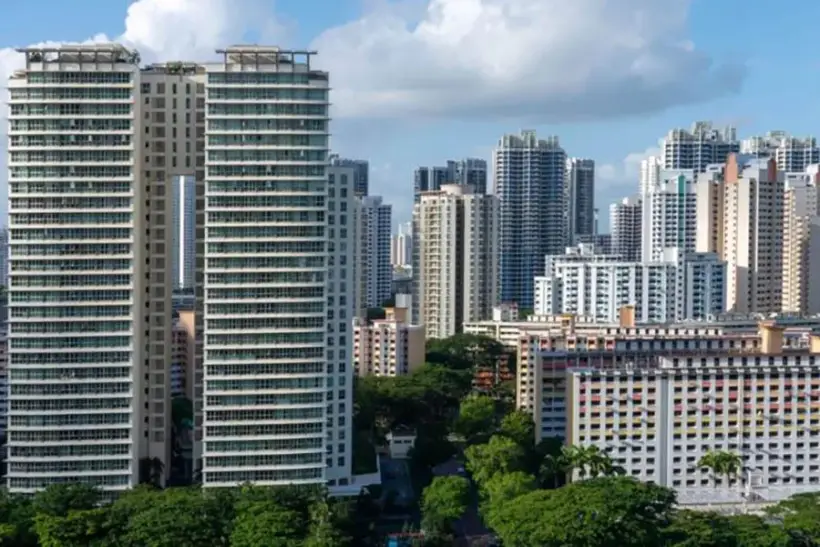
Singapore has revised rules for subsidised housing built by private developers under a government programme. The authorities aim to slow price growth, curb speculative resale of units, and improve access for first-time homebuyers, according to The Business Times.
Mandatory ownership period extended to 10 years
Singapore’s Minister for National Development Chee Hong Tat announced new measures on May 8 at a symposium on urban housing. The policy concerns executive condominiums — a hybrid housing format in Singapore that combines elements of public and private housing. These projects have been developed since 1995 by private developers on state land and are sold at lower prices due to buyer eligibility restrictions. One key condition is a household income ceiling of S$16,000 (US$12,525) per month.
The main change concerns the period during which owners are restricted from freely disposing of their property. Previously, units could be sold after five years. Under the new rules, owners will not be allowed to sell, fully rent out, or purchase additional residential property for 10 years. Full privatisation will only occur after 15 years, after which restrictions are lifted and sales to foreign buyers and companies become possible.
Subsidised payment scheme abolished
A deferred payment scheme previously allowed buyers to pay only 20% of the purchase price upfront, with the remaining 80% payable upon temporary occupation approval. Developers typically charged a 2–3% premium for this option.
This practice has now been abolished. Authorities said the move is intended to improve financial discipline among buyers and align rules with other private housing segments under construction. All new projects will follow a standard progressive payment scheme tied to construction stages.
Stronger support for first-time buyers
The share of units reserved for first-time buyers will be increased from 70% to 90%, while the priority access period will be extended from one month to two years. This is expected to improve access for Singapore citizens purchasing their first home.
In recent years, the share of first-time buyers has declined from around half of all transactions in 2020 to 30–40% in 2024–2025. More units have been purchased by repeat buyers with larger budgets from previous property sales.
Rising property prices in Singapore
The policy shift comes amid a clear overheating of the market and rapid price growth in this housing segment. Between 2021 and 2025, around 75% of such units were resold within five years after the minimum occupation period, compared to 45% in the previous period.
Over the past decade, median prices for new units rose by 120%, from S$797 (US$590) per square foot in 2015 to S$1,754 (US$1,299) in 2025. By comparison, prices for private non-central region housing rose by 96%, from S$1,150 (US$851) to S$2,252 (US$1,666) per square foot, according to PropNex. As of April 2026, median prices reached S$1,843 (US$1,364), while comparable private housing stood at S$2,278 (US$1,686).
Resale returns and investor demand
Strong resale gains have added pressure to the market. According to Cushman & Wakefield, such properties consistently rank among the top performers in percentage gains on resale, driving investor interest and accelerating price growth.
In Q1 2026, the top five most profitable transactions recorded price increases of 130–140%. In Q1 2023, the range for top deals was 83–86%.
Analysts say these units increasingly generate significant gains within a few years after the mandatory holding period, reinforcing speculative demand and adding pressure to the market. The segment was originally designed as a more affordable alternative for middle-income families, but limited supply and strong demand have turned it increasingly into an investment instrument.
Impact of the reform on investors
The reform of executive condominiums has drawn strong reactions from market participants. ERA Singapore CEO Marcus Chu said the changes shift the market towards long-term ownership, reducing the share of investment-driven buyers and reshaping demand.
Expanding the first-time buyer quota to 90% and extending the priority sales period to two years is expected to affect early-stage sales momentum, as unsold units were previously quickly absorbed by second-time buyers. Under the new rules, this mechanism is expected to weaken, potentially slowing initial sales activity.
Analysts at International Investment noted that the new measures are likely to reduce overall investor activity and dampen demand from other buyers. They also warned that developers may face greater uncertainty in assessing demand, with possible spillover effects into other housing segments and potential shifts toward overseas property markets.