







 Australia’s Spring Auctions Rise but Remain Well Below 2025
 Number of Foreigners Holding Turkish Residence Permits Exceeds 1.27 Million
 Demand from Russian Tourists for Holidays in Georgia Rises by 20–25%
 Montenegro Property Buying Costs in 2026
 Four in Ten Companies Would Not Choose Slovakia
 Gulf Countries Prepare Unified Tourist Visa
Greece allocates funds for renovation of old and vacant housing
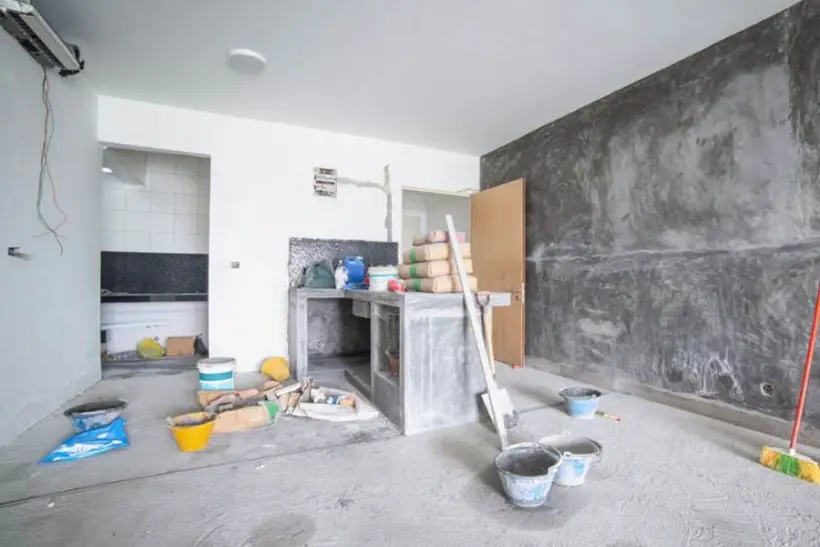
The Greek government has launched an online platform for property owners seeking state support for housing upgrades. A total of €480 million has been allocated to the programme, according to Ekathimerini. Renovation of apartments and houses is expected to increase housing supply in the country.
How to apply for housing renovation in Greece
The new “Residence Renovation” programme is designed for owners of old and vacant properties who need financial support for repairs. The total budget of the initiative amounts to €480 million.
Applications can be submitted through the online platform anakainisi.apps.gov.gr. After logging in with Taxisnet credentials, owners will be able to check eligibility, view their income category, and identify which properties meet the programme’s criteria. The eligibility certificate will be available until August 24.
In the second stage, participants will be able to submit funding applications and specify the planned works. Between 60% and 80% of the funds are intended for renovation works, while the remaining 20% to 40% will be allocated to energy-efficiency improvements.
Which properties are eligible
State support is primarily aimed at older housing stock. Eligible properties must have been built under permits issued before 31 December 1990. The maximum property size is 120 sq. m, while for families with three or more children the limit increases to 150 sq. m.
Priority is given to vacant homes that have not been used or brought to market since at least 2024. €200 million has been allocated specifically for the renovation of such properties. A further €280 million will support both vacant homes and properties currently occupied by owners.
After completion of works, owners must either live in the renovated property themselves or rent it out. Authorities expect this to bring thousands of vacant homes back into use, including inherited properties that have remained unused for years.
Housing in Athens and the Aegean islands
Separate funding is allocated for vacant properties in Greater Athens and the South Aegean islands. A total of €37.3 million will be directed to these regions.
Of this amount, €13.8 million is allocated as public expenditure for the capital region and €4 million for the South Aegean islands. An additional €19.5 million will be provided through the National Strategic Reference Framework.
Authorities expect these additional resources to accelerate the return of vacant properties to the market in areas where housing demand remains particularly high.
Reasons behind the housing renovation programme in Greece
Lack of affordable housing supply
Greece ranks among the European countries with a high level of housing stock per capita, according to IMF data. However, around 35% of the housing stock is not used as primary residences, while another 12–13% of homes remain vacant. The issue is not the total volume of housing, but the fact that a significant share is effectively inaccessible for habitation.
Many properties suffer from structural deterioration, low energy efficiency, unresolved legal issues, shared ownership structures, or require substantial renovation costs. The shortage is most acute in high-demand areas such as Athens, Thessaloniki, major tourist destinations, and economically active regions.
Economic impact
The housing shortage is also affecting Greece’s economy. In high-demand locations, property prices remain elevated and rental supply is limited, making it difficult for both local residents and tourism workers to find affordable accommodation.
According to IMF estimates, in 2025 about two in five households spent more than 40% of their income on housing costs. Another 20% spent between 30% and 40%, placing them in a financially vulnerable position. The highest risks are recorded in Attica and Central Macedonia.
Conclusion
Analysts at International Investment note that the launch of the renovation subsidy programme reflects an attempt to activate an existing but underutilised segment of the housing market. The focus is on returning inactive properties to circulation.
The effectiveness of such measures depends on reducing barriers to renovation and ensuring that upgraded properties enter long-term rental or sales markets. There is also a risk that renovated units will be redirected toward higher-yield uses rather than affordable long-term housing.
In the medium term, the programme’s impact will depend less on the size of the budget and more on the extent to which previously unused housing is integrated into a stable supply pipeline.
FAQ: Housing renovation programme in Greece
What is the programme?
A state initiative supporting the renovation and upgrading of old and vacant housing to increase market supply.
How much funding is available?
The total budget is €480 million.
Who is eligible?
Owners of properties built before 31 December 1990, including vacant homes not used or marketed since 2024.
Which properties qualify?
Homes up to 120 sq. m, or 150 sq. m for families with three or more children.
How to apply?
Applications are submitted online via anakainisi.apps.gov.gr using Taxisnet credentials.
What can the funds be used for?
60–80% for renovation works and 20–40% for energy-efficiency upgrades.
Is use of the renovated property required?
Yes. Owners must live in the property or rent it out after completion.
Are there deadlines?
Eligibility certificates are available until August 24, followed by subsequent application stages.