







 Australia’s Spring Auctions Rise but Remain Well Below 2025
 Number of Foreigners Holding Turkish Residence Permits Exceeds 1.27 Million
 Demand from Russian Tourists for Holidays in Georgia Rises by 20–25%
 Montenegro Property Buying Costs in 2026
 Four in Ten Companies Would Not Choose Slovakia
 Gulf Countries Prepare Unified Tourist Visa
Foreign real estate transactions in Armenia rise by 32%
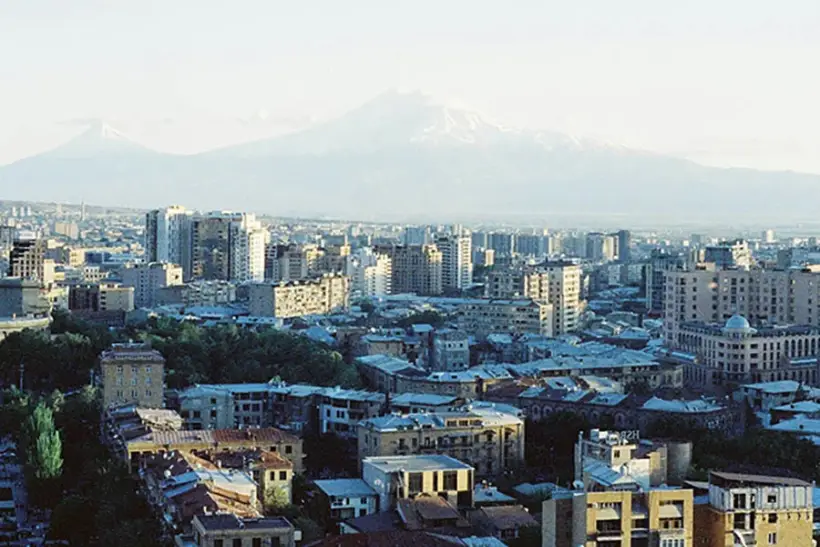
In the first quarter of 2026, foreigners in Armenia concluded 1,703 real estate transactions. This is 32.3% higher than in the same period of 2025, MIR24 reports, citing data from the State Committee of the Cadastre. Russian citizens were the leading buyers.
What foreigners are buying in Armenia in 2026
Transaction dynamics
Between January and March, foreign citizens accounted for 6.8% of total real estate transactions in Armenia. During this period, 548 sale contracts, 501 purchase contracts, and 24 mixed-format transactions were recorded. As a result, foreign nationals acquired 525 properties and sold 572.
The most active participants in Armenia’s real estate market are citizens of Russia, the United States, Iran, several European countries, and CIS states. Demand from these groups remains a key driver of transaction growth.
Apartments remain the dominant segment
The majority of purchases were concentrated in apartments, which accounted for 60.2% of all deals. They were followed by garages (13%), land plots (11%), and private houses (10.3%). Public-purpose buildings accounted for 5% of demand, while industrial properties remained marginal at 0.3%.
On the sales side, apartments also led with 39.5%, followed by land plots at 30.1% and private houses at 25.3%. Garages accounted for 3.1%, public buildings 1.6%, and industrial properties 0.3%.
Foreign transactions in 2025
In 2025, a total of 4,413 real estate transactions involving foreign citizens were recorded in Armenia. Foreign buyers acquired 2,014 properties and sold 2,524. Activity was concentrated mainly in apartments, land plots, and garages. The highest number of purchases was recorded in Yerevan (1,304), followed by Kotayk Province (221) and Lori Province (78).
Russian citizens led the market, followed by buyers from the United States and Iran. Active participation was also recorded from citizens of Syria, European countries, and CIS member states.
Popular real estate segments in Yerevan
In the first quarter of 2026, a total of 4,704 apartment sale transactions were concluded in Yerevan, marking a 67.6% increase compared to 2025. These deals accounted for 69.7% of all real estate transactions, including those involving both local residents and foreign buyers.
Garage transactions increased by 34% to 1,218, while private house deals rose by 29.5% to 334. Commercial property transactions increased by 36.6% to 250, and land plot transactions grew by 41.8% to 217. Industrial property activity declined slightly to 22 transactions (down 0.03%).
Overall, 6,745 real estate purchase and sale transactions were completed in Yerevan in the first quarter of 2026, up 55.2% year-on-year.
Housing prices in Yerevan
In the first quarter of 2026, the average market price of apartments in Yerevan increased by 3.8% and reached 482,100 drams ($1,310) per square meter. The highest prices remain concentrated in the city center.
In Kentron, the price reached 908,400 drams ($2,467), reflecting a 102% increase compared to 2025. It is followed by Arabkir at 633,400 drams ($1,721), up 0.8%, and Davitashen at 494,800 drams ($1,344), up 2.9%.
The most affordable housing remains in Nubarashen, where the average price stands at 249,900 drams ($680) per square meter, with a 5.5% annual increase.
Armenian real estate market outlook and growth factors
Deputy Director of the development company DCD and member of the Armenian Developers Association, Hovhannes Basentsyan, said the market dynamics are driven by several factors. These include the end of the mortgage income tax refund mechanism, as well as increasing market segmentation and growing professionalism among both developers and buyers. Flexible payment schemes and installment plans also add liquidity to the market.
He identified investment demand as a key driver, noting that a significant share of buyers purchase housing not for personal use but as an income-generating asset through resale or rental.
The expert believes that upward price potential in Yerevan remains intact, with no clear signs of a sustained decline. Among the main drivers he points to broader economic development and rising construction costs, both of which directly affect final housing prices.
Conclusion
Analysts at International Investment note that Armenia’s real estate market is entering a phase of steady but structurally uneven growth. The widening gap between central and peripheral districts suggests the formation of a dual-market structure within the capital.
Foreign buyers, while growing in absolute numbers, remain a supporting rather than defining force, though they contribute to liquidity in key segments, particularly apartments.
Overall, the market is increasingly shaped by investment-driven demand, construction costs, financial accessibility, and expectations of continued price growth. This reduces the likelihood of short-term price corrections while increasing sensitivity to macroeconomic shifts.