







 How Ukraine’s New-Build Housing Market Has Changed Over Four Years
 European Prime Rents Rise as Property Yields Turn Higher
 The Most Expensive Airlines in Europe in 2026
 Housing Prices in Italy Reach a Two-Year High
 Travellers Increasingly Choose Cooler Scandinavia
 Serbia Property Sales Decline as Transaction Value Rises
Thousands of Russians left without homes and still carrying mortgages due to contractors
CIAN
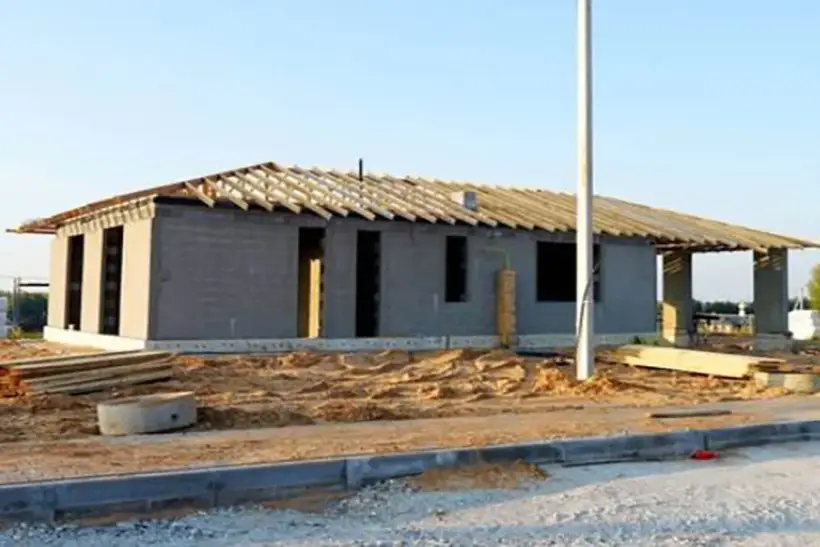
The problem of unfinished individual housing construction in Russia affects thousands of families who have taken out mortgages for the construction of private homes, RBC reports. The State Duma believes that the number of affected citizens may exceed 20,000.
Violations of construction deadlines in Russia
The Bank of Russia reported that as of the end of the first quarter of 2026, the mortgage portfolio included nearly 280,000 loan agreements for individual housing construction.
A total of 17,400 violations of construction deadlines related to lending have been recorded. Of these, about 6,000 loans were issued for the construction of homes with the involvement of contractors. It is on these loans, as noted by the Central Bank, that the main risks of unfinished work due to dishonest contractors are concentrated.
Such situations create additional difficulties for borrowers, since the absence of a completed home may lead to problems in servicing the mortgage loan. Back in June 2025, Central Bank Governor Elvira Nabiullina stated that around 5,000 borrowers who used subsidized IHC mortgages did not receive homes, as contractors either went bankrupt or ceased operations.
Statistics of IHC delays from the State Duma of the Russian Federation
A member of the State Duma Committee on Construction and Housing and Utilities, Alexander Yakubovsky, believes that the real number of affected citizens is significantly higher than the regulator’s estimates. As of June 2026, the figure may exceed 20,000 citizens. “Today it is more correct to speak not about an exact figure, but about the scale of the problem. There is no unified federal register of affected citizens in the IHC sector, so official statistics remain incomplete,” the deputy noted.
The parliamentarian recalled that back in summer 2025 he estimated the potential number of affected citizens at the same level. Over the past period, the figure has not changed significantly: some problematic situations have been resolved, while new cases continue to appear.
At the same time, the number of applications from citizens facing problems with home completion is gradually decreasing. Yakubovsky links this to a reduction in the number of dishonest contractors, stricter requirements from banks for construction companies, and increased awareness among Russians, who have become more careful when choosing a contractor.
Registers of affected citizens in the IHC sector
To assess the real scale of the problem, Alexander Yakubovsky proposed that each region create its own register of citizens affected by dishonest contractors in the IHC sector. This would make it possible to determine the number of affected citizens, the size of their credit obligations, and identify problematic contractors and banks involved in the transactions. Only after obtaining full information will it be possible to discuss mechanisms and sources of funding for possible support measures. Last year, the Ministry of Construction estimated the number of people affected by dishonest contractors in the IHC sector at 10,800.
The director of the portal “Vseostroyke.rf”, Svetlana Opryshko, also noted the absence of a unified federal register. “The IHC market today is roughly where the multi-apartment housing market was 15–20 years ago: it still has to be assembled as a system — with transparent rules, contractor control, and protection of a person taking a mortgage for the home of their dreams,” she noted. A bill on creating a federal register of affected citizens has already been introduced in the State Duma, CIAN reports, but the problem has not yet been solved.
Support for borrowers in Russia
In spring 2025, the Bank of Russia recommended that credit organizations support borrowers whose contractors did not complete construction. Measures included debt restructuring, preservation of preferential interest rates, extension of loan repayment terms, and cancellation of penalties.
In some cases, partial or full debt write-off was proposed. When making decisions, the borrower’s financial situation, social status, and availability of other suitable housing are taken into account. The Central Bank press service reported that banks actively used these mechanisms. Out of 20,000 problematic loans in 2025, around 15,000 were returned to payment schedules.
In March 2026, the regulator noted that financial organizations should independently contact affected borrowers and repeatedly offer support measures. Special attention, the Central Bank noted, should be given to socially vulnerable categories of citizens, including pensioners, participants in the special military operation, and large families. For such borrowers, banks are recommended to consider full or partial debt forgiveness if they are unable to service their credit obligations.
Construction period under subsidized mortgage increased
Last year, the Ministry of Finance of Russia increased the maximum construction period for residential houses under subsidized mortgage programs from 12 to 24 months. Previously, if a borrower did not manage to complete construction within one year, the interest rate was raised to the market level. This measure allows citizens to complete construction in more comfortable timeframes and return to the preferential rate if it was previously increased due to delays in commissioning the house.
Head and founder of the construction company APS DSK, Alexander Kalsin, noted that one of the reasons for the situation was insufficient verification of transaction participants. Some borrowers used the funds for non-target purposes such as cars, household appliances, and other purchases. As for problematic developers, many of them are already under investigation by law enforcement agencies, and some contractors were initially shell companies. Recovering funds from companies that failed to fulfill their obligations may be extremely difficult, the developer believes.
Conclusion
Svetlana Opryshko noted that existing banking risk assessment mechanisms and contractor verification services do not always allow potential problems to be identified. They mainly analyze data from arbitration courts, while most disputes in the IHC sector are considered by courts of general jurisdiction and are under the Federal Bailiff Service. Information from these sources is often not included in unified databases. As a result, a contractor with enforcement proceedings worth tens of millions of rubles and a dozen and a half affected families may still formally be considered reliable.
Analysts at International Investment note that as long as decisions of various agencies are not synchronized between banks, regions, and the federal center, such stories will continue to repeat. A systemic solution requires the creation of a unified federal register of affected citizens, improvement of contractor verification mechanisms, and the establishment of transparent rules for the IHC market. Only a comprehensive approach can reduce risks for borrowers and increase trust in private housing construction using mortgage funds.