







 How Ukraine’s New-Build Housing Market Has Changed Over Four Years
 European Prime Rents Rise as Property Yields Turn Higher
 The Most Expensive Airlines in Europe in 2026
 Housing Prices in Italy Reach a Two-Year High
 Travellers Increasingly Choose Cooler Scandinavia
 Serbia Property Sales Decline as Transaction Value Rises
New housing developments in Norway: lowest sales level in 10 years
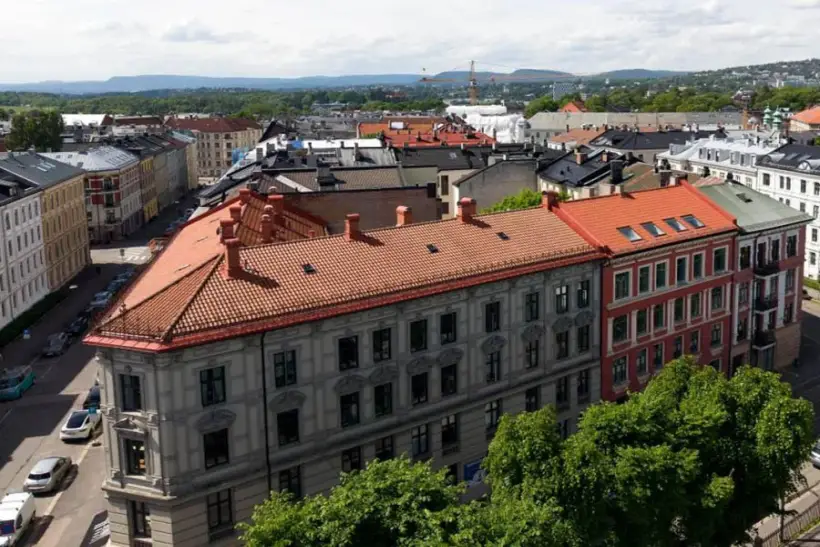
Weak demand for new housing is being recorded in Norway, Finansavisen reports. The volume of transactions has fallen to multi-year lows, while the market continues to be replenished. The gap between the pace of sales and the launch of new projects is increasing competition for buyers and slowing housing turnover.
Sales and dynamics of Norway’s real estate market
Over the past two months—from mid-April to mid-June—1,789 new residential properties were sold in Norway. This is 10% more than in the previous two-month period, but 7% lower than the annual result. The strongest dynamics were recorded in Western Norway, where sales increased by 16%. In other parts of the country, growth rates were around 10%.
The report by Samfunnsøkonomisk Analyse notes that despite short-term formal growth, the market remains in a phase of overall declining activity. This is especially clear in historical comparison: current figures correspond to the weakest June levels since 2014.
At the same time, developers continue to actively launch new projects. Over two months, sales started for 2,775 new units, while the total volume of unsold housing reached 14,195 units. Under these conditions, developers are increasingly facing longer project completion times and growing competition for limited demand.
Head of the brokerage company Privatmegleren, Grethe Meier, noted that sellers are being forced to lower price expectations, especially in Oslo. Additional pressure on the market comes from weak purchasing power among some buyers. An important factor for Norway’s real estate market has been the increase in the key interest rate to 4.25% in May. A further increase of 0.25 percentage points is expected after the summer period. This negatively affects prices and reduces activity.
How much new housing costs in Norway
The average price of new housing in Norway has reached NOK 85,500 (€7,570), an increase of 11% compared with last year. The highest price level remains in Eastern Norway — NOK 93,200 (€8,250). In the south, the lowest level is recorded — around NOK 67,400 (€5,962). At the same time, price growth amid declining annual sales indicates an imbalance between housing costs and purchasing power.
The Norwegian central bank, Norges Bank, has lowered its expectations for housing price growth from 4% to 3.5% this year. The outlook has also become more moderate further ahead: from 6.1% to 4.4% in 2027 and from 7.1% to 6.5% in 2028.
At the same time, Managing Director of the real estate industry organization Eiendom Norge, Henning Lauridsen, believes that housing prices in Norway will rise by around 6% in 2026. He noted that the secondary housing market remains active, although statistics are partly distorted by calendar effects and a high base from last year.
Norway’s rental housing market: investors are leaving
The Norwegian Real Estate Brokers’ Federation, Norges Eiendomsmeglerforbund, notes that rising interest rates and an increase in supply for sale are also creating pressure in the rental market. In Oslo and other cities, rents remain at historically high levels due to a reduced supply of available housing, which further strengthens the overall market imbalance.
Changes in tax regulations have led some investors to start selling rental housing that has lost tax benefits. This has increased the number of small apartments on the market.
Structural challenges in the industry
A record number of developer bankruptcies has been recorded in the residential and recreational real estate sector, according to news service E24. Pressure is being driven by high interest rates, rising costs, and reduced housing affordability.
Additional challenges are noted by Dagsavisen, linking the downturn in the construction sector to a weak ski season and weather conditions last winter—warm weather and a lack of snow reduced demand for holiday properties. In 2021, prices for such properties rose to 16.5%, but this was followed by a decline in activity. At present, sales in new projects in this segment have effectively stopped, and some developers have left the market.
Conclusion
Analysts at International Investment note that Norway’s real estate market is entering a period of structural restructuring. High interest rates, reduced mortgage affordability, and changes in tax conditions have weakened investment demand and increased the time required to complete new projects. At the same time, developers continue to bring housing to the market, leading to an accumulation of properties and stronger competition. Diverging assessments of price dynamics indicate ongoing uncertainty.
At the same time, it is important to consider Norway’s high income levels, strong public finances, low unemployment, and large oil and gas fund. Against this backdrop, the current challenges appear to represent a cyclical cooling rather than a systemic crisis.