







 Hong Kong Home Prices End 13-Month Rally
 Hot Summer Boosts UK Domestic Tourism
 Manila Condo Inventory Hits Record as Values Weaken
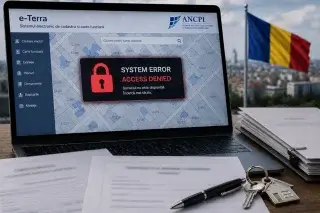 Cyberattack Paralyzes Real Estate Transactions in Romania
 Short-Term Rental Rates in Greece Rise to €200 per Night
 Asia-Pacific Property Investment Hits Record $92.5 Billion
Spain’s Supreme Court Allows Utility Cutoffs for Illegal Occupants

Spain’s Supreme Court has allowed property owners to cut off utility services in illegally occupied homes. Suspending water, electricity, or gas supplies in such cases is no longer considered a crime of coercion, according to the Roca Junyent legal portal.
A Family Dispute Changed Judicial Practice in Spain
The case originated from a conflict during divorce proceedings. After the separation, a man disconnected electricity in the apartment without prior notice. His wife lived without power for several days. Criminal Court No. 3 in Vigo found the former husband guilty of coercion. The decision was later upheld by the Provincial Court of Pontevedra.
When reviewing the appeal, Spain’s Supreme Court used the case to establish a general position on situations involving the termination of utility services. Ruling No. 426/2026 of June 24, with Supreme Court Criminal Chamber President Andrés Martínez Arrieta as the reporting judge, became the basis for new judicial practice in cases involving the suspension of utilities in illegally occupied properties.
Ten judges supported the court’s position. Four issued a dissenting opinion, arguing that the appeal should have been fully accepted and the conviction overturned. In their view, the concept of violence had been interpreted too broadly to apply Article 172 of Spain’s Criminal Code.
The judges who disagreed with the majority stressed that terminating an electricity contract cannot automatically be considered an act of interference with property under criminal law. Traditionally, the concept of vis in rebus refers to physical actions affecting property, such as breaking a lock, damaging a door, smashing a window, or tampering with a meter.
When Utility Cutoffs Are Allowed in Spain
Spain’s Supreme Court ruled that illegal occupation of a property differs from situations where a person has a legal right to use the home. If an occupant has no lawful grounds to remain in the apartment, the owner is not required to continue paying utility expenses.
The court relied on three arguments. First, a coercion offense requires actions to be carried out without authorization. The Supreme Court noted that owners have the right to manage utility contracts registered in their name.
The law does not require property owners to continue paying for water, electricity, or gas for someone using a home without any legal entitlement. The court also referred to the principle prohibiting unjust enrichment. According to the judges, maintaining utilities paid for by the owner could allow an occupant to benefit at the owner’s expense.
When Utility Cutoffs Can Become a Crime
The Supreme Court emphasized that utilities cannot be disconnected in every situation. If a person has a legal right to remain in the property — for example, due to a family dispute, a rental agreement, or another lawful basis — the circumstances must be assessed differently.
This was precisely the situation in the case reviewed by the court. The woman was not simply an unauthorized occupant: she had the right to remain in the family home while issues related to the divorce were being resolved. The man did not merely stop paying bills but used the disconnection to pressure his wife into leaving the property and strengthen his position in the dispute. The court considered these actions a form of pressure through property — the so-called vis in rebus (“violence against things”).
The Supreme Court also noted that a civil procedure was already underway to determine the rules for using the family home. The owner could not unilaterally change the situation by disconnecting electricity.
Housing Occupations in Spain
The issue of utility cutoffs is particularly relevant in Spain due to illegal property occupations. Many owners have been forced to pay for water, electricity, and other services used by illegal occupants. According to Spain’s General Council of the Judiciary (CGPJ), courts received 460 cases related to illegal occupation of properties in the first quarter of 2026 — 22.3% fewer than during the same period in 2025. This was the lowest figure for the first quarter since records began. However, experts warn that the decline does not necessarily mean that the number of illegal occupations has decreased.
CGPJ statistics include only civil procedures aimed at recovering possession of property and do not cover criminal cases related to unlawful entry or occupation. In addition, legislative changes have affected the number of court filings. Under the new rules, owners must first attempt pre-trial negotiations before filing a claim, which has extended the timeline for resolving disputes.
Experts believe that many owners choose not to go to court because of the complexity and length of legal proceedings. Instead, they look for alternative ways to recover their properties — from negotiations with occupants to paying compensation for voluntary departure.
Spain’s Housing Market May Face Further Regulatory Tightening
International Investment analysts note that previously decisions on whether utility services could be disconnected in illegally occupied homes were largely made at the regional and municipal level. The Supreme Court ruling has a broader impact because it establishes a unified approach across the country and strengthens the position of property owners.
For Spain, this represents a significant shift in judicial practice. Previously, many regulations were perceived as being primarily focused on protecting illegal occupants. Property owners were often required to continue covering utility costs, while attempts to intervene independently could create additional legal risks.
The new court position reflects a gradual move toward a more balanced approach to housing disputes. In recent years, Spain has already introduced measures aimed at tightening rules on illegal occupations, although they have not addressed all problematic aspects of the issue.
The occupation of properties remains one of the factors affecting investors’ perception of the Spanish real estate market. Pressure on authorities to strengthen property rights protection is likely to continue. However, the timeline for creating a fully effective system that provides a fast and predictable mechanism for recovering property remains uncertain.