







 Hot Summer Boosts UK Domestic Tourism
 Manila Condo Inventory Hits Record as Values Weaken
 Cyberattack Paralyzes Real Estate Transactions in Romania
 Short-Term Rental Rates in Greece Rise to €200 per Night
 Asia-Pacific Property Investment Hits Record $92.5 Billion
 Scandinavian Prefab Housing Market Seen Reaching $7.9 Billion
Hong Kong Home Prices End 13-Month Rally
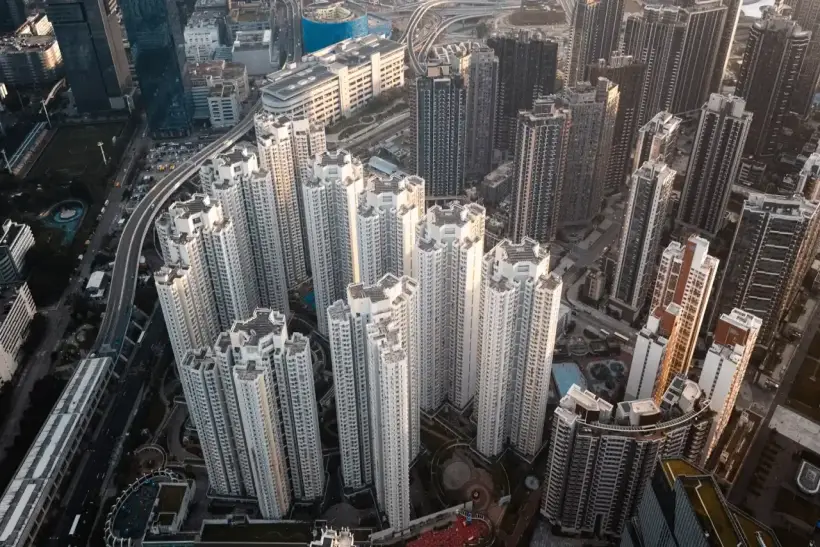
Hong Kong private home prices declined in July 2026 after 13 consecutive months of gains. The official index fell 0.46% from June to 321.5, but remained 7.3% higher for the first seven months of the year and 11.6% above its year-earlier level. The modest price correction coincided with a much sharper drop in registered residential transactions, while rents continued to increase to a record high.
Hong Kong home prices fall after a 13-month rally
Hong Kong’s private residential price index declined 0.46% in July to 321.5. The move ended the longest monthly winning streak since 2018, while the index remained 7.3% higher year to date and 11.6% above July 2025.
June’s increase was revised to about 0.2%. The latest series is published by the Rating and Valuation Department Hong Kong property market statistics, with the July movement also confirmed by RTHK.
The correction remains small compared with the preceding recovery. Prices have risen about 12.8% from their March 2025 trough but remain materially below the peak reached in 2021.
Smaller homes record broader price declines
Small and medium-sized flats with saleable areas below 100 square metres fell 0.46% in July, while larger properties of at least 100 square metres declined about 0.31%.
Flats between 40 and 69.9 square metres recorded the largest monthly fall at about 0.57%, while homes between 70 and 99.9 square metres declined 0.55%. Prices of flats below 40 square metres dropped 0.35%, properties between 100 and 159.9 square metres fell 0.38%, and the largest homes were broadly unchanged, according to Hong Kong Commercial Daily Hong Kong housing price index details.
The pattern points to a broad moderation rather than a correction concentrated in one particular segment.
Hong Kong residential registrations drop more than 40%
The change in transaction activity was much more pronounced than the move in prices. The Land Registry received sale and purchase agreements involving 4,462 residential units in July, down 41.7% from June and 22.6% from a year earlier.
The total consideration of residential agreements fell 44.6% month on month to HK$41.9 billion and was 9.6% lower than in July 2025. Across all building types, 6,715 agreements worth HK$51.7 billion were received for registration.
There is an important methodological caveat. Documents may be lodged up to 30 days after a transaction, meaning monthly registration figures generally reflect property deals completed in the preceding month.
The 41.7% decline should therefore not be interpreted as an instantaneous collapse in July demand. It nevertheless shows a significant loss of momentum following a very active period.
June provides a sharp contrast
In June, 7,650 residential sale and purchase agreements were received for registration, up 7.2% from May and 28.5% from a year earlier. Their total consideration reached HK$75.6 billion, rising 15.3% month on month and 23.8% year on year.
Across all property types, June recorded 9,434 agreements worth HK$82.8 billion.
July’s percentage declines therefore came off an unusually strong base.
Hong Kong property had a strong first half
The broader property market remained active during the first six months of 2026. The Land Registry received 49,955 sale and purchase agreements across all building types, 35.6% more than in the first half of 2025 and 13.9% more than in the previous six months.
Their total consideration reached HK$410.29 billion, an increase of 48.1% year on year and 21.7% compared with the second half of 2025. These are market-wide figures rather than residential-only data, but they underline the strength of the broader recovery before the July slowdown. The July figures therefore currently look more like a sharp pause after a strong first half than proof of a renewed property downturn.
Mainland Chinese buyers remain a major source of demand
Mainland Chinese purchasers played an important role in the recovery. They accounted for about half of first-hand residential sales by value in the three months through March 2026.
Bloomberg linked the subsequent cooling partly to a stock-market correction and tighter mainland scrutiny of outbound capital. Centaline Property also expects overall property sales to weaken further as buyers become more cautious.
That exposure means changes in cross-border capital rules can quickly affect the primary and high-end residential markets.
Mainland buyers dominate parts of the luxury market
The concentration is particularly strong in luxury property. Mainland purchasers accounted for roughly half of transactions above HK$100 million during the second quarter and represented an estimated 60–70% of primary luxury-market activity.
Luxury transaction numbers nevertheless fell from 70 in the first quarter to 48 in the second, while total consideration declined from HK$12.56 billion to HK$8.76 billion. At the same time, CBRE’s luxury residential index rose about 2% during the quarter and 3.9% year to date.
The segment therefore combines limited supply and resilient pricing with relatively volatile transaction volumes.
Hong Kong rents reach another record
The sales and rental markets moved in opposite directions in July. While home prices fell, the private residential rental index increased about 0.8% to a record 207.4.
Rents have now risen for nine consecutive months. The index is about 3.4% higher for the first seven months of 2026 and roughly 5.1% above its year-earlier level.
For investors, the divergence is important. If asset prices stabilise while rents continue rising, gross rental yields can gradually improve, although actual returns remain dependent on financing, taxation, maintenance costs and vacancy.
A large housing pipeline limits price acceleration
Hong Kong still has a substantial pipeline of new private homes. At the end of March, the government estimated that about 101,000 first-hand private flats could become available over the following three to four years.
The estimate covers unsold completed units, flats under construction but not yet sold and homes on disposed sites where construction can begin. The pipeline declined by about 3,000 units during the quarter but remained relatively high.
Affordability has also deteriorated. The government’s home-purchase affordability measure put mortgage payments for a 45-square-metre flat at around 61% of median household income in the first quarter, compared with a long-term average of 57% for 2006–2025. The calculation assumes a 70% loan-to-value mortgage with a 20-year tenor.
The government’s Hong Kong First Quarter Economic Report also notes that its residential property price index relates to secondary-market transactions.
High supply gives buyers more choice and limits developers’ ability to raise prices aggressively if sales momentum weakens.
Stamp duty rises for the most expensive homes
Hong Kong increased transaction taxes at the very top of the residential market in 2026.
From February 26, a higher ad valorem stamp-duty schedule applies to residential transactions above HK$100 million. Marginal relief applies between HK$100 million and HK$109.574 million, while the rate reaches 6.5% above HK$109.574 million. The previous top rate was 4.25%.
The government has estimated that the change affects only around 0.3% of residential property transactions.
Most earlier cooling measures were removed in 2024
The latest tax change does not represent a return to Hong Kong’s previous broad housing restrictions.
Effective February 28, 2024, the government abolished all demand-side management measures then applying to residential property, including the Special Stamp Duty, Buyer’s Stamp Duty and the higher ad valorem rate that had applied to certain transactions.
The policy change was introduced after officials concluded that the measures were no longer required under prevailing market conditions.
Policy has therefore become more targeted: broad restrictions have been removed while ultra-expensive transactions face a higher rate.
Hong Kong prices remain below the 2021 peak
Despite the recent rebound, residential values remain well below their previous high. Hong Kong home prices rose about 3.3% in 2025, recording their first annual gain since 2021 after having fallen nearly 30% from the peak.
The July 2026 index remains roughly one-fifth below the September 2021 record. Reuters linked the earlier downturn to higher mortgage rates, weaker economic conditions and soft demand, while lower borrowing costs and declining inventory helped improve sentiment in 2025. Hong Kong has therefore recovered sharply from its recent trough without returning to the nominal highs of the low-interest-rate era.
Hong Kong housing moves into a consolidation phase
After a 7.3% rise in only seven months, further price gains are becoming harder to sustain. Record rents, underlying housing demand and mainland buyer activity provide support. High affordability pressures, a substantial new-home pipeline, financial-market volatility and uncertainty around outbound mainland capital work in the opposite direction.
CBRE’s Eddie Kwok expects limited near-term upside following the strong year-to-date gains and sees the residential market moving into a consolidation phase, with new-home transaction volumes likely to weaken during the second half of 2026.
A single 0.46% monthly decline is not sufficient evidence of a renewed down-cycle. Several months of falling prices combined with sustained weakness in demand and rents would be needed to establish a clearer reversal.
As International Investment experts report, the most important signal in July is not the 0.46% price decline on its own but the widening divergence between the ownership and rental markets. Residential agreements received for registration fell by more than 40% from June while rents reached another record. That suggests the underlying need for housing remains strong even as buyers become more cautious about committing capital. For investors, performance is increasingly segment-specific: rising rents support income-producing residential assets, while new developments and ultra-prime homes remain more exposed to mainland capital flows and regulatory changes. After a 7.3% price increase in seven months, some consolidation appears natural, while a pipeline of around 101,000 potential new flats limits the case for expecting the same pace of appreciation during the remainder of the year.