







 Cyberattack Paralyzes Real Estate Transactions in Romania
 Short-Term Rental Rates in Greece Rise to €200 per Night
 Asia-Pacific Property Investment Hits Record $92.5 Billion
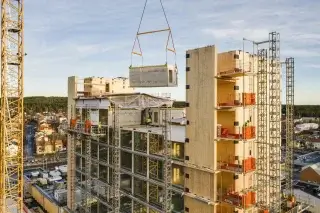 Scandinavian Prefab Housing Market Seen Reaching $7.9 Billion
 Denmark Sets First-Half Tourism Record as Germans Lead
 Drought Dries Bärenschützklamm Waterfalls in Austria
Manila Condo Inventory Hits Record as Values Weaken

Metro Manila’s residential market showed signs of demand stabilisation in the second quarter of 2026, but excess supply continues to weigh on property values. JLL recorded positive absorption, a marginal improvement in vacancy and modest rental growth while capital values declined. At the same time, Leechiu Property Consultants estimates that unsold condominium inventory reached a record 82,900 units, equivalent to almost three years of supply at the current sales pace.
Manila residential absorption remains positive
Manila’s residential market did not move into a broad contraction during the second quarter. JLL recorded positive absorption, stable market activity and a marginal improvement in vacancy. Rental rates continued to post modest growth while capital values declined.
Absorption measures the change in occupied or taken-up housing after units returning to the market are taken into account. A positive figure indicates that current demand is still absorbing part of the available stock.
The divergence between rents and capital values is important. Demand for the use of residential space can remain relatively stable even while investors and buyers become less willing to pay higher prices for the underlying asset.
Such conditions are typical of a market carrying substantial inventory. Units continue to find occupants, but owners and developers face stronger competition on price, payment terms and project quality.
Unsold condominium inventory reaches 82,900 units
The greatest pressure remains on the primary market. Metro Manila’s unsold condominium inventory reached a record 82,900 units in Q2 2026, the highest level since Leechiu Property Consultants began tracking the market in 2016.
Sales have not stopped. Around 7,255 units were taken up in the second quarter, while first-half absorption reached approximately 14,500 units, 6% more than a year earlier. Developers launched about 4,900 units during the six-month period, an increase of 18%.
At the current sales pace, existing inventory represents approximately 34 months of supply compared with Leechiu’s historical benchmark of about 12 months. The consultancy outlined the trend in its first-half residential market assessment.
The record inventory therefore does not mean buyers have disappeared. The problem is that new launches, returned units and cancellations continue to replenish supply and prevent a faster reduction in outstanding stock.
Buyers shift to completed units
High inventory is also changing transaction patterns. Ready-for-occupancy homes accounted for 72% of sales in the second quarter, up from 52% in Q1.
The shift gives buyers more certainty. A completed unit can be inspected, occupied or rented immediately, while developers benefit by releasing capital tied up in finished projects.
Discounts, extended instalment plans and government-backed financing have helped support this segment. Manila Bulletin reported the shift toward completed stock as developers focused more heavily on end-users.
The trend creates additional pressure in the secondary market. Individual owners must compete with developers able to offer financing, reduced upfront payments and promotional terms.
Residential vacancy may reach a record in 2026
Colliers uses a different methodology from Leechiu and its vacancy estimates should not be treated as the same measure as unsold inventory.
The consultancy has forecast Metro Manila residential vacancy rising to a record 25.6% by the end of 2026. The Bay Area faces the most severe imbalance, with vacancy expected to approach 60%.
Almost 13,000 new condominium units are expected to be completed across Metro Manila in 2026, nearly twice the previous year’s level. Colliers also expects rents to remain broadly flat and capital-value recovery to be delayed by higher financing costs, inflation and weaker buyer confidence. The outlook was set out in the firm’s 2026 residential market report.
High vacancy is particularly important for investors relying on rental income. More competing units increase the risk of extended vacancy periods and reduce landlords’ ability to raise rents.
Manila Bay remains the weakest submarket
Oversupply is distributed unevenly across the capital. The Bay Area has been particularly exposed because a large part of its condominium stock was originally developed around demand from foreign workers and businesses linked to Philippine offshore gaming operations.
As that demand contracted, the district was left with substantial competing inventory. Metropolitan averages therefore provide limited guidance for an individual property: an established business district can perform very differently from an area carrying large amounts of similar stock.
Rental figures show the same divergence. GMA News, citing Leechiu data, reported that average Makati rents remained about 18% below pre-pandemic levels at PHP887 per square metre per month. Ortigas and Mandaluyong were about 25% below previous levels, Alabang and Muntinlupa about 42% lower, and the Bay Area 59% lower.
Bonifacio Global City was considerably more resilient, with average rents of about PHP1,105 per square metre and broadly back to pre-pandemic levels.
Affordable housing supports current demand
Another divide exists between affordable housing and more expensive condominium stock. Residential demand remains present in the Philippines, but it is increasingly concentrated in price brackets that reflect actual household purchasing power.
Colliers found that the early-2026 rebound in preselling activity was led largely by economic and affordable projects, supported by developer promotions and flexible payment programmes, particularly for completed inventory.
This explains an apparent contradiction in the Philippine housing market: the country can face a structural shortage of affordable homes while Metro Manila simultaneously carries tens of thousands of unsold condominiums.
The two problems involve different products. A household needing a home may still be unable to afford a mid-market or premium high-rise unit even when thousands of such units remain available.
Philippine economic growth slows sharply
The weaker economic backdrop adds another constraint. Philippine gross domestic product expanded by only 2.8% year on year in the first quarter of 2026, a figure the national statistics agency confirmed in August.
Household consumption increased 3%, while gross capital formation declined 3.3%. Services grew 4.5%, while industry and agriculture posted slight contractions. The figures were published by the Philippine Statistics Authority.
For residential property, slower growth matters primarily through household purchasing power. Housing demand can remain structurally strong while actual transactions weaken because buyers cannot afford the down payment or long-term mortgage obligations.
The Philippine central bank raises its rate to 4.75%
Housing finance has also become more expensive. On 18 June, the central bank raised its target reverse repurchase rate by 25 basis points to 4.75%. The rate remained at that level in August.
The central bank cited a worsening inflation outlook, higher global oil and non-oil prices and peso depreciation. These factors raised expected inflation and prompted tighter monetary policy, according to the Bangko Sentral ng Pilipinas.
The policy rate is not the same as the mortgage rate ultimately paid by a homebuyer, but it influences the overall cost of credit. More expensive bank financing can delay purchases and make developer instalment programmes relatively more attractive.
Pag-IBIG raises the maximum home loan to PHP10 million
The government is simultaneously trying to expand access to housing finance. Pag-IBIG Fund increased its maximum home loan amount to PHP10 million per borrower.
Eligible socialised housing borrowers can access a subsidised 3% rate, while promotional rates of 4.5% and 5.75% apply to higher-priced housing categories under the 2026 programme. Some promotional rates are fixed for the first three years and are available through the end of the year. The terms were announced by the Philippine Presidential Communications Office.
The higher ceiling is particularly relevant in Metro Manila, where a significant share of completed inventory sits in the middle-income price range. It expands the number of units that can potentially be purchased through lower-cost long-term financing.
Financing support alone cannot eliminate the structural mismatch. If property prices remain well above the purchasing power of most households, a larger loan ceiling does not make the entire unsold inventory affordable.
Demand is gradually spreading beyond Metro Manila
Metro Manila condominiums also face greater competition from residential projects outside the capital. Buyers are increasingly considering house-and-lot and land developments in Cavite, Laguna, Pampanga and other emerging locations.
Lower land costs allow households to obtain more space for a similar budget, while new highways and regional business centres reduce the need for some families to live close to Manila’s central districts.
The trend does not represent a mass departure from the capital, but it gives homebuyers another alternative to a small high-rise apartment, particularly when they do not need to commute daily.
Lower capital values may improve yields, but not automatically
For investors, one of JLL’s most important signals is the combination of declining capital values and modest rental growth.
Mathematically, this can improve gross rental yields for new purchasers. If the acquisition price falls while rent is stable, annual rental income represents a larger percentage of the purchase price.
Actual returns are more complicated. Vacancy periods, condominium association dues, taxes, maintenance, management fees and tenant incentives can materially reduce net income.
A discounted unit in an oversupplied district can therefore generate a weaker return than a more expensive apartment in a location with consistent occupier demand.
Manila is becoming more favourable to buyers
Record inventory is strengthening buyers’ negotiating position. Developers need to reduce completed stock, capital values are under pressure and ready-for-occupancy projects are competing for a finite pool of customers.
That creates greater scope for discounts, longer payment schedules and other incentives. Buyers with cash or pre-approved financing have particularly strong bargaining power.
It would still be misleading to describe Manila as one uniformly falling market. The gap between locations is widening: Bonifacio Global City and selected Makati developments remain significantly more resilient than districts carrying large quantities of competing stock.
As International Investment experts report, Manila’s residential market is not undergoing a classic collapse but a serious mismatch between the structure of supply and the purchasing power of actual buyers. JLL’s positive absorption and marginal vacancy improvement show that occupier and buyer demand remains present, but Leechiu’s record 82,900-unit unsold inventory is likely to restrain broad price appreciation. For investors, the principal risk is no longer Metro Manila as a single market but the individual building and district: high local vacancy, competition from discounted developer inventory and weak rents can erase the advantage of a lower purchase price.