







 China Nears a Decision on Fresh Stimulus
 Fines for Illegal Rentals in Spain Reach €800,000
 Australia’s Spring Auctions Rise but Remain Well Below 2025
 Number of Foreigners Holding Turkish Residence Permits Exceeds 1.27 Million
 Demand from Russian Tourists for Holidays in Georgia Rises by 20–25%
 Montenegro Property Buying Costs in 2026
New-Build Home Prices in Russia Rise 34% in Three Years
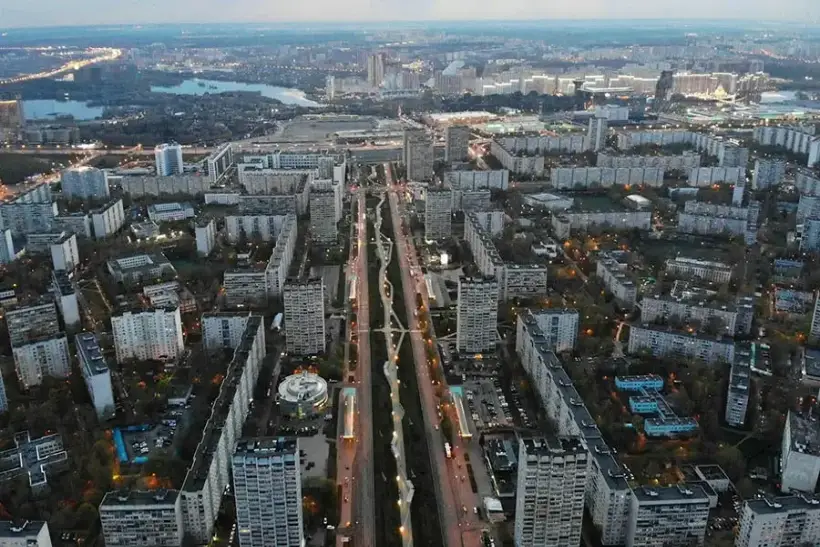
The average price per square meter on Russia’s primary housing market has risen by 34.3% over the past three years to RUB 161,700 ($1,940), while in Moscow properties priced below RUB 300,000 ($3,600) per sq. m have virtually disappeared. Experts cite expensive borrowing, higher construction costs and a shrinking number of budget projects among the main reasons, Izvestia reports.
Only Six Lower-Priced Projects Remain in Moscow
In July 2026, the average price per square meter in new developments in “old” Moscow reached RUB 871,000 ($10,458), according to estimates by Metrium and FSK Group. In 2023, the figure stood at RUB 491,000 ($5,895), meaning it increased by 77% over the period.
Only six projects remain in the segment priced below RUB 300,000 ($3,602) per sq. m, offering 27 apartments and 44 serviced apartments. Over three years, the number of such developments has fallen 13-fold. In 2023, this category included 45 residential complexes, 31 apartment complexes and four mixed-format projects. The number of available units has dropped by about 99.5%, from 14,500 to 71.
Olga Tumaykina, Commercial Director at FSK Group, noted that Moscow’s ten most affordable residential complexes now consist entirely of completed developments. Some are cheaper than properties in districts farther from the city center because they were built when construction costs were lower.
Five of the six remaining projects belong to the mass-market segment. The minimum price stands at RUB 277,900 ($3,337) per sq. m for residential apartments and RUB 237,400 ($2,850) for serviced apartments. In the business-class segment, only one project remains below RUB 300,000 ($3,602) per sq. m — an apartment complex with an average price of RUB 257,900 ($3,096).
Prices Rise Across Russia’s Million-Plus Cities
In 2023, nine of Russia’s 16 cities with populations above 1 million had average new-build prices below RUB 120,000 ($1,441) per sq. m. By August 2026, none remained below that level, said Alexander Ivanov, Lead Analyst at the federal real estate company Etazhi.
Three years ago, only Moscow and St. Petersburg had average prices above RUB 150,000 ($1,801) per sq. m. Today, levels below that threshold remain in only a quarter of Russia’s million-plus cities, including Samara, Rostov-on-Don, Krasnoyarsk and Volgograd. Nationwide, the average price per square meter on the primary market has risen by 34.3% over three years to RUB 161,700 ($1,941).
According to the Avito Real Estate analytics center, the average asking price for new homes reached RUB 191,000 ($2,293) per sq. m in July, up 3% from June and 11% year on year.
The average stood at RUB 147,000 ($1,765) per sq. m in Rostov Region, RUB 166,000 ($1,993) in Novosibirsk Region and RUB 167,000 ($2,005) in Bashkortostan. Over the month, prices fell by 4% in Moscow and 1% in Moscow Region, while remaining unchanged in Rostov and Sverdlovsk regions and in Tatarstan.
Average Purchase Budget Reaches $116,000
In July, the average budget for purchasing a new-build apartment reached RUB 9.7 million ($116,464), up 1% from June and 4% year on year. Buyers also opted for smaller homes: the average size of purchased apartments fell by 3% to 46.1 sq. m. The average price per square meter in completed transactions rose from RUB 203,000 ($2,437) in June to RUB 211,000 ($2,533) in July.
A total of 40,700 shared-construction participation agreements were signed in July, 5% fewer than in June but more than in any month from February through May. The strongest growth in transaction numbers was recorded in Orenburg Region, up 33%, followed by Kaliningrad Region at 31%, Leningrad Region at 24%, Samara Region at 22% and Voronezh Region at 21%. St. Petersburg posted a 9% increase.
Moscow and Moscow Region, St. Petersburg and Leningrad Region, as well as Rostov Region and Krasnodar Territory led by total transaction numbers.
Dmitry Alexeyev, Managing Director for Primary Real Estate at Avito Real Estate, said the market returned to a calmer pace in July. At the same time, the number of shared-construction transactions in the first seven months of 2026 remained 2% above the level recorded in the same period of 2025.
Developers Move Away From Mass-Market Housing
Higher costs are changing the structure of supply on the primary market. A high key interest rate makes project financing more expensive, while land, logistics, fuel, engineering and social infrastructure are also becoming costlier. Dmitry Proskurin, Commercial Director at Metrium, also points to a higher tax burden.
Developers are increasingly moving away from standard mass-market housing. Denis Zhalnin, CEO of the development company Lyudi, notes that demand in this segment is weakening, prompting builders to shift toward more expensive projects that can compete more effectively with homes on the secondary market.
To attract buyers, companies are upgrading project classes and building specifications, while investing more in landscaping and social infrastructure. These expenses raise development costs and are ultimately reflected in apartment prices.
Housing Prices Outpace Incomes in Russia
New-build prices are increasingly diverging from household income growth, according to Valery Tumin, Director of Russia and CIS Markets at Fam Properties. He sees this as the main obstacle for buyers.
The gap is most pronounced in Moscow. Even in the mass-market segment, the average price has reached RUB 425,000 ($5,103) per sq. m. A 50–60 sq. m apartment now costs roughly RUB 21–26 million ($252,000–312,000), excluding renovation, furniture and transaction-related expenses.
Lower mortgage rates could reduce monthly payments but would not necessarily make housing cheaper. More affordable borrowing could instead boost demand and, with supply constrained, put additional upward pressure on prices.
Tumin believes the same trend is gradually spreading to major regional centers. Without an increase in construction volumes and real household incomes, housing affordability is unlikely to improve substantially.
Russian Housing Prices Could Rise by 8–9%
Experts do not expect a sharp jump in new-build prices in the near term. Annual growth could reach around 8–9%, although trends are likely to vary considerably between regions and individual projects. Less sought-after developments may even become cheaper.
International Investment analysts note that the shrinking supply of affordable homes has become one of the key trends in the new-build market. The process is most advanced in Moscow, but rising prices and the disappearance of budget options are already visible in other major cities. Buyers are also increasingly opting for smaller homes to keep the total purchase price within reach.
Further market dynamics will depend on the key interest rate, household incomes and the pace of new construction. Cheaper borrowing could increase transaction volumes, but if supply remains limited, stronger demand may push prices higher. Less popular projects, by contrast, could see price corrections.
For investors, differences between market segments are becoming increasingly important. Average figures for a city or the country no longer provide a reliable indication of the prospects for an individual property. With buyer budgets constrained, the most expensive units may struggle to maintain previous sales rates, while smaller apartments with lower total prices remain accessible to a broader group of buyers. Under these conditions, investment potential increasingly depends on how closely a property’s price matches actual market demand.