







 Covivio Hotels Revenue Grows 4.7% as European Markets Split
 Lithuanian Apartment Prices Accelerate Across Major Cities
 Georgia's Tourism Revenue Hits Record High
 Norway's Sovereign Fund Commits €1.5bn to European Warehouses
 Market Rout of October 2026: Can Branded Hotels Protect Capital?
 Residential Property Prices in Tbilisi Rise by 5.9% Year-on-Year
Student housing no longer guarantees rent growth
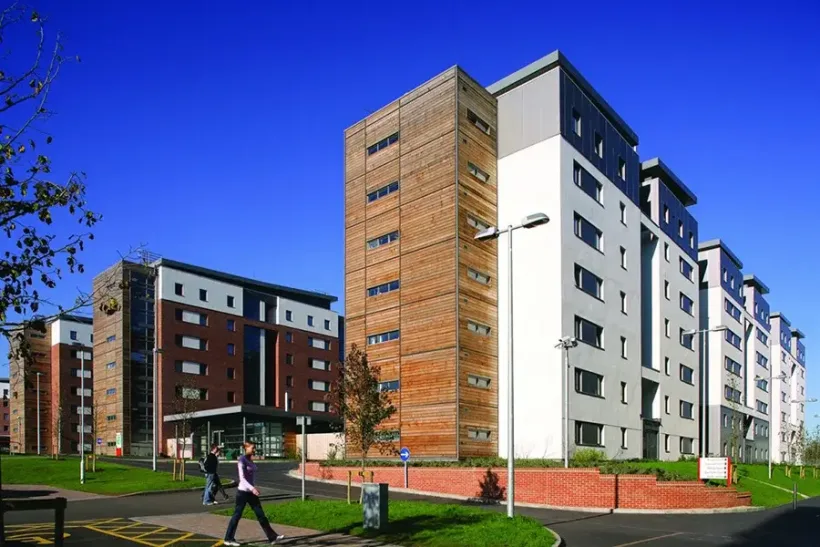
European student housing has long been treated as one of real estate's more defensive sectors. University populations expanded, international enrolment grew and purpose-built rooms remained scarce. In autumn 2026, Europe's most mature market showed that this formula no longer works automatically.
Unite Students, the UK's largest student accommodation operator, reported a 0.3% decline in annual rents for the 2026/27 academic year. Occupancy nevertheless increased to 95.6%, while like-for-like rental income rose 0.6% because more beds were filled. The Times described the rent decline as Unite's first this century outside the 2020 pandemic year.
The important signal is not the size of the decline. The portfolio is still almost fully occupied. The change is that targeted price reductions were needed in markets where supply has become too large relative to price-sensitive demand. Unite is concentrating capital around stronger universities while disposing of less strategic assets.
That matters for PBSA across Europe. Structural shortages remain severe in many countries, but national undersupply is no longer enough to justify an investment. City-level supply, university strength, price positioning and exposure to international students matter increasingly.
The UK is showing the limits of rent growth
Unite sold 95.6% of its beds for 2026/27, compared with 95.3% a year earlier. Like-for-like income grew 0.6%, but annual rents fell 0.3%.
This is not a collapse in demand. It is evidence that operators can no longer raise rents uniformly across markets. Unite had expected 1–2% rental growth as recently as July before shifting toward targeted pricing adjustments.
The higher-priced segment looks more exposed. A lower share of Chinese students and a changing mix of international demand from India, Pakistan and Nigeria has increased price sensitivity, while some domestic students are choosing to live at home and commute.
|
Market |
Shortage / occupancy |
Main driver |
Main risk |
|
UK |
Unite 95.6%; local oversupply |
strong universities |
pricing and international demand |
|
Spain |
>528k bed shortage; ~95.6% occupancy |
growing student base |
high-priced new supply |
|
Germany |
shortage of affordable rooms |
420k international students |
affordability ceiling |
|
Italy |
PBSA provision ~4% |
international demand |
rapid supply expansion |
|
Austria |
more mature market |
Vienna and international demand |
housing cost pressure |
Spain still has a large structural shortage
Spain ended 2025 with 118,762 operational student beds, 62% more than a decade earlier. Savills still estimates a shortage of more than 528,000 beds. Potential accommodation demand is close to 650,000 students, while specialised provision remains around 8%.
Modern residences report winter occupancy around 95.6%. Investment also remains strong: PBSA transactions exceeded €1.8 billion in 2025, making Spain Europe's second-largest market after the UK. Around €660 million traded in the first half of 2026.
The risk is changing. It is less about whether students exist and more about whether new projects are affordable. A national shortage does not guarantee full occupancy for every high-priced development.
Germany's shortage is mainly about affordability
Germany continues to attract more international students. DAAD estimated around 420,000 international students and doctoral candidates in the 2025/26 winter semester, while first-time international enrolments rose 9% to around 99,000.
Housing is a major constraint. Seventy-one per cent of universities in the DAAD survey described the limited availability of affordable accommodation as an important obstacle. Students spend around €489 a month on housing on average. A room in a student services residence averages about €280, while a shared-flat room in Munich can cost around €790.
Germany therefore offers deep demand, but not unlimited willingness to pay for premium PBSA.
Italy still has a shortage, but supply is expanding quickly
Italy has around 2 million students, 20% more than a decade ago. Student accommodation covers only 4.9% of the student base, falling to about 4% for PBSA alone. Investment reached roughly €520 million in 2025, up 63%.
Milan, Rome, Turin, Bologna and Padua remain important development markets, particularly for international students seeking furnished accommodation.
Public policy is also changing supply. By September 2026, Italy's university housing programme had activated more than 63,200 new places, exceeding the PNRR target. Around 33,000 have already been created and another 30,000 are expected to become available in 2027. Some of the new beds must be priced at least 15% below average market levels.
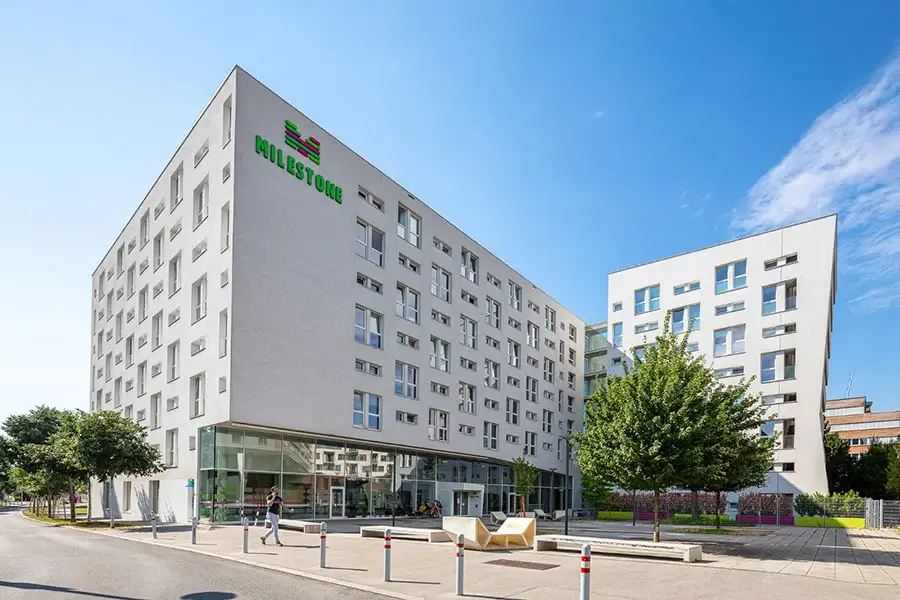
Austria highlights the affordability ceiling
Austria offers a different warning. Student housing costs reached an average €586 a month in the 2025 student social survey. Housing costs were 51% higher than in 2015, while dormitory costs had risen 61%.
Students now spend around 38% of their budgets on housing. In Vienna, commercial PBSA competes with a long-established non-profit dormitory sector as well as the private rental market. That makes affordability a direct constraint on premium products.
Europe still has a shortage
CBRE estimates European PBSA stock will grow by around 2.2% a year through 2028, with the strongest supply growth in Southern Europe. That remains below the expected increase in international student demand.
The UK shows why the headline shortage needs to be treated carefully. Structural undersupply can coexist with local oversupply, and strong student numbers can coexist with limited ability to absorb higher rents.
International students are the key variable
International students are particularly important for PBSA because they often arrive without local housing networks and value furnished rooms, included utilities and simple contracts.
Changes in this group therefore affect premium residences quickly. The UK is already seeing this effect. Spain, Germany and Italy are still benefiting from international demand, but visa policy, tuition costs, exchange rates and living expenses can change the picture quickly.
Shortages no longer guarantee rent growth
PBSA has not stopped being a defensive real estate sector. Spain and Italy still have large supply gaps, Germany lacks affordable rooms, and the UK's largest operator remains more than 95% occupied.
What has changed is the investment test. A university city and a national housing shortage are no longer enough. Investors need to examine international enrolment at specific universities, rents relative to alternative accommodation, development pipelines and the depth of local demand.
Unite's first average rent decline does not mark a reversal of European PBSA. It shows that a mature sector can no longer use a national shortage to hide the wrong city or the wrong price.
FAQ
Is demand for student housing falling in Europe?
Not overall. Most continental markets remain undersupplied, but some UK cities are already experiencing local oversupply in higher-priced PBSA.
Why did Unite reduce average rents?
Targeted price adjustments were used to support occupancy. Annual rents fell 0.3%, while occupancy rose to 95.6% and like-for-like income increased 0.6%.
Where is the student housing shortage strongest?
Spain and Italy remain among the least well-supplied major markets. Germany's main constraint is the lack of affordable accommodation.
Why do international students matter so much for PBSA?
They are more likely to need furnished, professionally managed accommodation and have less access to informal local rental networks. Changes in international enrolment therefore affect PBSA occupancy quickly.
Is PBSA still a defensive investment?
High occupancy and structural shortages continue to support the sector, but outcomes increasingly depend on the individual city, university and price point.