







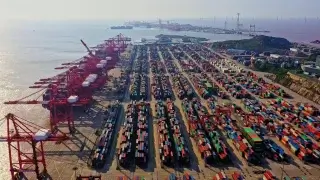
 China Nears a Decision on Fresh Stimulus
 Fines for Illegal Rentals in Spain Reach €800,000
 Australia’s Spring Auctions Rise but Remain Well Below 2025
 Number of Foreigners Holding Turkish Residence Permits Exceeds 1.27 Million
 Demand from Russian Tourists for Holidays in Georgia Rises by 20–25%
 Montenegro Property Buying Costs in 2026

Singapore’s labour market remains strong by headline measures, but restructuring pressure is rising beneath the surface. Layoffs have moved close to a three-year high, vacancies have fallen, companies are becoming more cautious in hiring and firms are reassessing headcount amid geopolitical risks, higher costs and technological change. For the city-state, this is not yet an employment crisis, but a signal that the economy is entering a phase of tougher selection for workers and business models.
Layoffs become more visible in a strong market
Singapore is used to judging its labour market through low unemployment, high employment and steady demand for skilled workers. In 2026, that picture still holds, but it has become less straightforward. The economy is still creating jobs, yet retrenchments remain elevated by recent standards and companies are more cautious about hiring plans.
Bloomberg reports that layoffs in Singapore have moved close to a three-year high as firms restructure. Official data from the Ministry of Manpower show that 3,700 workers were retrenched in the first quarter of 2026. That was almost unchanged from 3,690 in the fourth quarter of 2025.
As a share of employment, the level remains low, at 1.5 retrenched workers per 1,000 employees. But the cause matters as much as the level. Most retrenchments in the first quarter were due to business reorganisation or restructuring. That means companies are not merely reacting to a short-term downturn; they are changing cost structures, processes and teams.
Employment is growing, but much more slowly
The key feature of the current moment is that the labour market is not collapsing. Total employment in Singapore grew by 5,000 in the first quarter of 2026, extending growth for the 18th consecutive quarter since late 2021. That is a strong result for an open economy dependent on trade, finance, technology, logistics and external demand.
But the pace slowed sharply. In the fourth quarter of 2025, employment grew by 17,700. The shift from almost 18,000 new jobs to 5,000 in one quarter shows that companies have become more cautious. Employers are not stopping recruitment entirely, but they are no longer expanding teams as aggressively.
The Ministry of Manpower attributes part of the moderation to seasonal effects and a high base in the previous quarter. Even with that caveat, the change in sentiment is clear: businesses still need workers, but they are preparing for a less predictable external environment.
Retrenchments are concentrated in services
The structure of layoffs shows where the pressure is strongest. Of the 3,700 retrenchments in the first quarter of 2026, about 2,900 were in services, 700 in manufacturing and roughly 100 in construction. For Singapore, that is especially important because services form the core of the city-state’s economy.
The services sector includes finance, trade, logistics, professional services, real estate, information technology, administrative support, tourism and hospitality. These are precisely the areas where companies can more easily restructure office, management, product, operational and support functions.
Manufacturing also faces pressure, but it depends on another cycle: electronics, pharmaceuticals, semiconductors, external orders and global trade. Construction, by contrast, continues to support employment through infrastructure and development projects, although growth there has also slowed.
Restructuring becomes the word of 2026
Restructuring is not just cost cutting. In business, it means rebuilding a company: closing or merging units, changing management layers, automating processes, relocating functions, revising product lines and abandoning less profitable operations.
In 2026, this process is intensifying for several reasons. First, companies face higher capital and operating costs. Second, demand has become less predictable because of geopolitical conflicts and trade risks. Third, artificial intelligence and automation are accelerating the reassessment of office functions, analytics, customer support, development and marketing.
That means layoffs do not always signal that a company is weak. Sometimes a profitable business cuts workers to redirect budgets toward technology, new markets or narrower high-margin lines. For workers, however, the personal risk is similar: a role can disappear even inside a growing company.
AI changes the structure of labour demand
Artificial intelligence has become one of the factors reshaping Singapore’s labour market. Companies are investing heavily in digitalisation, but that does not mean employment will grow evenly. On the contrary, automation can simultaneously create shortages in some roles and displace others.
Back-office roles, support, standard analytics, parts of product and administrative work, repetitive operations, content processes and some entry-level technology jobs are under pressure. At the same time, demand is growing for specialists in data, cybersecurity, AI infrastructure, compliance, industry-specific digital solutions and transformation management.
For Singapore, this is especially sensitive because the country’s competitiveness is built on human capital. If technology rapidly changes skill requirements, the old advantage of high educational attainment is no longer enough. Continuous reskilling becomes essential.
Vacancies have fallen
The labour market is cooling not only through layoffs, but also through vacancies. Singapore statistics show that job vacancies fell from 77,700 in December 2025 to 73,300 in March 2026. That is still a high level, but the direction matters: the number of available jobs has declined.
Fewer vacancies mean that retrenched workers may have fewer quick alternatives. This is especially true for specialists whose skills overlap with functions that companies are simultaneously automating or removing from their structures.
This differs from a classic recession. Jobs exist, but they do not always match the profile of people losing work. That is why the 2026 risk is not mass unemployment, but structural mismatch between those being laid off and those being hired.
Unemployment remains low, but the signal has worsened
Singapore’s unemployment rate remains low. In March 2026, the overall rate was 2.1%, the resident rate 2.9% and the citizen rate 3.1%. These are far from crisis levels and confirm that the labour market remains resilient.
But even a small rise matters in Singapore’s context. The city-state’s economy usually reacts quickly to external changes. If companies are simultaneously cutting vacancies, slowing hiring and restructuring, official unemployment may stay low for some time even as labour-market quality deteriorates.
For workers, the main risk is not only losing a job, but finding a new one on worse terms: lower pay, a shorter contract, a different specialization or a weaker career path. This is especially relevant for mid-career professionals.
Companies are more cautious on hiring and wages
MOM data show a sharp deterioration in company expectations. The share of employers planning to hire over the next three months fell from 54.6% in February to 44.6% in March. The share of firms expecting to raise wages declined from 39.3% to 25.4%.
This is one of the most important indicators. An employer may not be laying people off today, but may already be freezing vacancies, delaying expansion, postponing pay increases and cutting bonus budgets. For the labour market, this is a softer but broader form of cooling.
If such caution persists, the pressure will gradually spread from retrenched workers to those who remain employed. Wage growth will slow, workers’ bargaining power will weaken and job switching will become less rewarding.
The economy is growing, but momentum is weakening
Singapore’s economy grew by 4.6% year-on-year in the first quarter of 2026. That is still a strong pace, especially for a developed open economy. But it is below the 5.7% growth recorded in the previous quarter, meaning momentum is fading.
For the labour market, the current growth rate is not the only issue. Expectations matter. If companies believe external demand could deteriorate because of geopolitics, trade barriers or energy shocks, they will hire more cautiously even when GDP remains positive.
Singapore is especially sensitive to the external environment. Its economy is tied to global supply chains, finance, logistics, cross-border services, technology and regional headquarters of multinational companies. Any external shock quickly feeds into corporate hiring decisions.
Geopolitics becomes a staffing factor
The Ministry of Manpower explicitly points to increased economic uncertainty caused by geopolitical tensions. For Singapore, this is not an abstract phrase. Conflicts, trade restrictions, tariffs, energy risks and logistics disruptions directly affect companies operating from the city-state across the region.
When the external environment is unstable, businesses choose flexibility. That means fewer permanent hires, more contract roles, more outsourcing, more automation and tighter cost control. Restructuring becomes a way to preserve profitability under uncertain demand.
In such an environment, even strong sectors can cut specific functions. A logistics company may grow revenue but reduce administrative staff. A technology company may invest in AI while shrinking product teams. A bank may improve efficiency by closing some support operations.
Singapore is not in crisis, but the market is tougher
It would be wrong to compare the current situation with a recession. Employment is growing, unemployment is low, vacancies remain significant and the economy is expanding. But that offers limited comfort to workers whose specific occupation or function has been hit by restructuring.
Singapore is entering not a classic jobs crisis, but a phase of reallocation. Some jobs disappear, others are created. Some skills lose value, others become scarce. Some companies cut, others hire — but with different requirements.
For the state, this phase is more difficult than an ordinary downturn. It is not enough to stimulate employment in general. Policy must help people move from vulnerable functions into growing ones, accelerate training, support mid-career workers and prevent long spells outside the labour market.
White-collar workers are more exposed
The new wave of layoffs differs from traditional industrial cycles. Increasingly, pressure is falling not only on manufacturing jobs, but also on office professionals: managers, analysts, support staff, marketers, product employees, HR, real estate, financial operations and technology workers.
This changes the social perception of risk. Many professionals used to assume that a degree, experience in a multinational company and work in services protected them from instability. Now restructuring is hitting precisely the roles that can be standardized, automated or merged.
For Singapore, where much of the population works in services and professional roles, this matters. The labour market is becoming more competitive not only for lower-skilled workers, but also for middle-class professionals.
Workers need to prove adaptability
In this environment, the key asset is not only occupation, but adaptability. A worker who can use artificial intelligence, manage data, understand business processes, work with customers and reskill quickly will be more resilient than a specialist with a narrow set of repetitive tasks.
For many, this is an uncomfortable shift. Careers used to be built through gradual accumulation of experience in one function. Now some functions may disappear faster than a person can move up the career ladder. Workers therefore need not only to upgrade skills, but also to understand which tasks in their role truly create value.
Government reskilling programmes can help, but they cannot replace individual strategy. Workers need to know which industries are growing, which skills are becoming transferable and which functions are most exposed to automation.
Employers should avoid disguising cuts as AI
One separate risk is that companies explain layoffs through artificial intelligence when the real reason is cost cutting, weak demand or management mistakes. This can undermine workers’ trust in digital transformation.
If AI is used as a convenient justification, staff begin to see technology projects as threats rather than productivity tools. That reduces their willingness to learn and adopt new systems. For Singapore, which is betting on technological competitiveness, this would be damaging.
Responsible restructuring should be transparent. Employers need to explain which functions are changing, what skills are required, what internal transfer opportunities exist and why layoffs are unavoidable. Otherwise, the labour market gets fear rather than transformation.
The government will push reskilling
Singapore’s model usually responds to structural risks through active skills policy. This includes retraining, mid-career support, learning incentives, employment assistance and employer participation in skills upgrading.
In 2026, such policy becomes even more important. If layoffs are caused by reorganisation rather than a temporary drop in demand, the old job may not return. The task is not to wait for recovery, but to move into another function or industry.
Mid-career professionals will require particular attention. Younger workers often move more quickly into new digital roles, while older workers may have more management experience but find it harder to change track. Without targeted support, this group may face longer job searches.
Singapore’s regional role remains intact
Despite the rise in layoffs, Singapore remains one of Asia’s main centers for capital, technology, logistics, finance, supply-chain management and regional headquarters. That means the labour market has not lost its fundamental appeal.
But multinational companies are increasingly reassessing which functions need to be in Singapore, and which can be automated, relocated or distributed across lower-cost jurisdictions. The high cost of labour forces the city-state to continuously prove its value.
In this logic, Singapore will win where management, trust, legal certainty, finance, regional coordination, deep expertise and high-tech functions are required. It will be vulnerable where work is standardized and can be done more cheaply elsewhere or through software systems.
The labour market enters a year of caution
The second quarter of 2026 will be an important test. MOM expects the labour market to remain tight and continue expanding, but it already warns of more cautious company plans. If external conditions worsen, the cooling could intensify.
The indicators to watch are not only unemployment. Vacancies, hiring intentions, wage expectations, re-entry into employment among retrenched workers, long job searches and sectoral layoffs will matter.
If retrenchments remain limited to restructuring at specific companies, Singapore can pass through this phase without serious social damage. If caution spreads across a wide range of industries, the labour market may soften more visibly by year-end.
Singapore faces the price of efficiency
The main conclusion is that Singapore’s layoffs reflect not economic weakness, but a change in economic requirements. Companies want to be leaner, more technological, more flexible and less vulnerable to external shocks. That raises business efficiency, but shifts part of the risk onto workers.
For a country with expensive human capital, this is a natural but painful process. Singapore cannot compete on low labour costs. It must compete on productivity, skills, management and institutional quality.
The rise in layoffs is therefore a warning. Even a strong economy no longer guarantees stability for old jobs. Stability now depends on whether workers, companies and the state can adapt faster than technology and global trade are changing.
As reported by International Investment experts, Singapore’s labour market shows a new risk model for developed Asian economies: layoffs are rising not because the economy has stopped, but because companies are accelerating restructuring. This makes the crisis less visible in headline unemployment, but more sensitive for middle-class professionals. Singapore’s main task is to turn restructuring into a transition toward more productive employment, not into a build-up of workers whose skills become obsolete faster than the market can offer them new roles.