







 China Nears a Decision on Fresh Stimulus
 Fines for Illegal Rentals in Spain Reach €800,000
 Australia’s Spring Auctions Rise but Remain Well Below 2025
 Number of Foreigners Holding Turkish Residence Permits Exceeds 1.27 Million
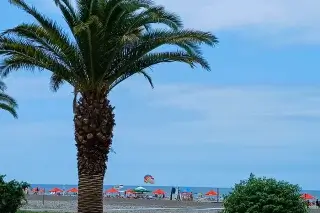 Demand from Russian Tourists for Holidays in Georgia Rises by 20–25%
 Montenegro Property Buying Costs in 2026
Lithuania Prepares New Curbs on Russians and Belarusians

Lithuania’s Foreign Ministry has proposed expanding the national sanctions regime with new restrictions affecting Russian and Belarusian citizens and organisations. The draft would deny entry to certain participants in cultural, educational, scientific and sporting activities, require a public declaration and impose additional property-purchase restrictions near military training grounds and sites important to national security. As of 5 August 2026, the amendments have not been enacted, and 1 January 2027 remains only the proposed effective date.
The Restrictions Remain a Legislative Proposal
The European Interest headline gives the impression that Lithuania has already adopted the new prohibitions. The Foreign Ministry has instead prepared amendments and submitted them for consultation.
Before entering into force, the proposal would have to complete the government process, be adopted by the Seimas and be signed by the president. It should therefore be described as a proposed expansion of Lithuania’s Law on Imposing Restrictive Measures Regarding the Military Aggression Against Ukraine.
The initiative has two separate components. The first concerns entry for specified public activities and events. The second concerns the acquisition of real estate in security-sensitive locations.
The Entry Rules Cover Specified Public Activities
The draft does not establish a blanket prohibition on Russians and Belarusians working, living or participating in society in Lithuania. It concerns individuals and representatives of organisations seeking to enter the country for public activities in education, science and higher education, culture, sport, the arts and entertainment.
Entry could be refused to people who performed activities in Ukrainian territories annexed or temporarily controlled by Russia, directly or indirectly supported Russia’s actions in the Ukraine–Russia conflict, or participated in those actions.
The grounds would also cover conduct or policies undermining Ukraine’s territorial integrity, sovereignty, independence, stability or security. Direct or indirect support for serious human-rights violations and repression against civil society or democratic forces in Russia or Belarus is listed separately.
The authorities could also apply the restriction where a person’s activities are considered a threat to democracy or the rule of law.
The proposal is therefore primarily aimed at visiting performers, athletes, educators, researchers and other invited participants. It is not formulated as an automatic ban on all Russian and Belarusian citizens already residing in Lithuania.
The Declaration Would Be Made Public
People seeking to enter Lithuania for the specified activities would have to sign a declaration condemning Russia’s actions against Ukraine.
They would also have to affirm support for the Charter of the United Nations and its principles, as well as Ukraine’s independence, sovereignty and territorial integrity within its internationally recognised borders.
The declaration would be published openly. Refusing to sign it would prevent the person from entering Lithuania for the relevant activity.
This is more specific than a general requirement to “condemn Moscow.” The draft proposes a document containing defined political and legal commitments, while refusal alone could become a sufficient ground for denying entry.
The public summary does not yet explain the declaration’s format, period of validity, verification procedure or appeal mechanism. Those details may be added to the final legislation or subsequent implementing rules.
Neutral Participants Could Still Be Admitted
Russian and Belarusian citizens for whom none of the disqualifying circumstances is established could continue participating in events in Lithuania, provided that they do not represent their country of citizenship and take part as neutral participants.
Neutral status generally means that an individual is not appearing on behalf of a state, using its official symbols or representing a government body or national organisation. The precise Lithuanian requirements have yet to be defined.
Organisers in Lithuania would be responsible for ensuring compliance. Universities, research institutions, concert venues, sports federations, cultural organisations and event promoters could therefore acquire additional screening obligations.
They may have to check a participant’s citizenship, status, previous activities and declaration. The proposal’s public description does not specify which official databases organisers would be able to use or what liability would apply if the requirements were breached.
Property Purchases Would Be Restricted Near Military Sites
The second part of the proposal concerns real estate located near military training grounds and sites important to national security.
Russian and Belarusian citizens holding Lithuanian temporary or permanent residence permits would be prevented from acquiring property in the designated areas. Residence-permit holders are the principal new category affected by this part of the draft.
The proposal contains an additional rule for Belarusian citizens. Belarusians without Lithuanian residence permits and legal entities owned by them would also be unable to acquire property within the security-sensitive zones.
The territorial restriction would not necessarily apply throughout Lithuania. Its practical reach will depend on which military, infrastructure and strategic sites are included and how the surrounding restricted areas are defined.
A Nationwide Restriction Already Applies to Russians
Russian citizens without Lithuanian temporary or permanent residence permits are already prohibited from acquiring real estate in the country. The existing measure also covers legal entities established or controlled by Russian nationals.
The law provides two principal exceptions. A Russian citizen may acquire property if they hold a Lithuanian temporary or permanent residence permit or if ownership is obtained through inheritance.
The new proposal would therefore not create the nationwide Russian restriction from the beginning. It would remove the residence-permit exception for property situated near strategic and military sites.
The Proposed Belarusian Regime Is Narrower
The existing nationwide property restriction is directed primarily at Russian citizens and entities connected to them. Belarusian citizens are not currently subject to an identical prohibition covering the whole country.
Under the draft, Belarusian acquisitions would be restricted in specified security-sensitive zones. The rule would cover both residence-permit holders and Belarusians without Lithuanian permits.
It would consequently be inaccurate to report that Lithuania plans to ban every Belarusian citizen from buying property anywhere in the country. Based on the published proposal, the restriction is location-specific.
The Restricted Zones Have Not Been Published
The most important unresolved issue for the property market is the absence of a publicly available map defining the affected areas.
The published description does not state whether the prohibition would apply within a fixed distance from a protected site, to individually listed land plots or across designated administrative areas. It also does not explain how buyers, sellers, notaries, lenders and real estate agents would access the information.
Precise geographic data will be necessary to determine whether a transaction is permitted before a deposit is paid or a preliminary agreement is signed.
The final rules will also need to address joint ownership, acquisitions through companies and contracts signed before the restrictions take effect but registered afterwards.
Existing National Measures Run Through 2027
On 23 April 2026, the Seimas extended Lithuania’s existing national restrictions until 31 December 2027. The amendments were adopted by 95 votes to one, with six abstentions.
Current measures suspend the acceptance of Schengen visa applications from Russian and Belarusian citizens except where the Lithuanian Foreign Ministry facilitates the application.
The acceptance of Russian applications for temporary residence permits is also restricted, although exceptions apply to holders of qualifying visas or residence documents issued by Lithuania or another European Union member state.
Russian citizens entering Lithuania across the European Union’s external border undergo additional individual screening. Belarusian citizens are subject to a risk assessment that may lead to a more detailed second-line border check.
Almost 62,000 Russians and Belarusians Hold Permits
As of 1 July 2026, 48,613 Belarusian citizens and 13,365 Russian citizens held valid Lithuanian residence permits. Their combined number was 61,978.
Belarusians remained the second-largest nationality among foreign residence-permit holders after Ukrainians. Russians ranked third.
Both populations had declined since the beginning of 2026. On 1 January, valid permits were held by 50,286 Belarusian and 13,723 Russian citizens. The numbers fell by 1,673 and 358 respectively over six months.
The figures show that the potential rules concern a substantial resident population. The proposed entry provisions, however, should not be interpreted as automatically applying to every residence-permit holder. The public-activity and property components use different criteria.
Security Decisions Already Number in the Thousands
Lithuanian authorities classified 1,721 Belarusian and Russian citizens as threats to national security, public order or public health during 2025.
Belarusian citizens accounted for 1,634 decisions. Authorities refused 391 first-time temporary permits, declined to renew 1,023 permits and cancelled 214 valid temporary permits.
A total of 87 Russian citizens were affected. Fourteen first-time temporary permits were refused, 28 were not renewed and 13 valid temporary permits were cancelled. Four applicants were refused first-time permanent permits, while 28 permanent permits were withdrawn.
All the affected people were also prohibited from entering Lithuania. Adult Russian and Belarusian applicants must complete a questionnaire covering their education, previous employment, military service, contacts with state institutions outside the European Union and North Atlantic Treaty Organization, and their position on Russia’s actions against Ukraine.
Latvia and Finland Have Adopted Broader Measures
In June 2025, Latvia’s parliament prohibited Russia, Belarus and their citizens from acquiring real estate anywhere in the country. The law also covers companies registered in the two states and legal entities in which Russian or Belarusian citizens own at least 25% of the capital or act as beneficial owners.
Finland introduced a different system on 15 July 2025. Its Defence Ministry can refuse real estate acquisition permits to citizens and entities connected with states conducting aggressive actions and considered capable of threatening national security. Russia and Belarus fall within the relevant category, although the Finnish framework contains exceptions and takes account of the individual buyer and property.
The Lithuanian draft is narrower than Latvia’s nationwide model. Its additional prohibition for residence-permit holders and Belarusian citizens is tied to property near security-sensitive sites rather than the country’s entire territory.
Property Transactions Would Require More Screening
If the amendments are enacted, notaries and registries will need to examine not only citizenship and residence status but also the property’s location relative to protected sites.
Transactions involving companies will require checks of controlling persons and ownership structures. Buyers may need an additional certificate or official confirmation that a property is outside a restricted zone.
The greatest uncertainty may arise where the boundaries of military or strategic sites overlap with residential areas, agricultural land or future development zones. A public digital register would reduce the risk of errors and blocked transactions.