







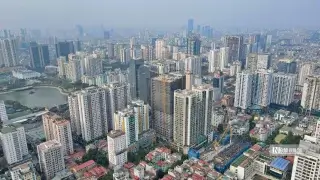
 Vietnam Mortgage Surge Pushes Homes Out of Reach
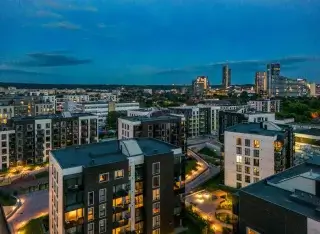 Lithuanian Apartment Prices Accelerate Across Major Cities
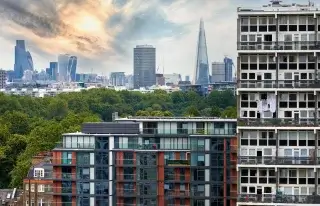 London Flats Lose Value Ahead of Leasehold Reform
 Construction of the Batumi–Sarpi Highway Begins in Georgia
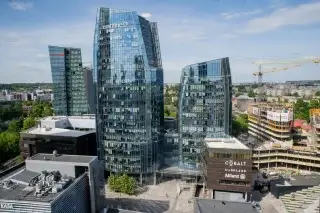 Baltic Property Investment Accelerates in 2026
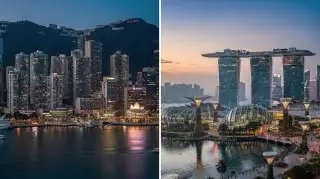 Hong Kong and Singapore Renew Their Expat Rivalry
Singapore New-Home Sales Slow Without Demand Collapse

Singapore developers sold 447 new private homes in May 2026, a 71.1% decline from April. The sharp monthly fall mainly reflected an unusually quiet launch calendar rather than a comparable withdrawal of buyers, as sales remained 43.3% above the previous year. Prime residential prices have stayed firm, but small transaction samples, heavy purchase taxes and a growing supply pipeline require caution when assessing the luxury market.
The Sales Decline Followed a Shortage of Launches
Developers sold 447 new private residential units in May, excluding Executive Condominiums, a regulated category that eventually becomes fully private housing. April sales had reached 1,548 units.
Only one major project, Hudson Place Residences, entered the market during May. The lack of new inventory pushed developer sales to their lowest level since February, but the total was still 43.3% higher than in May 2025.
The figures indicate a supply-timing effect rather than a 71% collapse in underlying demand. Singapore’s monthly primary-market data can change sharply depending on when developers open large projects for sale.
Hudson Place Generated Almost Half of May Sales
Hudson Place Residences in the Rest of Central Region sold 209 units, accounting for approximately 47% of all developer transactions during the month. Its early take-up rate reached 64%.
Almost 80% of the units sold were priced below S$2.5 million. The result suggests that buyers remain responsive when a new development combines a central-fringe location with a manageable total purchase price.
The project’s performance should not be treated as evidence that demand is equally strong across all price categories. It demonstrates resilience in a carefully priced segment rather than indiscriminate appetite for luxury housing.
Prime-Central Prices Remained High
Only 22 new private homes were sold in the Core Central Region during May. The median price nevertheless increased by 0.7% from April to about S$3,387 per square foot, equivalent to approximately S$36,500 per square metre.
A sample of 22 transactions is too small to establish that values across the entire prime market are rising. The median can shift when a few larger or more expensive units account for a significant share of the month’s sales.
The data shows that developers have not broadly reduced prime asking prices. It does not prove that every home in Marina Bay, Orchard, River Valley or Bukit Timah can be resold quickly at its advertised value.
Quarterly Data Does Not Indicate a Housing Crisis
Singapore’s official private residential price index increased by 0.9% in the first quarter of 2026 after rising 0.6% in the previous quarter.
Non-landed homes gained 1.3%, while landed-property prices fell by 0.4%. Non-landed prices increased by 0.6% in the Core Central Region, 0.8% in the Rest of Central Region and 2.2% in the Outside Central Region.
Developers launched 1,844 private homes during the quarter, down from 2,632, and sold 2,013 units, compared with 2,940 in the final quarter of 2025. The decline in transactions coincided with lower supply rather than a broad fall in values.
S$5 Million-Plus Transactions Reached a Two-Year High
Singapore recorded 188 Core Central Region residential deals priced at S$5 million or more during the first quarter. This was slightly above the 186 transactions in the previous quarter and the three-year quarterly average of 137.
Luxury new-home sales rose for a fourth consecutive quarter to 55 units, the strongest total since late 2023. Resale transactions edged down from 139 to 133.
The combined value of luxury transactions fell by 4% to S$1.7 billion. Buyers completed more high-end purchases but spent less in aggregate, indicating greater activity in the lower part of the luxury range.
Local Buyers Have Replaced Much of the Foreign Demand
Singapore citizens accounted for 89.6% of new private-home purchases in May. Permanent residents represented 8.6%, while non-resident foreign buyers accounted for only 1.8%.
The buyer mix makes the market less dependent on international capital. It also means that Singapore’s luxury segment is increasingly supported by local upgraders, affluent households and domestic investors rather than foreign purchasers alone.
Local demand can provide greater stability, but it remains sensitive to income, mortgage affordability and government cooling measures.
A 60% Tax Restricts Most Foreign Purchases
A foreigner buying Singapore residential property is generally subject to Additional Buyer’s Stamp Duty of 60% of the purchase price or market value, whichever is higher.
Singapore citizens pay no additional duty on their first home, but the rate rises to 20% for a second residential property and 30% for a third or subsequent property. Buyer’s Stamp Duty also applies, with the top marginal residential rate reaching 6%.
Qualifying nationals and permanent residents of Iceland, Liechtenstein, Norway and Switzerland, as well as United States nationals, can receive the same additional-duty treatment as Singapore citizens under applicable free-trade agreements.
The tax structure explains why May’s market was dominated by citizens and permanent residents despite Singapore’s international reputation as a wealth centre.
A Quiet Month Does Not Guarantee Discounts
Lower transaction volume gives buyers more time to compare developments, but developers do not necessarily respond by reducing headline prices.
They may provide furnishing packages, payment incentives or limited rebates while preserving the published price per square foot. This protects the recorded values of units already sold within the same project.
Negotiating room can be greater in the resale market, particularly when an owner needs liquidity or faces competition from similar unsold apartments. The scale of any discount depends on the individual seller rather than the national sales total.
The Supply Pipeline Challenges the Scarcity Argument
Approximately 55,800 private homes, including Executive Condominiums, are expected to be completed over the coming years. About 27,300 are scheduled by the end of 2028, with another 28,500 expected from 2029 onwards.
The Confirmed List of the Government Land Sales Programme for the first half of 2026 contains sites capable of delivering roughly 4,600 homes. That is 50% above the average half-yearly confirmed supply during the previous decade.
Singapore remains geographically constrained, but the government is actively releasing land to prevent a persistent shortage from producing uncontrolled price inflation.
Launch Timing Will Continue to Distort Monthly Results
Sales may remain weak during months with few debuts and then jump when a well-located project becomes available. Individual monthly comparisons will consequently remain volatile.
CBRE expects buying sentiment to stay firm in 2026 as financing conditions improve, while sales volumes may ease because fewer projects are scheduled. Private-home prices are expected to grow at a stable pace, with global economic and geopolitical risks limiting the outlook.
This will create a divided luxury market. Competitively priced developments in strong locations can sell rapidly, while large units with high total prices may remain available even when broad price indices continue to rise.
Buyers Need to Measure the Full Cost
A luxury-home decision should be based on total capital committed rather than the advertised price per square foot. Stamp duties, legal fees, mortgage interest, maintenance charges and property tax can materially alter the outcome.
Investors also need to examine achievable rent and vacancy within the specific building. Stable resale prices do not guarantee an attractive yield when purchase values rise faster than rental income.
New projects may offer modern facilities and progressive payment schedules. Completed homes allow buyers to inspect construction quality, actual service charges and an established rental market before committing.
As International Investment experts report, May’s decline does not amount to a Singapore housing crash. Developer sales fell primarily because the market lacked major launches, while annual activity remained higher. Prime prices continue to receive support from local wealth, limited central supply and disciplined developer pricing. However, 22 Core Central Region sales are insufficient evidence of a broad luxury upswing. Heavy taxes restrict foreign demand, while tens of thousands of future homes will increase competition. The most resilient assets will be projects combining strong locations with defensible total prices, rather than every property carrying a luxury label.
FAQ
Why did Singapore’s new-home sales fall in May 2026?
The main cause was the limited launch calendar. Developers sold 447 units, down 71.1% from April but 43.3% above May 2025.
Are Singapore luxury-home prices falling?
No broad decline has been recorded. The median price of new Core Central Region apartments increased by 0.7%, but only 22 units were sold.
Which project led May sales?
Hudson Place Residences sold 209 units and generated nearly 47% of all developer transactions.
Who is buying Singapore private homes?
Singapore citizens dominated May purchases with an 89.6% share. Permanent residents accounted for 8.6% and foreigners for 1.8%.
What tax do foreign buyers pay?
Most foreign purchasers pay 60% Additional Buyer’s Stamp Duty, plus regular Buyer’s Stamp Duty of up to 6% at the top marginal rate.
Do all foreign buyers pay 60%?
No. Qualifying buyers covered by certain free-trade agreements can receive the same additional-duty treatment as Singapore citizens.
Will Singapore property prices continue to rise?
Current forecasts point to gradual rather than rapid growth. Launch supply, financing conditions and the global economy will determine the outcome.
Is a slower market a good time to buy?
It offers more time to evaluate inventory and negotiate, but does not guarantee lower prices. Buyers must assess taxes, rental returns and project-specific liquidity.