







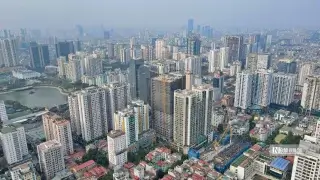
 Vietnam Mortgage Surge Pushes Homes Out of Reach
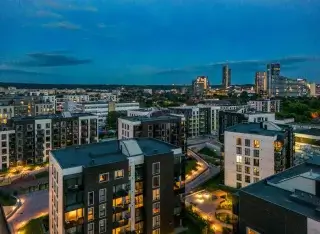 Lithuanian Apartment Prices Accelerate Across Major Cities
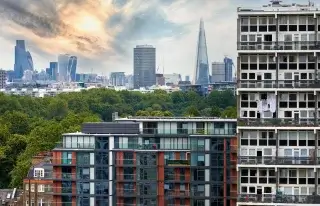 London Flats Lose Value Ahead of Leasehold Reform
 Construction of the Batumi–Sarpi Highway Begins in Georgia
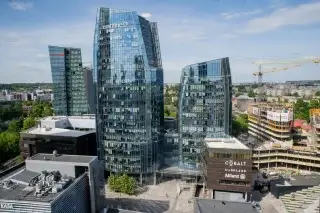 Baltic Property Investment Accelerates in 2026
 Hong Kong and Singapore Renew Their Expat Rivalry
Malaysia and Singapore Plan Faster Digital Border Clearance

Malaysia and Singapore aim to launch a new phase of digital immigration clearance and add border lanes by January 2027. The project is intended to reduce delays for hundreds of thousands of daily travellers between Johor and Singapore, although its technical specifications have not yet been released. The countries are simultaneously expanding QR-code clearance, preparing the RTS Link railway and upgrading existing checkpoint infrastructure.
Digital Border Launch Targeted for January 2027
Malaysian Prime Minister Anwar Ibrahim said on 5 July 2026 that the new digital immigration arrangements and additional lanes were expected to be ready by January.
He said the initiative would be launched with Singapore Prime Minister Lawrence Wong after the remaining technical and infrastructure work had been completed. January is therefore a target rather than an unconditional opening date.
The project is expected to improve journeys from Singapore to Johor Bahru and reduce congestion at Malaysia’s two main land gateways. The announcement did not specify the number or location of the lanes, the eligible vehicle categories or whether the digital system would be a separate platform.
It may instead represent another stage in the integration of existing biometric systems, QR-code applications and automated gates.
Anwar also stressed that the initiative was an existing government project rather than a new election campaign promise.
MyNIISe Already Processes Millions of Crossings
Malaysia’s main digital platform is the National Integrated Immigration System, or NIISe. It is being developed to replace MyIMMs, a platform that has operated for more than two decades and is no longer considered sufficient for current passenger volumes, biometric checks and data integration requirements.
The MyNIISe mobile application can generate a QR code connected to verified identity and passport records. Travellers using designated lanes present the code for digital verification instead of relying entirely on the manual scanning of individual passports.
By 28 June 2026, MyNIISe had processed approximately 19.48 million QR-code transactions at the Sultan Iskandar Building and Sultan Abu Bakar Complex in Johor.
The application had been downloaded about 2.4 million times and had 1.27 million registered users. Malaysia’s five major airports recorded another 5.59 million digital transactions.
The Sultan Iskandar Building serves the Johor Bahru–Woodlands Causeway, while the Sultan Abu Bakar Complex processes traffic using the Malaysia–Singapore Second Link.
The Wider Upgrade Will Continue Beyond January
The January target does not mean that Malaysia’s entire NIISe programme will be complete.
The Home Ministry told parliament that the overall project was 29.9% complete on 26 June 2026, slightly below the scheduled level of 31%.
Several visible components are already operating, including the mobile application, new electronic gates, advance passenger screening and digital clearance lanes in Johor. Other functions are still being developed.
The three main implementation phases run from March 2026 to March 2027, while nationwide expansion of the complete architecture is expected to continue until October 2028.
NIISe covers passport issuance, immigration control, travel passes, expatriate services and foreign-worker administration as well as physical border clearance.
Malaysia must also keep the ageing MyIMMs platform operational during the transition. The system cannot be switched off immediately without creating a risk of disruption, so the old and new platforms will run in parallel while data is migrated and tested.
Specific services at the Singapore border could therefore be launched in January while the broader national system remains under development.
The Application Is Not Yet Mandatory
Travellers do not currently need MyNIISe for every entry into Malaysia. Conventional automated gates, staffed counters and passport-based clearance remain available.
QR-code clearance is an additional option. Malaysian citizens using MyNIISe register through the government’s MyDigital ID identity platform.
The earlier MyBorderPass application also remains available during the transition. It is expected to be integrated into MyNIISe, but the authorities have not set a final date for withdrawing the older service.
Replacement of existing automated gates is also being carried out in stages.
Requirements vary by nationality and immigration status. Foreign visitors must still verify passport, visa and Malaysia Digital Arrival Card obligations before travelling.
Singapore Already Uses QR Codes at Land Checkpoints
Singapore operates its own digital-clearance system through the MyICA application.
QR-code clearance was fully implemented at the Woodlands and Tuas land checkpoints by January 2025. One code can contain the passport information of several people travelling in the same vehicle, reducing the number of separate document checks.
Singapore also uses facial and iris recognition at airports and maritime terminals. Approximately 127 million travellers cleared immigration without presenting a physical passport in 2025.
The next phase will extend automation from individuals to vehicles. Drivers and passengers in cars, motorcycles and cargo vehicles will eventually be able to complete automated clearance without leaving their vehicles.
Malaysia and Singapore use different national applications. Bilateral integration does not necessarily require one shared app; it can instead involve compatible procedures, advance data checks and coordinated lane design.
Woodlands Handles Hundreds of Thousands Daily
The Malaysia–Singapore land border is among the world’s busiest. Johor residents travel to Singapore for work, education and business, while tourism and freight add to the daily volume.
Average traffic through Woodlands Checkpoint increased by 22% in 2024, reaching 327,000 travellers a day compared with 269,000 in 2023. Single-day traffic exceeded 370,000 during the year-end holiday period.
Singapore expects average daily traffic at Woodlands to reach 400,000 by 2050.
Peak-period clearance can currently take about an hour. After the full redevelopment of the checkpoint, the authorities aim to reduce average peak travel time to 15 minutes.
The 10-to-15-year redevelopment includes additional automated facilities for cars, motorcycles and cargo vehicles.
Holiday flows are already approaching half a million travellers across both land checkpoints. More than 1.4 million people used Woodlands and Tuas between 3 and 5 April 2026, including more than 498,000 on 4 April alone.
At that scale, even a short technical failure can quickly produce long queues on both sides of the border.
New Lanes May Serve Several Projects
Anwar did not identify the facilities covered by the announcement. Several border projects are being developed on a similar timetable.
Malaysia is installing new automated gates at its existing Johor complexes. Singapore is expanding Woodlands and moving towards automated in-vehicle clearance. New immigration capacity is also being built for the RTS Link railway.
The reference to additional lanes may therefore include vehicle, bus or automated passenger channels. It may also involve new traffic arrangements after the railway begins operating.
Until a bilateral technical plan is published, the announcement should not be attributed exclusively to any single project.
RTS Link Is Scheduled to Open Around the Same Time
The Johor Bahru–Singapore Rapid Transit System Link will connect Bukit Chagar in Johor Bahru with Woodlands North in Singapore.
Passenger services are targeted to begin by December 2026. The rail journey between the two stations will take about five minutes, and peak capacity will reach 10,000 passengers per hour in each direction.
Both stations will contain co-located customs, immigration and quarantine facilities. Travellers will complete the procedures of both countries at the departure station and will not need to clear immigration again after arrival.
The Bukit Chagar complex will include 100 immigration e-gates, ten passenger-security lanes and 18 baggage scanners.
RTS Link is expected to carry around 40,000 passengers per day when operations begin. Mature ridership could eventually reach approximately 140,000 a day and account for a substantial share of movements across the Causeway.
The close timing suggests that the January border upgrade may be coordinated with the railway’s opening. Anwar’s statement did not explicitly say that the new system was limited to RTS Link passengers.
Faster Clearance Supports the Johor–Singapore Economic Zone
Border efficiency is a central part of the Johor–Singapore Special Economic Zone.
Malaysia offers industrial land, labour and comparatively lower operating costs. Singapore provides access to capital, multinational companies, financial services and global supply chains.
The bilateral agreement identifies faster movement of people and goods as a core objective. QR-code clearance and automated immigration lanes were among its first practical initiatives.
Around 300,000 people normally cross the Causeway each day. Travel reliability therefore affects recruitment, investment decisions and companies operating facilities on both sides of the border.
Without predictable immigration clearance, geographical proximity loses part of its economic value. Workers spend hours commuting, buses cannot maintain reliable schedules and businesses must build uncertain travel times into their operations.
Johor Wants More High-Income Jobs at Home
Anwar also linked the border project to the long-term development of Johor’s economy.
Many Malaysians commute to Singapore because wages are higher. They benefit from Singapore employment but face long queues, transport costs and highly demanding daily journeys.
Malaysia wants to attract data centres, artificial-intelligence projects, electronics manufacturing and other technology industries to Johor. The longer-term objective is to create enough well-paid local work to reduce reliance on daily commuting.
That adjustment will take time. Until Johor creates a much larger pool of high-income employment, cross-border workers will continue to depend heavily on immigration and transport infrastructure.
The prime minister also highlighted affordable housing. Investment associated with the economic zone may raise property demand in Johor Bahru, increasing the need for schemes such as Rumah Madani for younger residents.
Technical Reliability Will Determine the Outcome
The effectiveness of the new system will depend on more than the number of gates.
Malaysia and Singapore will need reliable mobile connectivity, interoperable databases, secure biometric processing, backup power and well-tested manual procedures.
Digital clearance can save seconds for each traveller. Multiplied across hundreds of thousands of crossings, those seconds can materially reduce queues. A central database outage can produce the opposite effect by disabling many automated lanes at once.
Malaysia must migrate information from its old system without interrupting border operations. Singapore must coordinate its infrastructure with Malaysia while retaining national control over security checks and personal data.
Additional immigration capacity will not eliminate every source of congestion. Road capacity, bus terminals, customs inspections, accidents and concentrated holiday departures can still create delays after document checks become faster.
As International Investment experts report, January 2027 is a logical target for the next phase of border digitalisation because RTS Link is expected to begin operating and Malaysia will be further into the NIISe rollout. The announcement remains a conditional schedule without a published technical blueprint, however. Digital lanes can significantly reduce clearance time, but they cannot replace road expansion, public transport and resilient backup systems. The greatest economic benefit will come from predictable journeys for workers and businesses in the Johor–Singapore Special Economic Zone rather than from isolated speed records.
FAQ
When will the new digital immigration system begin?
Anwar Ibrahim identified January 2027 as the likely target. The date depends on completion of technical preparations and infrastructure.
Where will the new lanes be located?
The exact locations have not been announced. They may involve existing Johor checkpoints, new automated zones or facilities connected with RTS Link.
Is MyNIISe compulsory?
Not at present. Malaysia continues to offer passport-based automated gates and staffed immigration counters.
How does QR-code clearance work?
Travellers register their identity and passport information through an authorised government application. A generated QR code is scanned at a designated lane and matched against immigration records.
Can Singapore travellers use MyNIISe?
Eligibility depends on the traveller’s nationality and Malaysia’s current immigration rules. Singapore uses its own MyICA application on the Singapore side.
Does a QR code replace the passport?
Travellers must still carry a valid passport. The QR code changes the method of presenting data at supported lanes but does not remove passport or visa requirements.
When will RTS Link open?
Passenger service between Bukit Chagar and Woodlands North is targeted to begin by December 2026.
How long will the RTS Link journey take?
The train journey will take about five minutes. Passengers will complete both countries’ immigration procedures at the departure station.
Will digital clearance eliminate border queues?
No. It should speed up document checks, but congestion also depends on roads, buses, vehicle inspections and overall traveller volume.