







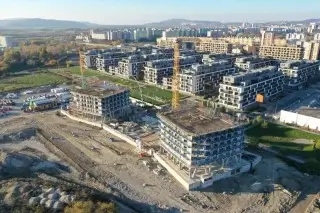
 Slovakia Reforms Building Rules as Housing Starts Slide
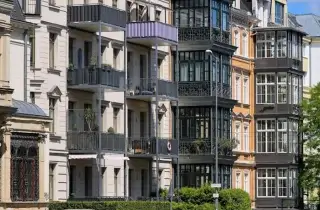 EU Proposes New Restrictions on Short-Term Housing Rentals
 Canada Fast-Tracks Tax Rulings for C$1 Billion Investments
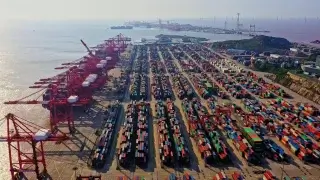 China Nears a Decision on Fresh Stimulus
 Fines for Illegal Rentals in Spain Reach €800,000
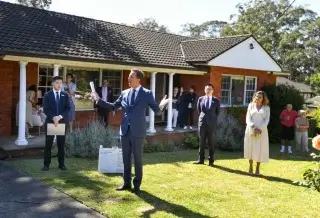 Australia’s Spring Auctions Rise but Remain Well Below 2025
Singapore Looks Beyond Concerts and Casinos for Tourism Growth

Singapore generated a record S$32.8 billion in tourism receipts in 2025 despite welcoming fewer international visitors than before the pandemic. The city-state is now considering how to convert demand generated by concerts, casinos and major exhibitions into repeat visits. Neighbourhoods, green corridors, food centres and local nightlife could provide experiences that competing destinations cannot easily reproduce.
Tourism Revenue Reached a Record With Fewer Visitors
Singapore received 16.9 million international visitors in 2025, an increase of 2.3% from the previous year, while tourism receipts reached a record S$32.8 billion.
In 2019, the country welcomed 19.1 million visitors who generated S$27.1 billion. Arrivals therefore remain approximately 12% below the pre-pandemic level, while revenue is more than 20% higher.
Dividing receipts by arrivals produces an approximate average of S$1,941 per visitor in 2025, compared with S$1,419 in 2019, an increase of almost 37%. The calculation does not account for changes in length of stay or spending methodology, but it illustrates Singapore’s shift from maximising visitor numbers towards attracting higher-value travellers.
Mainland China remained the largest source market with 3.1 million arrivals, followed by Indonesia with 2.4 million, Malaysia and Australia with about 1.3 million each, and India with 1.2 million.
During the first nine months of 2025, spending on sightseeing, entertainment and gaming increased by 15%. Food and beverage expenditure rose by the same percentage.
The record did not produce equally strong results across every tourism business. Hotel occupancy increased from 81.4% to 81.9%, while the average room rate declined by 1% to S$273.56 and revenue per available room fell by 0.4% to S$224.04.
Events Create Demand but Also Volatility
Singapore has invested heavily in becoming an Asian centre for concerts, sport, exhibitions and business events.
The 2025 calendar included Lady Gaga’s exclusive Singapore concerts, Blackpink and Seventeen performances, Formula One, the World Aquatics Championships and major international conferences. Attendance at the Singapore Grand Prix reached 300,641, an increase of 11.7% from 2024.
Events create concentrated demand for airlines, hotels, restaurants and retail. Their weakness is that they are mobile. An artist can select another city, while a sporting organisation can move an event to a host offering more attractive terms.
The volatility can be seen in visitor data. Philippine arrivals declined from 779,000 in 2024 to 726,000 in 2025 after the previous year’s increase was supported by large entertainment events.
Arrivals from Vietnam fell from 393,000 to 344,000, with the tourism authority citing greater sensitivity to travel prices.
A Business Times commentary argues that Singapore should complement concerts, casinos and mega-attractions by promoting assets that are harder to imitate: local neighbourhoods, safe green routes, everyday food culture and small-scale nightlife. The proposal is commentary rather than an adopted government policy.
Tourism 2040 Prioritises Quality Growth
Singapore’s Tourism 2040 roadmap aims to raise tourism receipts to between S$47 billion and S$50 billion by 2040.
The strategy is organised around attracting high-growth visitor segments, developing stronger destination products and building a more productive tourism industry.
The government announced an additional S$740 million for the Tourism Development Fund in 2026. The programme supports attraction renewal, technology adoption, workforce development and new tourism products.
Business travel, meetings, incentive trips, conventions and exhibitions are central to the plan. A MICE visitor spends almost twice as much as a leisure traveller, and Singapore intends to triple tourism receipts from the segment by 2040.
Leisure visitors will nevertheless remain the largest foundation of total arrivals.
The 2026 forecast is cautious. Singapore expects 17 million to 18 million international arrivals and S$31 billion to S$32.5 billion in tourism receipts, below the 2025 revenue record at the upper end.
The tourism authority has cited global uncertainty, energy risks and tensions in the Middle East.
Green Infrastructure Can Become a Visitor Experience
Singapore has a connected system of parks, waterfronts, nature reserves and paths passing through residential and commercial districts.
The National Parks Board plans to expand the Park Connector Network to 500 kilometres, with every household located within a ten-minute walk of a park.
The Land Transport Authority is separately expanding the cycling network to approximately 1,300 kilometres by 2030. Eight in ten residents of public housing estates are expected to live within minutes of a cycling path.
The infrastructure was designed primarily for residents, but it could support guided runs, neighbourhood walks and cycling routes connecting East Coast with Marina Bay or Mandai with Singapore’s western districts.
Tours could include breakfasts at hawker centres and stops for kaya toast and traditional coffee. The investment required would be smaller than for a new mega-attraction because most of the physical infrastructure already exists.
Commercial use would still require route design, bicycle rental, trained guides, insurance, multilingual booking and safeguards to prevent tourist groups from obstructing commuters and local recreation.
Urban Wellness Is Becoming a Growth Segment
Tourism 2040 describes Singapore as a “City in Nature” capable of delivering wellness in a dense urban environment.
The strategy identifies five areas: wellness attractions, specialist centres, medical spas, longevity clinics and wellness hotels.
Singapore could combine green routes, medical services, hotels and dining into short programmes for leisure and business visitors.
Its advantages include safety, transport efficiency, clinical infrastructure and an English-speaking environment. The main limitation is cost, particularly when compared with Thailand, Indonesia and Malaysia.
Night-Time Tourism Remains Underdeveloped
Singapore’s tropical climate makes the evening one of the most comfortable periods for outdoor activity.
The Business Times article proposes more live-music venues, night markets and accessible restaurants in districts such as Clarke Quay, Holland Village and Mohamed Sultan Road. Late-night meals involving prata, dim sum, satay or bak chor mee could become part of the destination’s identity.
The night economy operates within strict public-order rules. Takeaway alcohol sales and drinking in most public places are prohibited between 10.30 pm and 7 am.
Licensed premises operate according to the hours stated in their permits, and extensions require additional approval.
Those restrictions do not prevent night tourism centred on food, performance and culture. Expansion would require late transport, noise controls, cleaning and consultation with nearby residents.
Singapore’s opportunity is to combine a lively evening environment with safety and predictable regulation. Excessive standardisation could instead produce districts that feel like managed shopping centres.
Residential Districts Could Encourage Repeat Visits
Most first-time visitors concentrate on Marina Bay, Sentosa, Orchard Road, Chinatown and major attractions.
Everyday districts contain experiences that rarely appear in international advertising: traditional provision shops, neighbourhood markets, community exercise sessions, coffee shops and gatherings involving songbird owners.
The Business Times identifies Balestier, Little India, Toa Payoh and Bishan as places where older traditions and modern Singapore coexist. Such districts could appeal to repeat visitors who have already seen the principal landmarks.
The tourism authority has previously promoted ten precincts, including Changi and East Coast, Joo Chiat and Katong, Kampong Gelam, Little India, Mandai and Kranji.
It also recognises the role of tourist guides in presenting different aspects of Singapore and developing more specialised experiences.
Neighbourhood tourism can spread visitor spending to family-owned shops, hawker businesses, bicycle operators and independent guides.
Its principal risk is the destruction of the experience being marketed. Large groups can increase rents, disrupt markets and replace ordinary life with staged activity. Programmes need smaller group sizes and meaningful involvement from residents.
Transit Travellers Offer Another Market
The future Terminal 5 at Changi Airport will significantly increase passenger movements through Singapore.
Tourism 2040 aims to persuade more connecting passengers to leave the airport, experience the city and potentially return for a longer trip.
Travellers with limited connection times need reliable, tightly scheduled products rather than long attraction lists. A cycling route, neighbourhood meal or short heritage walk may be more practical than a conventional city tour.
The value of these products will depend on predictable immigration, transport and return times.
Authenticity Must Become Bookable Without Becoming Artificial
Everyday city life is not automatically a tourism product. Visitors need clear information, reservations, language support, transparent pricing and quality standards.
Singapore’s Tourism Product Development Fund already supports the creation and major rejuvenation of viable visitor experiences. The programme could assist small local operators when projects retain neighbourhood character and provide benefits to residents.
Performance should be measured through length of stay, repeat visits, spending outside central areas, small-business income and resident satisfaction rather than arrivals alone.
Singapore will also need to accept a degree of unpredictability. A chance conversation, an unfamiliar bakery or a community event can create the sense of discovery that a standardised attraction cannot provide.
As International Investment experts report, concerts, casinos and major attractions will remain important sources of Singapore’s tourism revenue. Sustainable growth towards S$47–50 billion will also require reasons to return that do not depend on the schedules of global performers. Green routes, local food, neighbourhood culture and evening activity can provide that advantage. The challenge will be making these experiences accessible without turning residential areas into staged attractions or reducing the quality of life for the people who live there.
FAQ
How much did Singapore earn from tourism in 2025?
Tourism receipts reached a record S$32.8 billion from 16.9 million international visitors.
Why is Singapore looking beyond major events?
Concerts and sporting events generate strong demand but can move between destinations. Local everyday experiences are more difficult for competitors to reproduce.
What is the Tourism 2040 target?
Singapore aims to increase annual tourism receipts to between S$47 billion and S$50 billion by 2040.
How much new funding has been announced?
The government announced an additional S$740 million for the Tourism Development Fund in 2026.
Which neighbourhoods could attract more visitors?
Potential areas include Balestier, Toa Payoh, Bishan, Little India, Joo Chiat, Katong, Mandai and Kranji.
How can Singapore use its parks for tourism?
The city could offer guided running, walking and cycling routes linked to neighbourhood food centres and local businesses.
Is public drinking permitted at night?
Alcohol consumption in most public places is prohibited between 10.30 pm and 7 am. Licensed venues operate according to their approved hours.
What are the risks of neighbourhood tourism?
Potential problems include higher rents, crowding, disruption to residents and the loss of the authenticity that attracts visitors.