












Slovenia Cuts Taxes Before Reform Push

Slovenia has adopted a broad tax and economic package designed to ease pressure on households and businesses, but the measures are also intensifying debate over fiscal sustainability, the country’s social model and the direction of policy under a new centre-right government.
The tax reform signals a new economic course
Slovenia has made a sharp turn in economic policy by adopting the Act on Intervention Measures for the Development of Slovenia. Cord Magazine reported that the package is one of the most visible initiatives of the new centre-right agenda and includes broad tax relief, changes to labour rules, healthcare, pensions and business regulation.
The reform emerged during a political transition after the March 22, 2026 parliamentary election. After a prolonged period of uncertainty, parliament approved a cabinet led by Janez Janša, head of the Slovenian Democratic Party. His government was backed by 49 lawmakers against 30, and Janša pledged to reduce what he called record-high taxes and cut bureaucracy.
For a country of about 2.1 million people with an open economy, the tax package matters not only as a domestic social measure. It is meant to show investors, entrepreneurs and skilled workers that Slovenia is ready to compete for capital and labour in Central Europe, where tax burdens and administrative barriers are increasingly part of political competition.
Food and energy measures target living costs
One of the most visible parts of the reform is support for household purchasing power. According to Sibiz, after the law’s adoption a zero value-added tax rate applies to a range of basic food and agricultural goods, including flour, bread, pasta, meat, milk, yoghurt, butter, eggs, cheese, fresh fruit, vegetables, sunflower oil and sugar.
Value-added tax is an indirect tax included in the price of goods and services and ultimately paid by consumers. Lowering the rate on basic goods should theoretically reduce final prices or at least limit increases. The real effect will depend on retailers and supply chains: some of the benefit may reach consumers, while some may remain within margins.
The law also allows a temporary reduction of value-added tax on electricity, natural gas, district heating and firewood to 9.5% for up to nine months. That matters for households and small businesses because energy remains one of the main cost pressures after the inflation shock of recent years.
The rental market receives a tax incentive
A separate part of the reform targets housing. The general tax rate on rental income is set to fall from 25% to 15%. Landlords who rent homes to young people under 30 or to families with children can qualify for a 5% rate if the tenant actually lives there and registers permanent residence.
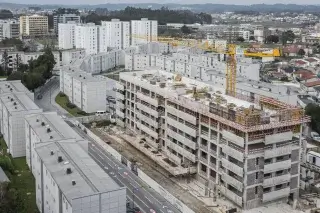
This is one of the most politically sensitive elements of the package. Slovenia, like many European Union countries, faces higher housing costs, limited rental supply and pressure on young professionals. The government is trying to use the tax system to make long-term renting more attractive for owners while easing access to housing for groups most exposed to rental-market pressure.
But the outcome is not guaranteed. A lower tax rate may increase the profitability of legal renting and move part of the market out of the informal economy. It does not solve limited construction, high land costs, mortgage rates or concentrated demand in Ljubljana and other economic centres.
Self-employed workers and small businesses get new rules
The reform changes conditions for self-employed people and sole traders. In Slovenia, samostojni podjetnik means an individual who conducts business in their own name. For these entrepreneurs, the flat-rate expense regime is important because it simplifies how the taxable base is calculated.
Wolf Theiss noted at the draft stage that thresholds for the flat-rate expense regime were set to increase: from €30,000 to €70,000 in annual revenue for part-time entrepreneurs and from €60,000 to €150,000 for full-time entrepreneurs. After adoption, this block became one of the main signals to small businesses and independent professionals.
For entrepreneurs, this means less administrative complexity and potentially more predictable taxation. For the state, it creates the risk of lower revenue and a sharper debate over where business support ends and tax optimisation for high-earning professionals begins.
A social contribution cap aims to retain skilled workers
The package includes the idea of capping social security contributions for high incomes. Social security contributions are mandatory payments used to finance pensions, healthcare and other parts of social protection. In Slovenia, they create a significant burden on wages.
A cap means contributions are calculated only up to a certain income level, while income above that threshold is not subject to additional contributions. Supporters argue that this raises net income for skilled workers and makes the country more attractive to engineers, doctors, managers, technology firms and international employers.
Critics see a different effect. If high incomes are taxed more lightly through contribution caps, the social insurance system may receive less money and the benefits of reform may be unevenly distributed. This is likely to remain one of the most contested elements of the policy debate.
Healthcare became part of the economic package
The reform is not limited to taxes. In the draft version, the law included simplified rules for healthcare workers who want to combine public-sector employment with limited private-sector work. The proposal was that if management did not respond within a set period, consent would be deemed granted rather than denied.
The goal is to increase healthcare availability and retain skilled professionals. Slovenia, like many European countries, faces waiting lists, shortages of specialists and tension between public and private medicine. Allowing doctors to work more flexibly may increase service supply, but it also raises concern that part of the workforce will shift toward more profitable private practice.
This shows that the tax package has become broader than a regular fiscal law. It attempts to address competitiveness, employment, healthcare and social policy at the same time, increasing both its political weight and the risk of implementation mistakes.
Pension incentives reshape the labour market
The package is also tied to rules for working after retirement age. Under the discussed framework, a person who qualifies for an old-age pension can continue working and receive the full pension while retaining insured status. For an ageing society, this is an important tool to keep people in the labour force.
Slovenia already faces demographic pressure typical of much of Central and Eastern Europe. The share of older people is rising, while the labour market needs skilled workers. Allowing people to remain employed after pension eligibility can support employment and the tax base.
But the approach requires caution. If it mainly encourages continued work among better-paid or highly skilled groups, the social effect will be limited. Employers will also have to adjust contracts, human-resources policies and working conditions for older employees.
Fiscal sustainability is the central question
The most vulnerable point of the reform is its cost to the budget. Tax and contribution cuts may support consumption and entrepreneurship, but in the short term they usually reduce public revenue. That is especially sensitive for a country that must comply with European fiscal rules.
Slovenia’s annual progress report on its medium-term fiscal-structural plan shows that government debt stood at 65.7% of gross domestic product at the end of 2025 and is expected to hover around 65% by the end of 2026. That is below crisis-era levels but above the European Union’s 60% reference value.
The same document says Moody’s upgraded Slovenia’s long-term credit rating from A3 to A2 with a stable outlook in February 2026, citing lower public debt and pension reform. This gives Ljubljana some market credibility, but it does not remove the need to prove that tax cuts will not create a lasting increase in the deficit.
Investment and EU funds remain economic anchors
Slovenia continues to rely on public investment and European funding. Official reporting said general government investment reached 5.6% of gross domestic product in 2025 and is planned to remain close to that level at about 5.5% in 2026.
This is an important backdrop for the reform. If tax relief is combined with high investment in infrastructure, digitalisation, energy, housing and productivity, the economic effect may be stronger. But if fiscal space narrows, the government will have to choose between tax cuts, social spending, defence and capital projects.
For investors, the key issue will be not only the size of tax incentives but also the quality of public expenditure. Lower taxes improve the attractiveness of a jurisdiction, but weak infrastructure, housing shortages and an overloaded health system can quickly reduce that advantage.
The centre-right package shifts the political balance
The reform is not only an economic document but also a political signal. Intellinews wrote that the draft emerged during a post-election political vacuum and was presented as a tool to boost competitiveness and reduce living costs, while critics warned it could threaten the country’s social model.
Slovenia is entering a period of sharper ideological competition. The right and centre-right are focusing on tax cuts, business support, skilled-worker retention and less bureaucracy. The left is likely to emphasise public services, progressive taxation and stable financing for healthcare and pensions.
For business, the shift looks attractive but not risk-free. Frequent changes in tax policy can create uncertainty, especially if measures are later revised after budget assessments or political disputes.
Slovenia is competing for capital and talent
The tax package reflects a broader Central European trend. Small open economies are trying to retain skilled workers, attract higher-value companies and avoid losing investment to neighbours. Slovenia competes not only with Austria and Italy, but also with Croatia, Czechia, Slovakia, Hungary and the Baltic states.
For international business, the decisive factors include tax burden, labour costs, workforce quality, European Union market access, infrastructure and legal predictability. Slovenia has advantages: eurozone membership, geography, relatively strong institutions and skilled labour. It also faces a small domestic market, demographic pressure and high housing costs.
The reform seeks to strengthen the country’s competitive position, but success will depend on execution. Businesses assess not only headline rates but also tax administration, court practice, permitting speed, rule stability and the state’s attitude toward entrepreneurs.
The risk lies between promises and revenue
The main economic risk is that tax cuts create expectations of rapid growth, while the budget cost appears before the investment effect. If lower taxes do not significantly expand the tax base, the government will have to offset lost revenue through borrowing, spending cuts or new tax measures.
This is especially important as defence spending rises and healthcare remains under pressure. European countries are increasing security budgets, ageing populations require more money for pensions and healthcare, and infrastructure needs renewal. In such an environment, tax cuts must be targeted and accompanied by measures to improve spending efficiency.
For Slovenia, the bet may work if it increases employment, formalises income, supports entrepreneurship and attracts investment. But if the effect is mainly redistributive, political criticism will intensify in the next budget cycles.
As experts at International Investment report, Slovenia’s package should not be viewed only as a set of tax breaks: it is an attempt to shift the country’s economic model toward higher competitiveness, but without a full answer on the cost of reform. The critical risk is that tax and social contribution cuts produce a quick political effect, while productivity growth, investment and a wider tax base take time. If the government fails to keep the deficit under control and prove that relief measures create new economic activity, the reform may become less a growth tool than a new source of fiscal conflict.
FAQ: Slovenia’s tax reform
What did Slovenia adopt in May 2026?
Slovenia adopted the Act on Intervention Measures for the Development of Slovenia. It includes tax relief, changes for sole traders, rental-market measures, energy support, labour rules, healthcare and pensions.
Which goods received tax relief?
Available guidance says a zero value-added tax rate applies to a range of basic goods including bread, flour, pasta, meat, dairy products, eggs, cheese, fruit, vegetables, sunflower oil and sugar.
What changes for landlords?
The general tax rate on rental income is set to fall from 25% to 15%. A 5% rate applies to homes rented to young tenants under 30 or families with children if residence conditions are met.
What is a social contribution cap?
A social contribution cap means mandatory social insurance payments are charged only up to a certain income level. Income above that level is not subject to additional contributions.
Why does the reform matter for business?
It reduces parts of the tax and administrative burden, expands opportunities for self-employed workers and may make Slovenia more attractive to skilled workers and companies.
Why is the reform controversial?
Critics fear lower public revenue, pressure on the social model and uneven benefits for higher-income groups.
How could the reform affect Slovenia’s economy?
In the short term, it may support consumption and small business. In the long term, the impact will depend on whether tax cuts lead to higher investment, employment and productivity.