







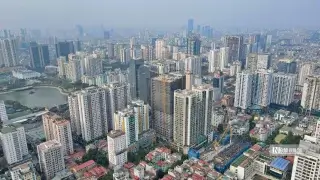
 Vietnam Mortgage Surge Pushes Homes Out of Reach
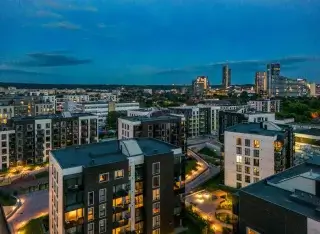 Lithuanian Apartment Prices Accelerate Across Major Cities
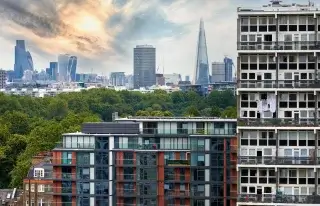 London Flats Lose Value Ahead of Leasehold Reform
 Construction of the Batumi–Sarpi Highway Begins in Georgia
 Baltic Property Investment Accelerates in 2026
 Hong Kong and Singapore Renew Their Expat Rivalry
Madrid Drives Spain Housing Pressure

Madrid is increasingly becoming a magnet for wealthy foreigners, and the rise in housing prices in the Spanish capital is intensifying concerns about a new market overheating cycle. The debate in Spain is now moving beyond a local luxury story and toward a broader question of how quickly supply shortages, inbound capital and population growth can push one of Europe’s largest urban housing markets into dangerous territory.
Why Madrid is at the center of Spain’s housing pressure
A France 24 report published on April 16 described Madrid as a city that has recently attracted wealthy Latin American investors as well as younger Americans settling in historic districts, adding pressure to an already expensive housing market. Official data support the broader direction of that story: Spain’s National Statistics Institute said house prices nationwide rose 12.9% year on year in the fourth quarter of 2025, while the Madrid region posted a steeper 14.2% increase, outpacing the national average.
That acceleration is rooted in a deeper structural imbalance. The Bank of Spain has warned that new household formation has been running ahead of new housing completions, creating a structural shortfall that could reach around 600,000 homes by 2025. The central bank linked that gap to the regions with the strongest economic and tourism activity, precisely the areas where foreign capital and mobile high-income demand can translate scarce supply into faster price growth.
How foreign demand is affecting Spain’s housing market
Foreign demand is no longer a marginal force in Spain’s housing market. Spain’s property registrars said foreign buyers accounted for 14.1% of home purchases in the first quarter of 2025, still within the upper range of the historical series, while preliminary full-year 2025 figures pointed to nearly 97,300 purchases by foreign citizens, or 13.8% of total transactions. The largest shares are still concentrated in island and coastal markets, but Madrid stands out for a different reason: foreign capital has a disproportionate effect on pricing in prime central neighborhoods and upper-end properties rather than simply on transaction volume.
Madrid’s appeal is also tied to tax and investment competitiveness. Market coverage of the city’s luxury segment has highlighted how the capital strengthened its pull on wealthy international families through its role as a business hub, its regional tax environment and its large share of Spain’s incoming foreign investment. For housing, that means the city is not just attracting more buyers, but buyers with greater pricing power than domestic households.
Is Spain entering a new housing bubble
The national picture is more nuanced than a simple bubble narrative. A Funcas study on housing-market expectations found that households expect prices in their own cities to rise sharply in 2026, at levels that compare unfavorably with historical norms, while also documenting stronger public anxiety over affordability and the acceleration of prices in the last two years. But that still falls short of proving a classic 2007-style nationwide bubble: the current cycle appears to be driven more by supply scarcity, demographic pressure and tighter lending discipline than by the kind of credit excess that defined the earlier boom.
That is why the more accurate reading is one of selective overheating, especially in Madrid and other highly pressured urban markets, rather than a fully developed national bubble. Spain has now seen prices rise for nine consecutive quarters since late 2023, and resale homes have been climbing even faster than new housing. For buyers, the immediate issue is not only whether a future correction will happen, but how rapidly affordability is eroding right now.
Why Madrid has become the pressure point
Madrid now combines several of the strongest price drivers in one market: wealthy foreign demand, population inflows, limited new supply and strong competition for homes in prestigious historic districts where additional stock is difficult to create quickly. As a result, even a moderate foreign-buyer share can influence the wider price structure if it is concentrated in the city’s most supply-constrained and symbolically important locations.
Rental-market pressure adds another layer. The Bank of Spain has highlighted that in high-tourism areas, a large share of potentially habitable homes can be diverted into tourist use or owned by non-residents, reducing supply for local households. Madrid is not the most extreme case by foreign-buyer share, but as an increasingly international city it is feeling the same competitive tension between residential use, investment demand and short-term accommodation.
What rising prices mean for investors and residents
For investors, Spain remains a market with strong price momentum but growing political and social risk. The further prices move away from local incomes, the greater the probability of tighter rental rules, tax changes and more aggressive housing intervention. For residents and first-time buyers, the situation already looks harsher: even without a confirmed national bubble, the combination of scarce supply and stronger high-income demand is functioning as a mechanism of displacement.
As International Investment experts report, Spain’s housing market in 2026 looks less like a fully formed nationwide bubble and more like a dangerous phase of local overheating in its most desirable cities, above all Madrid. For foreign investors, that points to continued short-term price resilience; for local households, it means worsening affordability and a higher likelihood of further regulatory pressure on landlords, investors and developers.
FAQ
Question: Why is Madrid being discussed as a housing-bubble risk?
Answer: Because the city combines fast price growth, limited supply, wealthy foreign demand and continued household formation, making it especially exposed to overheating.
Question: How fast have Spanish home prices been rising?
Answer: Spain’s National Statistics Institute said house prices rose 12.9% year on year in the fourth quarter of 2025, while the Madrid region rose 14.2%.
Question: Are foreign buyers really shaping Spain’s housing market?
Answer: Yes. Their share remains historically high nationally, and in Madrid their influence is especially visible in central prime districts and upper-end pricing.
Question: Is this already a full national housing bubble like 2007?
Answer: Not necessarily. Current evidence points more to overheating in specific pressured markets than to a credit-fueled national bubble of the earlier type.
Question: What is the biggest risk for Spain’s housing market now?
Answer: The main risk is that housing supply continues to lag behind household growth, leaving prices and rents under pressure for longer, especially in Madrid and other strong urban markets.