







 Vietnam Mortgage Surge Pushes Homes Out of Reach
 Lithuanian Apartment Prices Accelerate Across Major Cities
 London Flats Lose Value Ahead of Leasehold Reform
 Construction of the Batumi–Sarpi Highway Begins in Georgia
 Baltic Property Investment Accelerates in 2026
 Hong Kong and Singapore Renew Their Expat Rivalry
Barcelona Raises Tourist Tax Again
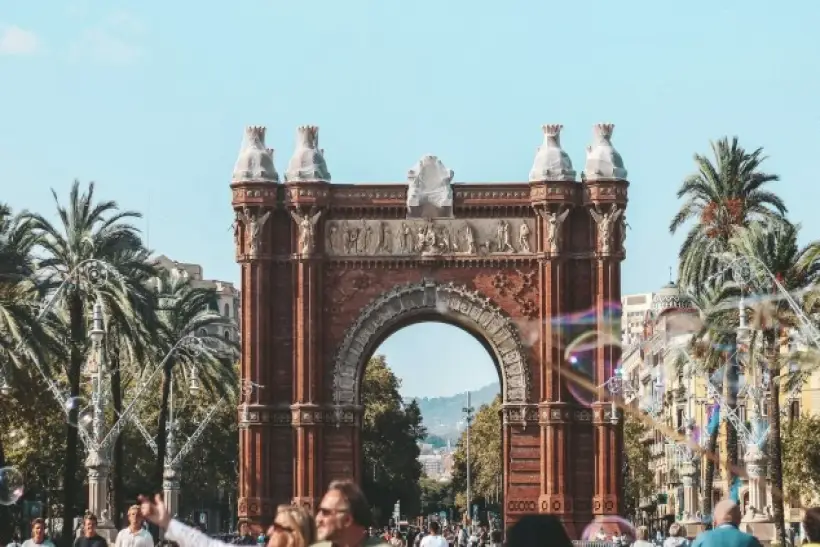
Barcelona entered a new phase of tourism taxation in April 2026 after Catalonia doubled its base accommodation levy and the city kept its own municipal surcharge on top. For visitors, that means materially higher overnight costs. For policymakers, it means a larger funding stream tied directly to housing pressure and the management of an overstretched urban tourism model.
Barcelona tourist tax increased from April 2026
Idealista reported on April 2 that Catalonia’s parliament approved a sharp increase in the regional tourist tax effective April 1, 2026. The levy is charged per person, per night across most short-stay tourist accommodation. In Barcelona, the new regional base rates rose to €7 for luxury hotels, €3.40 for four-star hotels, and €4.50 for tourist apartments, with additional local surcharges possible on top.
Why Catalonia raised the tourist tax
When presenting the reform, the Catalan government said the 100% increase was designed to raise more money to offset the negative externalities that tourism creates in the housing market. In its official explanation, the government said at least 25% of the revenue corresponding to the Generalitat would be earmarked directly for housing policies. It also confirmed that municipalities could apply their own surcharge through local tax ordinances, turning the tourist tax into both a revenue tool and a housing-policy instrument.
That policy logic matters especially in Barcelona, where overtourism has long been linked not only to crowding and public-service pressure, but also to rent inflation, displacement of residents from central districts, and the political backlash against tourist apartments. The revised tax framework makes the levy part of a broader attempt to rebalance some of tourism’s local costs.
How much tourists now pay in Barcelona
The crucial point is that visitors in Barcelona do not pay just one tax. They pay the Catalonia regional levy and the Barcelona municipal surcharge. According to Catalan News, once the new regional law took effect in April 2026, the city’s own surcharge was already set on a rising schedule of €1 more per year until it reaches €8 in 2029. That means the municipal portion is €5 per person per night in 2026, pushing the total charge in luxury hotels to €12 per night and in four-star hotels to €8.40 per night.
At that level, the tax is no longer a marginal add-on. It becomes a visible component of the total cost of staying in the city, especially for families, multi-night stays and higher-end accommodation. The structure also sends a clear policy signal by placing heavier pressure on premium lodging and tourist apartments.
What changed across the rest of Catalonia
The reform goes far beyond Barcelona. Idealista’s published rate table shows that for the rest of Catalonia, from April 1, 2026 to March 31, 2027, the tax stands at €4.50 for five-star hotels and equivalent establishments, €1.80 for four-star hotels, €1.75 for tourist dwellings, and €0.80 for youth hostels. Cruise passengers face separate charges of €3 for stays longer than 12 hours and €4.50 for stays of 12 hours or less. From April 2027, those rates are scheduled to rise again.
The design of the new schedule shows that Barcelona remains the main target of fiscal pressure, but the regional government is broadening the principle itself: tourism should fund not only promotion and destination management, but also social and housing responses in areas under the greatest strain.
What the higher tax means for tourism and housing
For travelers, the effect is immediate: a trip to Barcelona now costs more even if the advertised room rate has not changed. For hotels and tourist-apartment operators, the reform raises the sensitivity of demand to the all-in cost of staying in the city. For the city and the region, the tax increase is part of a broader effort to capture more of tourism’s economic upside and redirect part of it toward housing access and urban resilience.
As International Investment experts report, Barcelona’s higher tourist tax shows how Spain is increasingly linking tourism policy to housing policy. For hotel and short-term rental investors, that means heavier regulatory pressure ahead. For visitors, it means that in Europe’s most saturated urban destinations, compulsory travel charges are shifting from symbolic fees to meaningful budget items.
FAQ about Barcelona tourist tax
Question: When did the new Barcelona tourist tax rates start?
Answer: The revised Catalonia regional accommodation tax took effect on April 1, 2026.
Question: Why is the tourist tax described as doubled?
Answer: Because Catalonia increased the regional base rates by 100%, effectively doubling them from the previous level.
Question: How much extra does a tourist now pay in Barcelona?
Answer: It depends on the type of accommodation because the total includes both the Catalonia regional tax and the Barcelona municipal surcharge. In some categories, the combined nightly charge is already in double digits.
Question: Where will the extra tax revenue go?
Answer: At least 25% of the Generalitat’s share is designated for housing policies, while the remainder continues through the tourism promotion framework and related allocations.
Question: Will Barcelona’s tourist tax keep increasing?
Answer: Yes. The city surcharge has already been approved on a step-up path and is scheduled to rise annually until it reaches €8 in 2029.