











Switzerland Decides How Many People It Can Sustain

Swiss voters will decide on June 14 whether to enshrine a 10 million population ceiling in the Constitution until 2050, a move that could restrict migration, complicate relations with the European Union and reshape the growth model of one of Europe’s wealthiest economies.
Switzerland puts a demographic ceiling to voters
Switzerland is preparing for one of Europe’s most unusual votes: citizens will decide whether the country’s permanent resident population should remain below 10 million until 2050. The initiative is called “No to a Switzerland with 10 million” and is backed by the Swiss People’s Party, the country’s largest right-wing conservative force.
Bloomberg reported that the vote reflects rising voter concern over expensive housing, stretched infrastructure, migration and a sense that the country is changing faster than its institutions and population are willing to accept. At the center of the debate is not only the number of residents, but whether a rich economy that depends on foreign labor can limit inflows and preserve competitiveness at the same time.
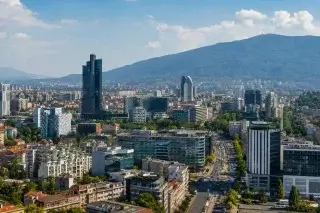
Switzerland’s permanent resident population is now about 9.1 million. That is small by the standards of large countries, but for a compact Alpine federation with limited land, expensive property, dense cities and heavy transport use, population size has become politically sensitive.
How the 10 million initiative would work
The initiative proposes to write into the Constitution that Switzerland’s permanent resident population must not exceed 10 million before 2050. The permanent resident population includes people living in the country on a long-term basis, both Swiss citizens and foreigners with long-term residence status.
The mechanism is phased. If the population exceeds 9.5 million before 2050, the Federal Council and parliament would have to take measures, especially in asylum policy and family reunification. Family reunification is the right of a foreign resident to bring a spouse, children or other close relatives to the country under defined conditions.
If the population reaches or exceeds 10 million, the authorities would have to take tougher action. The key political issue is the possible termination of the free movement of persons agreement with the European Union if other tools fail to keep the population below the ceiling.
Why the debate is bigger than migration
Formally, the initiative is aimed at limiting population growth. In practice, it is about restricting migration. Switzerland’s natural population increase is no longer the main source of demographic growth. The central driver is net migration, the difference between arrivals and departures.
Yet the campaign has moved far beyond migration. Supporters cite housing shortages, rising rents, pressure on roads, railways, schools, hospitals, energy systems and natural areas. They argue that the country is approaching a physical and social limit.
Opponents answer that a numerical ceiling does not solve the causes of those problems. Expensive housing, they argue, is not only about migration, but also limited construction, the legacy of low interest rates, strong demand for property, zoning rules and concentration of jobs in major urban areas.
The Swiss economy depends on foreign labor
One of the main arguments against the initiative is Switzerland’s dependence on workers from abroad. Foreign employees are active in health care, construction, hospitality, research laboratories, banking, industry, information technology and pharmaceuticals.
For years, the Swiss economy has been built on a combination of high productivity, an open labor market, access to European workers and appeal for international companies. If inflows of workers fall sharply, businesses could face labor shortages, higher costs and relocation of some functions abroad.
The most vulnerable sectors are those already facing staff shortages. Hospitals and care homes depend on foreign medical workers. Construction needs engineers and laborers. Financial, technology and pharmaceutical companies compete globally for specialists. For such an economy, a demographic ceiling could become not just an administrative rule, but a limit on productive capacity.
Free movement with the EU is at the center
The most sensitive part of the initiative concerns the European Union. Switzerland is not an EU member, but its economy is closely integrated with the European market through a network of bilateral agreements. One of the most important is the free movement of persons agreement, which allows EU and Swiss citizens to live and work in each other’s territories under certain rules.
If the population reaches 10 million and Switzerland needs to restrict migration more sharply, the country could face the need to renegotiate or terminate that agreement. This creates risk for the broader relationship with the EU, because many agreements between Bern and Brussels are politically and legally linked.
The European Union remains Switzerland’s main trading partner. Any conflict over free movement could affect market access, scientific cooperation, transport, recognition of standards, labor mobility and the investment climate. That is why business groups and the federal government oppose the initiative.
The 2014 experience remains a warning
Switzerland already voted to curb mass immigration in 2014. That initiative was approved by a narrow majority and put the country in a difficult position: voters had demanded migration limits, but strict implementation could have damaged relations with the EU.
The authorities eventually adopted a compromise that did not impose hard quotas and allowed the free movement agreement to remain in place. For supporters of the current initiative, that became proof that the earlier popular will was not fully implemented. For opponents, it showed how difficult it is to combine direct democracy, economic interests and international obligations.
The current vote is therefore seen as a repeat test. This time the proposal is framed around a demographic ceiling, but it effectively asks the same question: is Switzerland prepared to sacrifice part of its EU relationship for tighter migration control?
Foreign residents have become a political symbol
Switzerland has one of the highest shares of foreign residents in Europe. During the campaign, supporters of the ceiling point to the sharp rise in the share of residents with foreign origins over recent decades, especially in large cities where international migration is now part of daily life.
For the economy, this is an advantage: the country receives workers, entrepreneurs, students, scientists and taxpayers. For some voters, it is a source of anxiety: they see more competition for housing, changes in the language of daily life, pressure on schools and a loss of control over the country’s future.
The conflict is not a simple divide between openness and closure. Even many opponents of the initiative acknowledge that population growth creates real problems. But they see a fixed 10 million ceiling as too blunt a tool for an economy that depends on people, capital and international links.
Housing is the strongest everyday argument
The most tangible argument for voters is housing. In Zurich, Geneva, Lausanne, Basel, Zug and other economically strong regions, renting or buying a home has long become one of the largest household expenses. The problem is especially visible for young families, middle-income workers and pensioners.
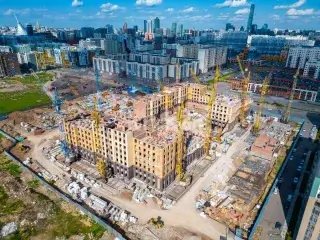
Population growth increases demand, while supply is constrained. Switzerland faces scarce land, strict construction rules, landscape protection, resistance to densification and long approval processes. As a result, the housing market reacts to demand growth more slowly than needed.
Supporters say that without migration limits, construction programs will only chase demand. Opponents say the country should build more, use existing housing more efficiently, simplify planning and expand transport rather than introduce a demographic ceiling that may hit the labor market.
Infrastructure is the second pressure point
Beyond housing, voters are concerned about transport. Switzerland is proud of one of the world’s most efficient rail systems, but population growth adds pressure to trains, roads, city networks and public utilities. Rush-hour congestion affects not only highways, but also commuter routes around major cities.
The same logic applies to schools, hospitals, childcare, energy grids and water systems. The faster the population grows, the more federal, cantonal and local authorities must invest in capacity. In Switzerland, many infrastructure decisions are made at the cantonal and municipal levels, so the burden is uneven.
For supporters of the ceiling, this proves that the country cannot keep up with growth. For opponents, it supports the case for better planning and investment, not withdrawal from European labor mobility.
Government and parliament oppose the initiative
The Federal Council has recommended rejecting the initiative. The government argues that a hard population ceiling would endanger economic development, worsen labor shortages and create serious problems in relations with the European Union. Parliament has also rejected the initiative and offered no counterproposal.
The government’s position is that migration should be managed, but not through an absolute population cap. The Federal Council says Switzerland already has tools in asylum policy, integration, the labor market and urban planning, while international agreements provide economic stability.
This is familiar territory for Swiss direct democracy. The government can oppose an initiative, but the final decision belongs to citizens and cantons. To pass, the initiative needs a majority of voters and a majority of cantons.
Business sees a competitiveness risk
Swiss companies fear the initiative would create uncertainty for investment. For an international corporation, what matters is not only taxes and infrastructure, but also the ability to hire people. If access to European workers becomes less predictable, some companies may shift projects elsewhere.
Pharmaceuticals, finance, precision manufacturing, research, universities and technology startups are especially sensitive. These sectors compete not only within Switzerland, but also with London, Paris, Munich, Amsterdam, Singapore and Boston.
The risk is not an immediate business exodus the day after the vote. The bigger danger is long-term uncertainty. If companies do not know whether they will be able to hire the specialists they need in five or ten years, they start pricing political risk into decisions on expansion, laboratories, headquarters and investment.
Supporters frame the initiative as quality of life
The Swiss People’s Party presents the initiative as a sustainability measure. In its view, the country should not grow endlessly only because companies need workers and the property market needs buyers. Supporters argue that nature, infrastructure and social cohesion have limits.
Quality of life is one of the campaign’s main arguments. Switzerland values safety, a clean environment, access to mountains and lakes, reliable transport, strong municipalities and high incomes. If population growth is seen as threatening these advantages, migration becomes a question of the national model, not only the labor market.
That is why the initiative uses the language of sustainability. It is meant to show that the issue is not only migration, but the country’s ability to preserve space, nature, infrastructure and social balance. Critics see this as a rhetorical shift: in their view, a hard migration restriction is being proposed under the label of sustainability.
The referendum reflects a European trend
The Swiss debate fits into a broader European context. Across many countries, tension is rising over migration, housing, social infrastructure and cultural adaptation. Even where economies need workers, voters are increasingly demanding control over arrivals.
Switzerland is different because direct democracy allows such a question to be put to a national vote in a concrete form. In other countries, similar disputes are usually handled through parliamentary elections, coalition agreements or administrative quotas. In Switzerland, voters can directly amend the Constitution.
That makes the referendum a signal for Europe. If the initiative receives strong support even if it fails, parties in other countries may use the Swiss example for new campaigns against migration and in favor of demographic limits.
Markets are watching the EU relationship
For investors, the key risk is not the number 10 million itself, but the possible impact on EU agreements. The Swiss franc remains a safe-haven currency, and the country has strong institutions, low debt and a high reputation. But uncertainty around European agreements could influence investment decisions and valuations in specific sectors.
Financial markets usually treat Swiss referendums calmly because the system is seen as predictable. But initiatives affecting relations with the EU have broader effects. They concern not only politics, but also market access, regulation, labor supply and cross-border services.
If the initiative is rejected, the migration issue will not disappear. If it is approved, Switzerland will enter a long period of legal and diplomatic uncertainty, as authorities try to implement the vote while minimizing damage to the economy.
What happens after the vote
The June 14 vote will not immediately change migration rules. If the initiative is rejected, the current system will remain, but political pressure on housing, infrastructure and migration will continue. Supporters of population limits are likely to use the result as a basis for future campaigns.
If the initiative is approved, the authorities will have to develop legal and administrative measures to keep the population below the thresholds. The most difficult questions will arise when the country approaches 9.5 million and 10 million residents. Then the debate will move from slogans to specific restrictions: who can enter, who is refused, and how to treat refugees, students, family members, temporary workers and EU citizens.
For a country whose economic success is closely tied to openness, such a turn would be a serious test. Switzerland would have to decide whether it can preserve wealth, innovation and quality of life if the main source of growth — people — is constrained by a constitutional ceiling.
As experts at International Investment report, Switzerland’s 10 million initiative matters not only as a migration referendum, but as an attempt to place a legal limit on economic growth through demography. The critical conclusion is that Switzerland does face expensive housing, infrastructure pressure and fatigue with rapid growth, but a hard population ceiling may treat symptoms at the cost of new risks: labor shortages, conflict with the EU and weaker investment predictability. For Europe, the referendum will test how far voters are willing to go to protect quality of life from the consequences of their own country’s economic success.
FAQ
What is Switzerland’s 10 million population initiative?
The initiative proposes to write into the Constitution that Switzerland’s permanent resident population must remain below 10 million until 2050. If the population exceeds 9.5 million, the authorities would have to take measures to slow growth.
When is the Swiss vote taking place?
The federal vote is scheduled for June 14, 2026. At the time of writing, the initiative has not been approved and remains subject to the referendum.
Who supports the population cap?
The initiative is backed by the Swiss People’s Party, a right-wing conservative political force that has long called for tighter migration control.
Why is Switzerland’s population growing?
The main driver is migration. Switzerland attracts workers, students, specialists, entrepreneurs and family members from the EU and other countries because of high wages, stability and a strong economy.
Why could the initiative affect relations with the EU?
If the population reaches 10 million, Switzerland may have to restrict free movement with the EU. That could affect important bilateral agreements between Bern and Brussels.
Why does business oppose the cap?
Businesses fear labor shortages, weaker competitiveness and investment uncertainty. Many Swiss industries depend on foreign specialists and access to the European labor market.
Would the population cap solve high housing costs?
Not necessarily. Population growth raises demand, but housing prices also depend on construction, zoning, land costs, interest rates, investment demand and supply constraints.