







 Vietnam Mortgage Surge Pushes Homes Out of Reach
 Lithuanian Apartment Prices Accelerate Across Major Cities
 London Flats Lose Value Ahead of Leasehold Reform
 Construction of the Batumi–Sarpi Highway Begins in Georgia
 Baltic Property Investment Accelerates in 2026
 Hong Kong and Singapore Renew Their Expat Rivalry
Thailand Stock Index Falls 8%, Trading Halted
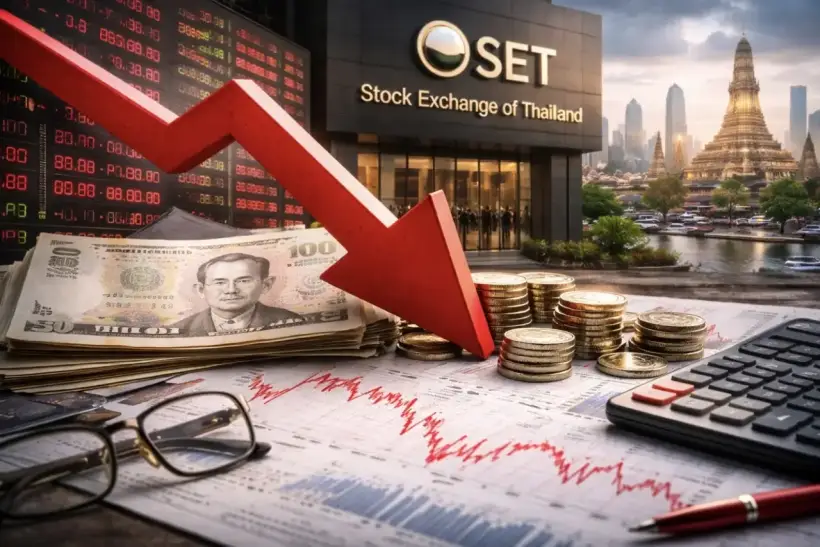
Thailand’s stock market experienced a sharp decline as escalating geopolitical tensions in the Middle East triggered a wave of risk aversion across Asian equities. The benchmark Stock Exchange of Thailand SET Index plunged about 8%, prompting an automatic suspension of trading.
Trading on the Stock Exchange of Thailand was halted for 30 minutes after the index breached the exchange’s circuit breaker threshold. According to exchange rules, another 30-minute halt may occur if the decline reaches 15%.
The selloff reflects broader turbulence in emerging markets as investors assess the potential economic consequences of the conflict surrounding Iran.
Middle East conflict rattles Asian financial markets
The escalation in geopolitical tensions has pushed oil prices higher and increased uncertainty across global markets. As a result, emerging market assets have come under pressure.
Thailand is particularly vulnerable to rising energy prices because the country relies heavily on imported oil and gas. Higher energy costs can quickly translate into inflation, pressure on the current account balance and declining corporate profitability.
Market participants say these macroeconomic risks have prompted investors to reduce exposure to equities across the region.
Tourism and corporate margins face pressure
Thailand’s tourism-dependent economy is also exposed to disruptions caused by geopolitical instability. Aviation routes and travel costs could be affected if the conflict spreads or leads to prolonged volatility in energy markets.
The tourism industry plays a crucial role in Thailand’s economic structure, supporting airlines, hotels, retail and hospitality businesses.
At the same time, rising energy prices can squeeze corporate margins across multiple sectors by increasing logistics and production costs.
AI-related stocks contribute to the market decline
Another factor behind the market slump has been a broad unwinding of positions in technology stocks linked to artificial intelligence.
Companies that previously benefited from the global AI investment boom experienced heavy selling. Delta Electronics Thailand was among the largest contributors to the decline in the benchmark index.
Investors appear to be locking in profits after strong gains earlier in the year, amplifying the downward pressure on the market.
Election-driven rally partially erased
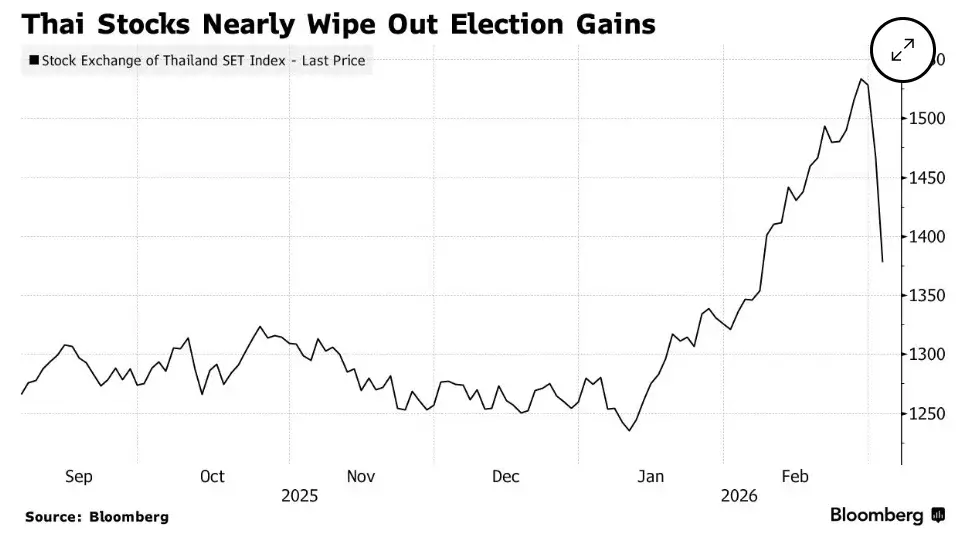
The market drop has effectively erased a large portion of the rally that followed Thailand’s recent political developments.
After Prime Minister Anutin Charnvirakul secured a decisive election victory last month, Thai equities surged as investors anticipated pro-growth economic policies.
The benchmark index had gained nearly 14% following the election. After the latest decline, the year-to-date increase has narrowed to about 7.1%.
As International Investment experts note, the sharp fall in Thailand’s stock market highlights how sensitive emerging economies can be to geopolitical shocks and rising energy prices. Countries with high dependence on energy imports often face immediate pressure on currencies, inflation and equity markets during global crises.
At the same time, some economies continue to demonstrate strong growth momentum. Georgia’s economy expanded by 7.9% year-on-year in January 2026. The European Bank for Reconstruction and Development also raised its forecast for Georgia’s economic growth in 2026 from 5% to 5.5%, underlining the country’s economic resilience and increasing investment attractiveness.