







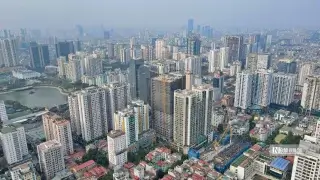
 Vietnam Mortgage Surge Pushes Homes Out of Reach
 Lithuanian Apartment Prices Accelerate Across Major Cities
 London Flats Lose Value Ahead of Leasehold Reform
 Construction of the Batumi–Sarpi Highway Begins in Georgia
 Baltic Property Investment Accelerates in 2026
 Hong Kong and Singapore Renew Their Expat Rivalry
Songkran gives Thailand tourism a sharp lift

Thailand’s tourism industry gets a strong Songkran boost
Thailand received a major seasonal boost in mid-April 2026 as Songkran, the traditional Thai New Year festival, drew a heavy mix of international and domestic travellers and generated an estimated THB 30.35 billion in tourism revenue, or roughly USD 950 million on a market-conversion basis. Bloomberg highlighted the surge on April 15, while the Tourism Authority of Thailand confirmed that festival-period revenue was expected to rise 6% from a year earlier.
Songkran has long been one of the most important dates on Thailand’s tourism calendar, but in 2026 it carried wider significance. Authorities and industry operators are using the festival not only as a peak travel period, but also as a showcase for Thailand’s position as a global cultural destination. The Tourism Authority of Thailand tied the result directly to its value-over-volume strategy, which focuses less on raw visitor counts and more on spending quality, trip value and broader regional distribution of tourism income.
How much Thailand earned during Songkran 2026
According to the Tourism Authority of Thailand, international arrivals during the April 11–15 festival window were projected at around 500,000, up 4% from a year earlier. Revenue from foreign visitors alone was estimated at about THB 8.1 billion. Domestic travel was expected to reach 5.96 million trips, up 7% year on year, contributing another THB 22.25 billion. Together those streams produced the headline figure of more than THB 30.35 billion in tourism revenue.
Put in broader economic terms, the figure explains why Bloomberg treated the story as more than a festival update. For a country where tourism remains one of the biggest sources of foreign-currency earnings, nearly a billion dollars generated over a few holiday days is a strong signal that demand remains resilient even in a more difficult global environment. It is especially notable that both foreign arrivals and domestic travel contributed to the gain, giving the market a dual base of support.
Bangkok and regional destinations captured the holiday surge
The strongest visible effect was in Bangkok. Official figures showed high attendance across major celebration areas including Silom Road, Siam Square and Khao San Road. The flagship Maha Songkran World Water Festival 2026 at Benjakitti Park alone welcomed 108,640 visitors between April 11 and 13, including 56,368 Thai visitors and 52,272 international guests. The event’s estimated economic impact reached THB 283.68 million.
The gains were not limited to the capital. In southern Thailand, the Sadao border crossing recorded more than 36,000 crossings between April 10 and 12, driven mainly by Malaysian visitors. Average hotel occupancy in the area reached about 80%, while total arrivals were projected at 70,000, generating roughly THB 700 million in local tourism revenue. That underlines Songkran’s role not only as a Bangkok-centered festival, but as a mechanism for spreading income across the country.
Why Songkran became a showcase for Thailand’s new tourism model
For Thai authorities, Songkran in 2026 was more than a successful celebration. It became proof that the country’s emphasis on cultural tourism is still working. In official statements, the Tourism Authority of Thailand linked the festival’s performance to its value-over-volume policy. In practical terms, that means the government is trying to reduce its dependence on pure arrival growth and focus more on higher-spending travellers, market diversification and a more resilient tourism income base.
Earlier in 2026, Thailand’s official government portal said the country was targeting about 36.7 million foreign visitors and around THB 2.78 trillion in total tourism revenue for the full year. By April, however, tourism officials were emphasizing that in a shifting external environment, the quality of tourism growth mattered more than chasing an absolute volume record. Songkran became an example of how a major cultural event can produce strong returns without relying solely on mass numbers.
The revenue jump came despite a tougher backdrop
The strength of the Songkran figures is even more notable because they arrived in less-than-ideal conditions. Earlier in April, Bloomberg reported that spending by Thai consumers during the holiday season was projected to post its biggest drop since 2022. The University of the Thai Chamber of Commerce estimated total holiday spending at THB 129.6 billion, down 3.7% from a year earlier, citing pressure on household budgets and higher fuel-related costs.
There were also broader cost concerns ahead of the festival. Before the holiday rush, Thai authorities froze public transport fares and took steps to secure fuel supplies along key travel routes in an effort to prevent rising logistics costs from weakening travel demand. The move showed that policymakers were aware of how sensitive domestic tourism could be to transport inflation.
At the same time, some destinations faced negative local conditions. The Guardian reported that severe air pollution in Chiang Mai led to cancellations and hurt local tourism during the Songkran period. That means the strong national numbers did not eliminate regional divergence: some destinations benefited heavily from the festival, while others faced environmental and cost-related headwinds.
What Songkran 2026 means for Thailand’s tourism market
The results matter not just as a holiday success story, but as a forward-looking market signal. If Thailand can generate more than THB 30 billion in tourism revenue and add around half a million foreign arrivals in just a few days, it reinforces the country’s ability to monetize large-scale cultural events at an international level. For airlines, hotels, retail, food service and urban leisure businesses, that points to continued strong seasonal returns even in a costlier and more volatile environment.
The structure of the result also points to a more important shift. Thailand’s tourism story now looks less like a simple race for higher arrival counts and more like a model built around spending depth, event-driven demand, regional distribution and the conversion of cultural capital into exportable services. That is why both Bloomberg and Thai tourism authorities are treating Songkran 2026 as an economic signal, not merely a colorful public celebration.
As experts at International Investment report, Songkran 2026 shows that Thailand still has a strong ability to turn cultural events into major tourism revenue even in a more turbulent external environment. For investors and market participants, that suggests the most resilient segments in 2026 are likely to remain hotels, urban entertainment, transport infrastructure and projects tied closely to event-driven tourism.
FAQ
What is Songkran in Thailand
Songkran is Thailand’s traditional New Year festival, celebrated in April with a mix of religious rituals, family travel and large public water festivities. In economic terms, it is also one of the country’s most important tourism periods each year.
How much revenue did Thailand generate from Songkran 2026
The Tourism Authority of Thailand projected more than THB 30.35 billion in tourism revenue during April 11–15, equivalent to roughly USD 950 million on a market-conversion basis.
How many foreign tourists came to Thailand for Songkran 2026
The official projection for the festival period was around 500,000 foreign visitors, up 4% from a year earlier. Their direct revenue contribution was estimated at roughly THB 8.1 billion.
Why is Songkran important for Thailand’s economy
Because it supports both foreign and domestic tourism, raises hotel occupancy, lifts transport demand, boosts restaurants and retail, and strengthens Thailand’s international positioning as a cultural tourism destination.
How does Songkran fit Thailand’s value over volume strategy
Thailand is using Songkran as an example of how a cultural event can deliver strong tourism revenue and a higher-quality visitor mix. The value-over-volume approach prioritizes revenue quality, sustainability and resilience over simply maximizing visitor numbers.