







 China Home Prices Continue to Fall
 Housing Prices in Israel Fell 1.5% Year-on-Year
 Immigration Slowdown Reshapes the US Sun Belt
 Slovakia Reforms Building Rules as Housing Starts Slide
 EU Proposes New Restrictions on Short-Term Housing Rentals
 Canada Fast-Tracks Tax Rulings for C$1 Billion Investments
Thailand Plans New Domestic Travel Subsidies
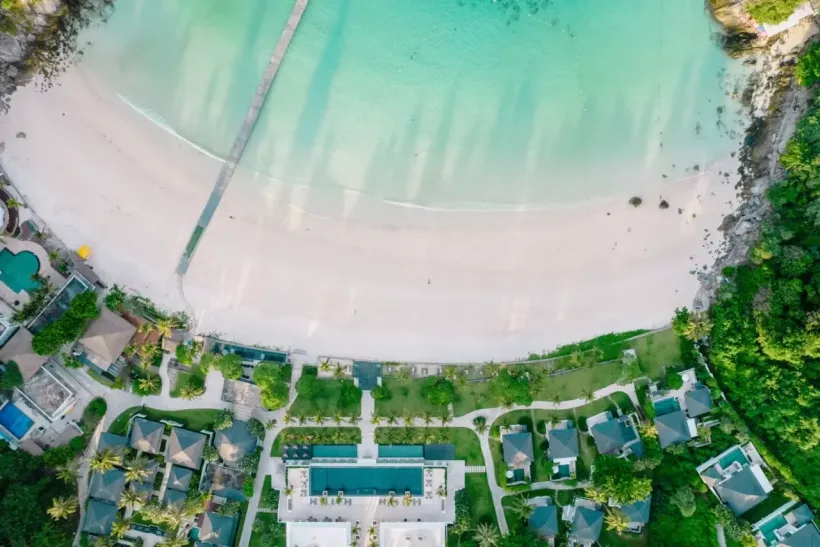
Thailand is preparing a new domestic tourism stimulus programme with a budget of around 4 billion baht. The government expects hotel subsidies and tourism vouchers under Thai Tiew Thai Plus to generate about 20 billion baht in spending. The proposal covers one million entitlements and would support trips from November 2026 through February 2027, although the Cabinet has yet to give final approval.
Hotel support will be capped at 2,000 baht a night
Thailand's Tourism and Sports Ministry plans to submit Thai Tiew Thai Plus to the Cabinet on Sept. 22. The proposal provides one million entitlements, with each person allowed to use a maximum of five.
The state would cover the actual accommodation cost up to a ceiling of 2,000 baht per night. Unlike some earlier tourism schemes, the latest proposal uses a fixed maximum subsidy rather than reimbursing a set percentage of the hotel bill.
Participants would also receive co-payment tourism vouchers. Government support would be capped at 1,500 baht in major tourism destinations and 2,000 baht in secondary destinations.
Eligible spending is expected to extend beyond restaurants to spas, massage businesses, shops and tourism services including diving, boat trips and organised activities.
Tourism and Sports Minister Surasak Phancharoenworakul has put the programme's budget at around 4 billion baht and expects it to generate approximately 20 billion baht in economic activity, according to Thailand's Public Relations Department.
The programme is divided into two travel periods
Registration is expected to open through the Paotang application on Oct. 1. The first travel period is scheduled to run from Nov. 1 through Dec. 15, 2026.
The programme would then pause for roughly one month, covering the New Year peak when domestic tourism demand is already at its seasonal high. Benefits are expected to resume from Jan. 16 through Feb. 28, 2027.
Those dates remain provisional. As of Sept. 15, Thai Tiew Thai Plus is still a proposal rather than an approved programme, with Cabinet consideration expected on Sept. 22.
The latest structure differs considerably from earlier versions discussed during July and August, when officials considered smaller budgets, a percentage-based hotel subsidy and an earlier launch. The September proposal should therefore be treated as the current version, subject to final Cabinet approval.
Thailand is leaning more heavily on domestic travellers
The programme comes as Thailand's international tourism sector continues to trail last year's performance.
The country welcomed about 21.7 million foreign visitors through Sept. 12, down 3.4% year on year. Their spending declined 1.9% to 1.06 trillion baht.
Domestic tourism has held up better. Thai travellers made about 142 million trips, an increase of 2%, while their spending rose 1.9% to 824.6 billion baht. The Business Times reported the figures.
That divergence helps explain the government's strategy. Domestic travel is already expanding and is less exposed to international air capacity, long-haul travel costs and economic conditions in overseas source markets.
Thai Tiew Thai Plus is intended to increase spending by travellers who are already willing to holiday within the country while directing more revenue to hotels, restaurants and tourism businesses.
Thailand has cut its foreign-arrival expectations
At the start of 2026, the Tourism Authority of Thailand, or TAT, was targeting 36.7 million international visitors and more than 205 million domestic trips. Total tourism revenue was projected at about 2.78 trillion baht.
The outlook was subsequently lowered. In April, TAT projected 30 million to 34 million international arrivals and around 206 million domestic trips, with total tourism receipts of approximately 2.58 trillion baht. The authority cited changing travel demand, air-connectivity constraints and energy-price volatility among the factors affecting the outlook.
By September, the base-case forecast had moved to 32.6 million–32.7 million international arrivals, with TAT continuing to target 33 million. The authority expects tourism revenue of around 2.7 trillion baht in 2026, including 1.6 trillion baht from foreign visitors and 1.1 trillion baht from domestic travel.
Thailand received 32.97 million foreign tourists in 2025, while Thai travellers made about 202 million domestic trips. Combined tourism revenue was approximately 2.7 trillion baht.
The domestic stimulus therefore does not replace the effort to rebuild international tourism. Its narrower role is to support industry revenue while foreign arrivals remain below the levels policymakers initially expected.
Secondary destinations will receive larger incentives
The different voucher limits for major and secondary destinations are deliberate.
Government support for tourism vouchers would reach 1,500 baht in established tourism centres and 2,000 baht in secondary destinations. The structure is designed to direct more domestic spending away from Thailand's busiest tourism markets.
For smaller hotels, restaurants, tour operators and other businesses in less-visited provinces, that geographical distribution may matter more than the headline number of programme participants.
The programme has changed rapidly during the preparation process. A government information service report on Sept. 9 still referred to accommodation support of up to 1,500 baht a night. Within days, the proposed ceiling had been increased to 2,000 baht, illustrating why the final Cabinet decision remains important.
Hotel operators question the timing
Thailand's hotel industry broadly supports the stimulus but has questioned its timing.
The Thai Hotels Association had previously urged the government to begin the scheme in September, allowing subsidies to support the weaker September–October period before the traditional high season begins.
Association president Thienprasit Chaiyapatranun argued that an earlier launch would provide greater support during months when hotels need additional demand.
The current plan starts on Nov. 1, when occupancy and room rates in many popular destinations are already rising. That increases the possibility that public money will subsidise trips that travellers would have made without government assistance.
The pause from mid-December to mid-January partly addresses that problem by excluding the busiest New Year period.
The real test is how much new travel the scheme creates
The projected 20 billion baht in economic activity is around five times the proposed public budget. It should not be interpreted as an equivalent increase in gross domestic product because the figure represents total participant spending, some of which may have occurred even without the programme.
The key measure will be additional demand.
If most beneficiaries use subsidies for November or February trips they had already planned, the programme will primarily reduce their private travel costs. The economic effect would be stronger if the subsidy persuades people to travel more frequently, extend stays or choose destinations they would otherwise have skipped.
The issue is particularly relevant because much of the programme overlaps with Thailand's high season. Economists cited by The Straits Times have cautioned that the package is too small to materially alter national economic growth and have highlighted the importance of distinguishing newly generated travel from spending that would have occurred anyway.
Authorities are also introducing anti-fraud safeguards after problems with earlier tourism subsidy programmes. Participating hotels will be required to document room rates from the comparable period a year earlier, while more than 1,000 businesses and travellers previously blacklisted for irregularities are expected to be excluded.
As experts at International Investment report, the headline figure of 20 billion baht in expected spending will not by itself show whether Thai Tiew Thai Plus is successful. The more useful measure will be how many additional trips the programme actually generates. A November launch risks subsidising demand that would already exist during the high season, while larger incentives for secondary destinations may have a stronger effect in markets where hotel occupancy and tourism spending are normally lower. Until the Cabinet considers the package on Sept. 22, its budget, benefits and timetable should still be regarded as proposed rather than final.
FAQ
What is Thai Tiew Thai Plus?
It is a proposed Thai government programme designed to stimulate domestic tourism through hotel subsidies and tourism spending vouchers.
How much will the programme cost?
The latest proposal has a budget of around 4 billion baht. The government expects it to generate roughly 20 billion baht in tourism-related spending.
How much hotel support would travellers receive?
The state would cover the actual accommodation cost up to 2,000 baht per night. Each participant could use a maximum of five entitlements.
What can the tourism vouchers be used for?
Eligible spending is expected to include restaurants, shops, spas, massage businesses and tourism activities such as organised tours, diving and boat trips.
Why are incentives larger in secondary destinations?
Government voucher support would reach up to 2,000 baht in secondary destinations compared with 1,500 baht in major tourism centres, encouraging travellers to spend more outside Thailand's busiest markets.
When would Thai Tiew Thai Plus start?
If approved, registration is expected to open on Oct. 1. Travel benefits are planned for Nov. 1–Dec. 15, 2026 and Jan. 16–Feb. 28, 2027.
Has the programme already been approved?
No. As of Sept. 15, 2026, the plan still requires Cabinet approval. It is expected to be considered on Sept. 22.
How many foreign tourists has Thailand received in 2026?
Thailand recorded about 21.7 million international arrivals through Sept. 12, down 3.4% from the comparable period of 2025.