











UK Hit by Severe Travel Disruption as Storm Chandra Grounds Flights Nationwide
Storm Chandra paralyzes UK transport
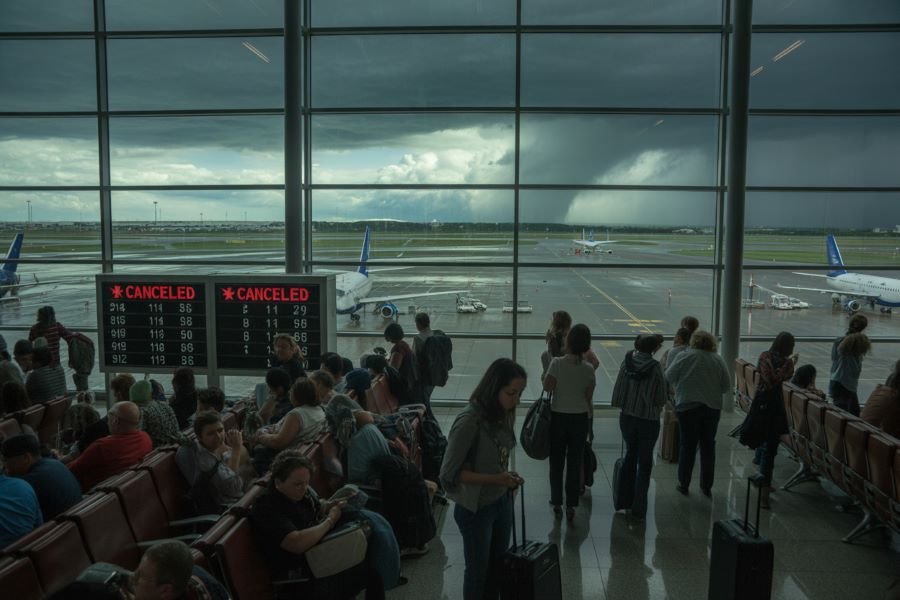
Photo: Travel and tour world
The United Kingdom faced widespread travel disruption on January 28, 2026, as Storm Chandra triggered severe weather conditions across the country. Heavy rainfall, strong winds and flooding forced airlines to cancel 81 flights and delay a further 213, severely impacting air travel in London, Manchester, Birmingham, Belfast and other major cities.
The disruption extended beyond aviation, with rail services across south-west England and key intercity routes suspended or replaced by buses due to flooded tracks and infrastructure damage.
Airports most affected
London Heathrow bore the brunt of the disruption, recording 127 delays and 15 cancellations, affecting major carriers including British Airways, American Airlines and Air Canada. Manchester Airport followed with 36 delays and 11 cancellations, while Birmingham International Airport logged 15 delays and 13 cancellations.
Regional airports were also heavily affected. George Best Belfast City Airport recorded 42 cancellations, largely involving Emerald Airlines, highlighting the storm’s impact beyond the UK’s primary hubs. London Gatwick avoided cancellations but still reported 35 delays.
Weather-driven disruption
Storm Chandra swept through south-west England, bringing intense rainfall and flooding. The Environment Agency confirmed that more than 30 properties were flooded across Devon, Cornwall and Hampshire, with rainfall reaching over 100mm in some areas within 12 hours. Red flood warnings were issued, and evacuations took place in towns such as Ottery St Mary.
Flooding and a sinkhole near Exeter caused widespread rail disruption, compounding the impact on passengers already affected by flight cancellations and delays.
Airlines under pressure
Both international and regional airlines were hit. British Airways and BA CityFlyer faced significant disruption at Heathrow and regional airports, while American Airlines and Air Canada experienced knock-on delays on transatlantic routes. Emerald Airlines was particularly affected in Belfast, underscoring the vulnerability of regional connectivity during extreme weather events.
What passengers should expect
Authorities and airlines urged passengers to closely monitor flight and rail updates, prepare for extended delays and remain flexible with travel plans. With flooding and infrastructure damage still being assessed, further disruption remained possible throughout the day.
Conclusion
According to International Investment analysts, the disruption caused by Storm Chandra once again highlights the fragility of UK transport infrastructure in the face of extreme weather. As climate-related events grow more frequent, airlines, airports and rail operators face rising operational risks, while passengers and insurers absorb increasing costs linked to weather-driven travel chaos.