







 Turkey Is Losing Its Cheap-Holiday Advantage
 Development Is Rewriting Southeast Asia’s Historic Districts
 How Ukraine’s New-Build Housing Market Has Changed Over Four Years
 European Prime Rents Rise as Property Yields Turn Higher
 The Most Expensive Airlines in Europe in 2026
 Housing Prices in Italy Reach a Two-Year High
Flight Delays and Cancellations at Boston Logan Airport: 145 Disruptions in One Day
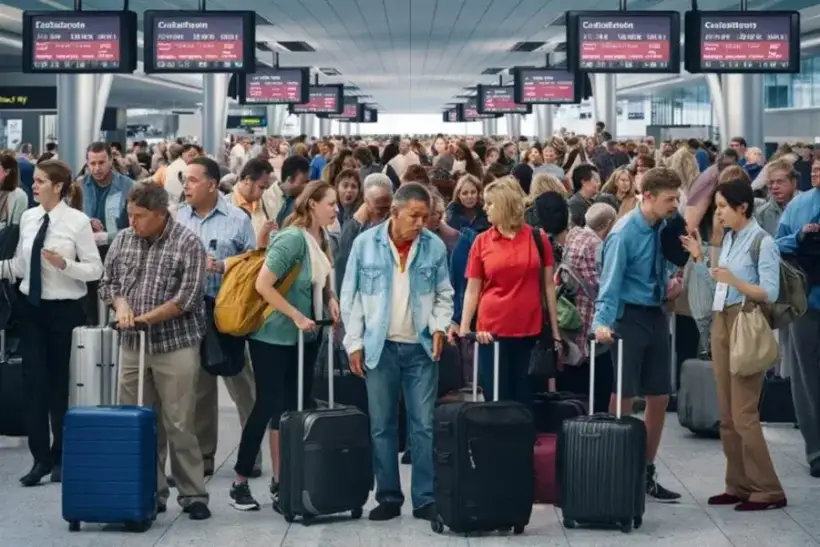
Air traffic disrupted with cities across the United States, Europe, and Latin America
On February 27, major operational disruptions were recorded at Boston Logan Airport, affecting domestic routes across the United States as well as international flights to Europe and Latin America. A total of 145 delays and 18 cancellations were reported, disrupting schedules of major carriers including JetBlue, El Al, LATAM Brasil, and Korean Air, Travel And Tour World reports, citing FlightAware data.
Geography of Flight Delays and Cancellations
The disruptions at Boston Logan Airport affected operations at other major U.S. hubs. At Ronald Reagan Washington National Airport, approximately 21% of flights connected to Boston were delayed. In Palm Beach, the figure reached 45%, and in Orlando, 23%. At Luis Muñoz Marín International Airport in Puerto Rico, up to 50% of flights were delayed, while Charlotte Douglas International Airport reported 27% delays and John F. Kennedy International Airport in New York recorded 17%.
Disruptions also extended to other destinations. Certain routes saw cancellations to Frankfurt Airport, Yampa Valley Airport, and Daytona Beach International Airport. Flights to São Paulo (Guarulhos), Montego Bay, and Key West were suspended. Zurich Airport and Ben Gurion Airport also reported operational issues, complicating connections and increasing waiting times for transit passengers.
Airlines and Causes of Disruptions
Operational difficulties affected several major carriers operating through Boston Logan Airport, including JetBlue, El Al, LATAM Brasil, Korean Air, Delta Air Lines, Alaska Airlines, and Southwest Airlines. The highest delay rate was recorded by Spirit Airlines, with approximately 45% of flights operating behind schedule. Significant pressure was also observed on JetBlue and American Airlines routes linked to Palm Beach and Puerto Rico.
The causes of the disruptions were multifaceted. Contributing factors included adverse weather conditions, additional technical inspections of aircraft, and operational constraints such as crew reassignments and late aircraft arrivals from other airports. Delayed inbound aircraft led to adjustments of subsequent departures. In some cases, additional technical procedures prior to departure further affected scheduling.
An aircraft arriving late is unable to complete its standard turnaround cycle—passenger disembarkation, refueling, crew change, and technical inspection—within the planned time window. As a result, the next flight is pushed back, and in a tightly scheduled environment, adjustments can spread across the entire daily timetable. For international routes, this means slot rescheduling at foreign airports and longer waiting times for connecting flights.
Recommendations for Passengers
The large number of delays and cancellations at Boston Logan Airport disrupted connection chains on both domestic and international routes. Adjusted departure times altered transfer schedules through New York, Washington, and major European hubs, requiring urgent ticket rebooking and route changes.
Cancellations to São Paulo, Montego Bay, and Key West forced carriers to reroute traffic through alternative airports along the U.S. East Coast. This led to longer departure wait times and increased pressure on booking modification services.
With international routes operating at high load factors, schedule recovery may take longer, particularly on destinations with limited daily frequencies. Carriers recommend that passengers check flight status in advance through official airline websites and Boston Logan Airport resources. In case of cancellation, rebooking options or rerouting through other cities are available. For international flights, departures may be postponed to the following day.
Conclusion
Analysts at International Investment note that the combination of weather-related, technical, and operational factors can significantly alter domestic and international flight schedules within a single day. Even a limited number of cancellations can affect subsequent departures and connections at other airports. The events at Boston Logan Airport confirm this pattern, alongside earlier incidents frequently observed in the United States during the winter 2025–2026 season.
According to FlightAware data, delay figures may fluctuate throughout the day as flights and crews are reassigned. Full schedule recovery typically occurs only after the completion of the daily aircraft rotation cycle and synchronization of timetables on key routes.