







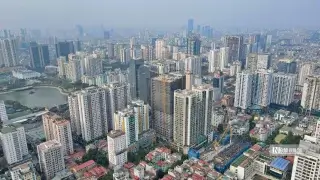
 Vietnam Mortgage Surge Pushes Homes Out of Reach
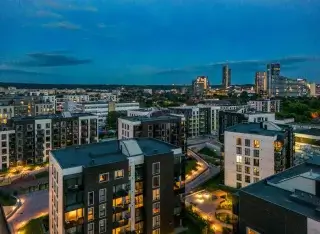 Lithuanian Apartment Prices Accelerate Across Major Cities
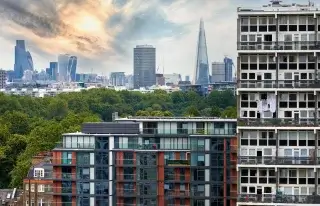 London Flats Lose Value Ahead of Leasehold Reform
 Construction of the Batumi–Sarpi Highway Begins in Georgia
 Baltic Property Investment Accelerates in 2026
 Hong Kong and Singapore Renew Their Expat Rivalry
European Cities See Tourism Slowdown

Dubrovnik, Barcelona and other cities report fewer visitors
Several major European tourism destinations have recently reported a slowdown in visitor numbers. Cities such as Dubrovnik, Barcelona, Dublin, Venice and Berlin — long considered key pillars of European tourism — are experiencing shifts in travel patterns driven by rising costs, new regulations and changing traveler preferences.
Industry analysts say the changes do not necessarily signal a collapse in tourism but rather reflect structural shifts in the global travel market. Many cities are attempting to reduce overcrowding while maintaining economic benefits from tourism.
Dubrovnik records decline in overnight stays
Dubrovnik, one of Croatia’s most famous tourism destinations, recorded weaker tourism indicators in 2025. According to national statistics, Croatia saw a 5.1% decline in tourist arrivals in May 2025, while overnight stays dropped by about 15%.
Within Dubrovnik itself, overnight stays fell by approximately 2.6%, reaching around 482,000 nights. Although the city remains a major international attraction, the figures indicate that tourism growth has slowed after several years of rapid expansion.
Anti-over-tourism measures reshape visitor flows
For several years Dubrovnik has introduced measures aimed at reducing overcrowding. The historic Old Town, a UNESCO World Heritage site, has faced heavy pressure from cruise ship arrivals and mass tourism.
Local authorities have limited the number of cruise ships and organized tour groups entering the Old Town each day. While the goal is to preserve the historic environment, these measures also reduce the volume of short-term visitors.
Rising travel costs influence demand
Higher travel costs are another factor shaping tourism trends. Across many European cities, accommodation, food and transportation prices have increased.
In Dubrovnik, accommodation prices have risen significantly in recent years. Higher restaurant prices, transport costs and tourist services make the destination less accessible for budget travelers.
As a result, some visitors are choosing alternative destinations that offer better value.
Economic and geopolitical uncertainty affects travel decisions
Tourism demand is also influenced by broader economic conditions. Inflation, energy price fluctuations and geopolitical tensions have led some travelers to postpone international trips.
Tourism organizations across Europe note that visitors from major source markets, including Germany and the United Kingdom, have become more cautious about travel spending.
Climate change reshapes travel seasons
Climate conditions are also influencing tourism patterns. Summers in Southern Europe are becoming increasingly hot, making sightseeing in historic cities less comfortable.
As a result, many travelers now prefer visiting during spring or autumn. This shift reduces peak summer pressure but also spreads tourism demand across different seasons.
Barcelona tightens tourism regulation
Barcelona has introduced stricter policies to manage tourism flows. The city has tightened rules on short-term rentals, limited cruise ship arrivals and implemented measures to reduce overcrowding in the historic centre.
According to Spain’s National Statistics Institute, Catalonia recorded about a 6% decline in visitor numbers in early 2026.
City officials say the goal is to balance tourism with the quality of life of local residents.
Dublin faces accommodation challenges
Dublin’s tourism sector has also been affected by domestic economic issues. The city faces a housing shortage and limited hotel capacity.
According to Ireland’s Central Statistics Office, visitor numbers to Dublin declined by about 5% compared with January 2024.
High accommodation prices make the city less attractive for budget travelers.
Venice introduces entry fee for day visitors
Venice continues to experiment with new policies to manage tourism pressure. In 2026 the city introduced an entry fee for day visitors entering the historic centre.
The policy aims to protect the fragile infrastructure of the lagoon city but also changes travel patterns and may reduce the number of short visits.
Berlin loses its reputation as a budget destination
Berlin has long been considered one of Europe’s most affordable capitals. However rising housing costs, inflation and higher energy prices are changing that perception.
In 2026 the city introduced a tourism tax of around 7.5% on overnight stays, increasing the overall cost of visiting the German capital.
These changes affect the city’s appeal to budget-oriented travelers.
European tourism adapts to structural changes
Europe’s tourism sector is gradually adjusting to new conditions. Many travelers are exploring lesser-known destinations rather than concentrating in a few famous cities.
Others are opting for slower, more sustainable travel experiences.
As experts at International Investment note, the current trends reflect a transformation rather than a collapse of European tourism. Many cities are trying to reduce pressure on infrastructure while improving the quality and sustainability of tourism.
Georgia benefits from shifting tourism flows
While several traditional European destinations are experiencing changes in tourism demand, some emerging travel markets are showing steady growth. Georgia has increasingly positioned itself as one of the destinations benefiting from this redistribution of tourist flows.
According to the Georgian National Tourism Administration, the country has recorded strong growth in international arrivals in recent years as global travel continues to recover. Visitors from Europe, the Middle East and Central Asia represent some of the fastest-growing segments.
Tbilisi and Batumi remain the country’s main tourism hubs. The capital attracts travelers with its historic architecture, culinary culture and vibrant arts scene, while Batumi continues to develop as a seaside resort on the Black Sea coast.
Georgia’s tourism infrastructure has also expanded in recent years with new hotels, improved transport links and an increasing number of international flight connections.
Another factor contributing to the country’s popularity is its relatively high level of public safety, liberal visa policies and comparatively affordable travel costs when compared with many Western European cities.
As experts at International Investment note, the global tourism landscape is gradually shifting as travelers seek destinations that combine affordability, safety and authentic cultural experiences. In this environment, countries such as Georgia are increasingly attracting both international visitors and investment in tourism infrastructure.