







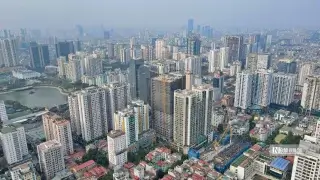
 Vietnam Mortgage Surge Pushes Homes Out of Reach
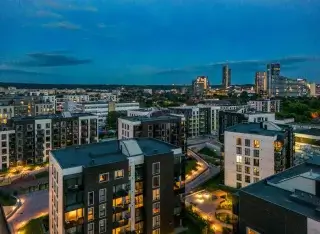 Lithuanian Apartment Prices Accelerate Across Major Cities
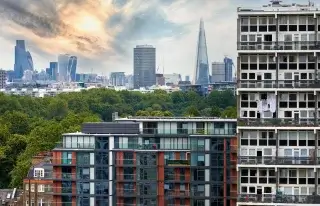 London Flats Lose Value Ahead of Leasehold Reform
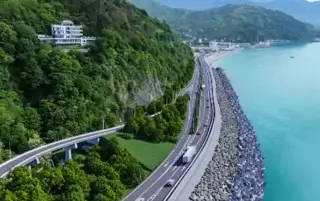 Construction of the Batumi–Sarpi Highway Begins in Georgia
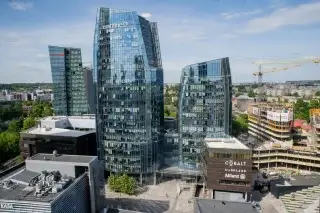 Baltic Property Investment Accelerates in 2026
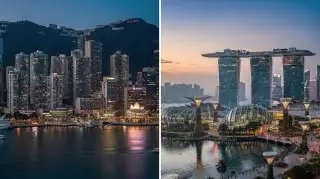 Hong Kong and Singapore Renew Their Expat Rivalry
Gulf Attacks Raise Concerns for Tourism and Aviation
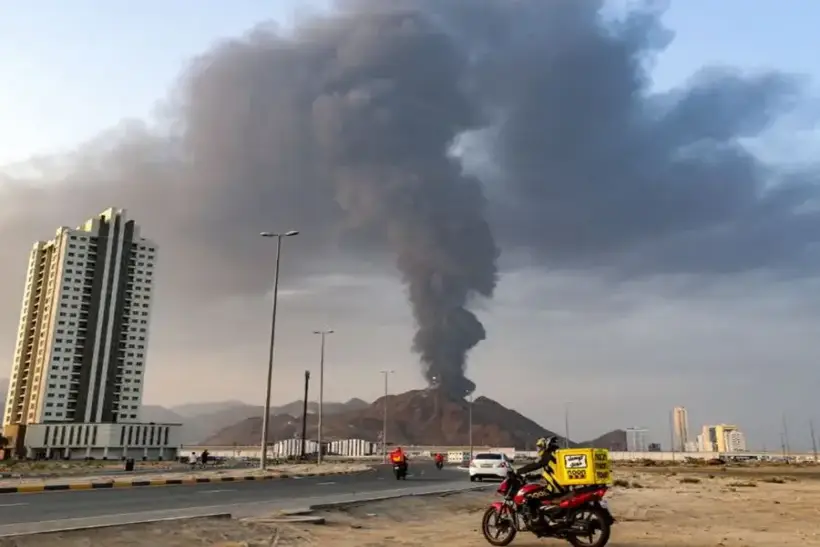
Escalation of regional conflict impacts Gulf states
Reports of missile and drone attacks across several Gulf states have heightened concerns about regional security and the stability of the tourism industry. According to official statements from defense ministries in the region, air-defense systems in the United Arab Emirates, Bahrain, Kuwait, Saudi Arabia and Qatar intercepted numerous ballistic missiles and hundreds of drones.
The incidents occurred amid escalating geopolitical tensions involving Iran and broader conflict dynamics in the Middle East. Authorities in the region stated that most incoming threats were intercepted, although debris from destroyed missiles and drones caused localized damage and injuries.
In the United Arab Emirates, the Ministry of Defense reported detecting multiple aerial threats, most of which were neutralized by air-defense systems.
Air travel disruptions affect regional tourism
One of the most immediate consequences of the attacks has been disruption to aviation and travel across the Gulf region. Airports including Dubai International experienced temporary airspace restrictions, flight delays and route adjustments.
Airlines and travel companies reported rising cancellations and increased demand for flexible booking policies. Tourism plays a central role in the economies of Gulf states, particularly in the UAE where the sector generates tens of billions of dollars annually.
The security situation has prompted some international travelers to reconsider trips to the region.
Hotels and tourist infrastructure remain operational
Despite the heightened tensions, officials across the Gulf have emphasized that hotels, resorts and tourist attractions remain open. The UAE Ministry of Economy and Tourism stated that hospitality facilities continue operating normally while adhering to safety protocols.
Authorities also said security monitoring had been intensified and that the safety of visitors and residents remained a top priority.
However social media images and videos have contributed to heightened perceptions of risk, even when actual damage was limited.
Air-defense systems under pressure during attacks
The air-defense capabilities of Gulf states were heavily tested during the recent wave of attacks. According to official reports, dozens of ballistic missiles and hundreds of drones were detected and intercepted in the UAE.
Kuwaiti authorities reported intercepting multiple missiles and drones with limited material damage and no casualties. Bahrain’s defense forces said they had destroyed numerous missiles and more than one hundred drones during the escalation.
Saudi Arabia also reported intercepting a ballistic missile targeting Prince Sultan Air Base, while Qatar stated that its air defenses intercepted several ballistic and cruise missiles.
International response and diplomatic support
Several governments issued statements condemning missile and drone attacks targeting the region. A joint statement involving the United States and Gulf partners emphasized the importance of regional security cooperation and missile defense coordination.
International observers warn that continued escalation could have broader implications for global aviation routes, energy markets and geopolitical stability.
Tourism sector faces economic uncertainty
Analysts note that even limited incidents can significantly influence traveler perceptions and investor confidence. Tourism is a critical economic sector across the Gulf, especially in the UAE where hospitality and travel represent a major share of economic activity.
If instability persists, tourism demand could decline and hotel occupancy rates may fall across several Gulf destinations.
Governments across the region have nevertheless emphasized economic resilience and ongoing support for tourism and hospitality sectors.
As experts at International Investment note, restoring confidence among travelers and investors will depend largely on how quickly regional tensions stabilize and how effectively governments maintain security and communication. Even short-lived crises in the Gulf can have ripple effects on global tourism flows, energy markets and international investment decisions.
Georgia Remains a Stable Destination Amid Regional Tensions
Amid rising geopolitical tensions in the Persian Gulf, international travelers and investors are increasingly looking toward alternative destinations perceived as stable and secure. Georgia is emerging as one such location, benefiting from its geographic distance from the current escalation and its reputation for internal stability.
Georgia is not involved in the conflicts affecting the Gulf region and is not directly dependent on strategic routes such as the Strait of Hormuz. This reduces the risk of disruption to air travel and tourism flows compared with Gulf countries, where recent security incidents have led to temporary airspace restrictions and flight adjustments.
Airports in Tbilisi, Kutaisi and Batumi continue to operate normally, and the country’s tourism infrastructure remains fully open to visitors. Georgia is widely regarded as one of the safer destinations in Eastern Europe and the South Caucasus, supported by international rankings for safety and stability.
Tourism and investment flows may shift toward Georgia
Tourism analysts note that periods of geopolitical instability often lead to a redistribution of travel demand. Travelers tend to choose destinations that combine accessibility, affordability and a perception of safety.
Georgia fits this profile. The country has been expanding its tourism infrastructure, including hotels, mountain resorts, wine tourism routes and cultural destinations. Cities such as Tbilisi and Batumi have become popular destinations for travelers from Europe, the Middle East and Asia.
In addition to tourism, Georgia’s stability continues to attract international investors. The country’s real estate sector, hospitality industry and infrastructure projects remain appealing due to relatively low investment barriers and a business-friendly environment.
As experts at International Investment note, geopolitical instability in regions such as the Persian Gulf can redirect global tourism and investment flows toward more stable destinations. In this context Georgia is increasingly viewed as a safe and accessible alternative capable of attracting part of the demand that shifts away from areas affected by geopolitical tensions.