







 Vietnam Mortgage Surge Pushes Homes Out of Reach
 Lithuanian Apartment Prices Accelerate Across Major Cities
 London Flats Lose Value Ahead of Leasehold Reform
 Construction of the Batumi–Sarpi Highway Begins in Georgia
 Baltic Property Investment Accelerates in 2026
 Hong Kong and Singapore Renew Their Expat Rivalry
Iranian Drones Attack Luxury Hotel and Dubai Airport
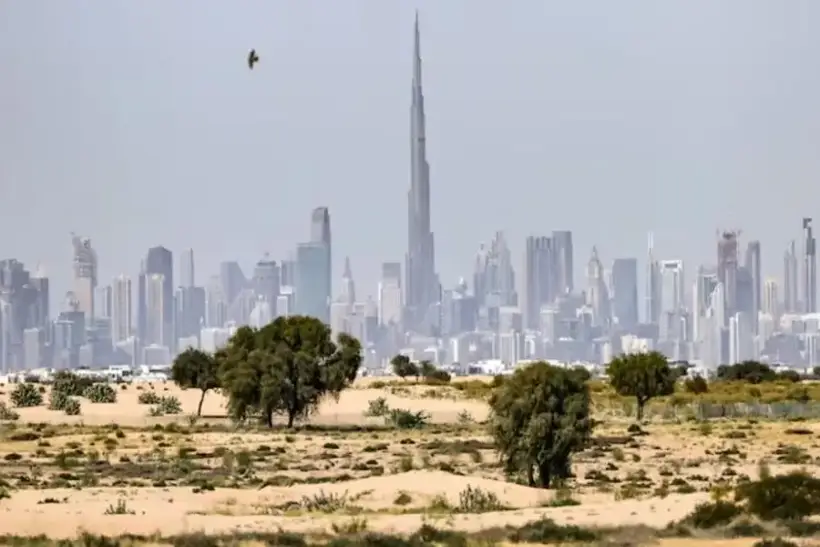
Air Defense Systems Shoot Down 52 Aerial Targets in 24 Hours
Iran continues to increase pressure on the UAE, making the country increasingly dangerous for tourists and businesspeople. On Wednesday, Dubai International Airport was attacked, and on March 12, the luxury Address Creek Harbour hotel came under fire from drones, reports The National. Tehran announced it is changing tactics and moving military operations deeper into the territories of the Gulf countries.
Chronology of Attacks: What’s Happening in Dubai
Address Creek Harbour Hotel on Fire
An Iranian drone struck the Address Creek Harbour 2 tower early on the morning of March 12. The strike hit the luxury hotel-residence in the new prestigious Dubai Creek Harbour district, completed in 2023. The drone crashed into the building, causing a major fire. Footage circulating on social media shows flames engulfing the upper floors, with debris falling to the ground.
Residents were urgently evacuated, with some taking shelter in the underground parking. Authorities quickly confirmed the incident, stating that the fire was contained and all residents were safe. Official reports indicate there were no casualties or injuries.
State television in Iran claimed that the drone hit the 57th floor, where U.S. military advisors may have been stationed. There has been no official confirmation from UAE or U.S. authorities.
Injuries at Dubai Airport
On Wednesday, March 11, Dubai International Airport (DXB) — the main hub for Emirates Airlines and the world’s busiest airport by international passenger traffic — was attacked. Two Iranian drones fell in the airport area. Four people were injured: two from Ghana, and one each from Bangladesh and India. The latter suffered moderate injuries, while the others had minor wounds. The airport continued operations as usual.
Other Incidents in Dubai and the Region
The series of attacks was not limited to the hotel and the airport. Dubai authorities confirmed two additional incidents during the day. In the Al Bada’a area, near Satwa and Sheikh Zayed Road, a drone fell. Smoke was reported rising above the residential neighborhood, but authorities characterized it as a minor incident and emphasized that there were no injuries.
Another drone crash was recorded on the famous Sheikh Zayed Road. The drone damaged the façade of the UP Tower, one of the landmarks along the highway. Authorities again reported no injuries.
Scale of Escalation
The scale of Iran’s offensive is unprecedented. In the past 24 hours alone, the UAE’s air defense systems intercepted six ballistic missiles, seven cruise missiles, and 39 drones. Since the conflict began on February 28, UAE air defenses have neutralized 268 ballistic missiles, 15 cruise missiles, and 1,514 drones. The Iranian attacks have claimed six lives (including citizens of the UAE, Pakistan, Nepal, and Bangladesh), and more than 130 people have been injured to varying degrees.
The wave of violence has affected more than just the UAE. Kuwait reported intercepting eight Iranian drones, with two residents injured by one of the falling drones. Saudi Arabia intercepted five drones headed for the Shaybah oil field and six ballistic missiles targeting Prince Sultan Airbase. Qatar also defended against attacks, shooting down all but one of nine ballistic missiles launched by Iran.
Comments and Statements from the Parties
Dubai authorities stated the situation is under control and all residents are safe. Iranian command announced the start of an “infrastructure war” and threatened strikes on banks and financial institutions across the Gulf. A list of potential targets reportedly included offices of Amazon, Google, Microsoft, and Nvidia in the region.
Tehran officially set three conditions to end the war with the U.S. and Israel: recognition of Iran’s legitimate rights, payment of reparations, and firm international guarantees against future aggression.
Meanwhile, U.S. President Donald Trump, at a rally in Hebron, Kentucky, declared victory in the war with Iran, claiming all was resolved in the first hour. He added that 58 Iranian warships were destroyed and stressed that the U.S. will not withdraw prematurely, stating they “must finish the job” to avoid returning every two years.
Conclusions and Consequences
In the first two weeks of March, attacks hit a shopping center in Sharjah, hotels on Palm Jumeirah, and the Dubai International Airport area. Attacks were also reported in Abu Dhabi. One missile fell near a cruise ship carrying more than three thousand people. Expectations for improved security have not been met, and the conflict is intensifying.
For decades, the UAE, Qatar, and Bahrain built a reputation as safe havens attracting capital and tourists. Now, that status is in question. Footage of burning hotels and smoke over airports circulates worldwide, investments are paused, and tourists and businesspeople are fleeing the Gulf states.
Attention is now shifting to calmer regions. Among them is Georgia, where the economy is steadily growing, tourist flows are rapidly increasing, and the hospitality sector is improving, attracting travelers and investors.