











Foreign tourists in Russia: number of visits down 30–40%
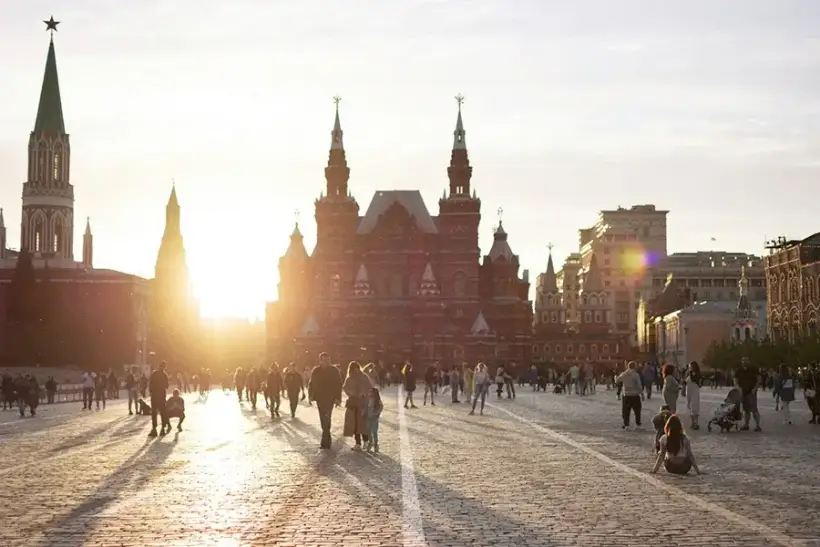
Inbound tourism to Russia declined noticeably in the first quarter of 2026, with the number of trips by foreign visitors falling by 30–40%. The decline affected key markets, primarily China and countries in the Middle East. The dynamics were driven by armed conflicts, rising travel costs, disruptions in air connectivity, and restrictions on mobile communications. The market is entering the season with weakened demand and a wave of cancellations of already confirmed tours, Kommersant reports.
Active start of 2026 for Russia’s tourism industry
Russia’s Ministry of Economic Development notes that inbound tourist flows grew by 37% in January–February 2026 compared with the same period in 2025. However, in March and early April, a decline in bookings from several countries was recorded.
According to the Federal Security Service Border Service, 1.64 million foreign citizens visited Russia for tourism purposes in 2025, an increase of 4.5% compared with 2024. At the same time, growth rates slowed significantly — in 2024, inbound flows increased 2.3 times following the introduction of electronic visas.
China accounted for the largest share of visits in 2025 at 50.8%. It was followed by Middle Eastern countries, including Saudi Arabia (4.6%), the UAE (3.6%), and Iran (1.9%). These markets are currently showing the most pronounced decline.
Demand slowdown and mass tour cancellations in Russia
Vice President of the Association of Tour Operators of Russia Sergey Romashkin estimates that inbound tourist trips fell by 30–40% in January–March. A similar trend is confirmed by Marina Levchenko, CEO of tour operator Tari Tour: in March–April, the company had to cancel 34 tourist groups, while new bookings remain limited.
Significant numbers of cancellations and weakening demand from traditional tourists were also confirmed by Dmitry Gorin, Vice President of the Russian Union of the Tourism Industry. Azimut Hotels reports a decline in inbound flows in certain segments, while OneTwoTrip reports a 23% year-on-year drop in foreign hotel bookings in Russia compared with 2025.
The number of “classic” tourists from China visiting Moscow and St. Petersburg decreased by 10–30% over the year, according to different estimates. Market participants had expected strong growth in bookings following the visa-free regime for Chinese citizens. In 2025, China accounted for more than half of all visits — 50.8%.
Experts note that official statistics may partially smooth the decline due to cross-border trips — visits to relatives or service-related travel. Dmitry Gorin emphasized that there are virtually no European tourists in Russia: most recorded visits are made by Russian-speaking residents of European countries visiting relatives.
Reasons for the decline in tourism in Russia
The key driver of the downturn was the situation in the Middle East. Military actions in Iran and neighboring countries led to air traffic restrictions and mass trip cancellations. The absence of tourists from this region became one of the main factors behind the sharp decline in inbound flows, experts say. In addition, passengers using Middle Eastern carriers traditionally included travelers from Southeast Asia, meaning disruptions also affected this segment.
Other factors include rising travel costs, airport disruptions, and restrictions on foreign SIM cards. Experts also point to the strengthening of the ruble: over the year, trips from China to Russia became about 20% more expensive. The average cost of a one-week tour now ranges from $800 to $1,200 per person.
Additional pressure came from sanctions: since October 2025, European tour operators have been unable to organize trips to Russia.
Outlook: hopes for the summer season
The first quarter is traditionally not indicative for inbound tourism, as 80–85% of foreign arrivals occur in the summer season, which typically begins in mid-May.
Sergey Romashkin suggests that the decline may ease but will still amount to 10–15% by the end of 2026. Dmitry Gorin considers maintaining 2025 levels a success. The recovery is constrained by expensive airfares and the industry’s inertia: tourism flows respond to shocks with a delay and require time to stabilize.
Meanwhile, the Ministry of Economic Development expects inbound tourism to grow by 15% in 2026, calling the forecast balanced given current restrictions and global instability.
Global tourism slowdown
The Responsible Travel network, which brings together more than 450 tour companies worldwide, has recorded a noticeable cooling of the global travel market. 79.5% of respondents reported a decline in travel demand, while 59.3% indicated a drop of around 20%. Meanwhile, 56% see no signs of recovery.
The sharpest decline was recorded in trips to the Middle East, amid ongoing instability and military risks in the region. Peace talks between the US and Iran have not been successful, and even in the event of a resolution, experts do not expect a quick recovery.
A shift toward safer destinations is also emerging. One of them is Georgia, which has not been affected by military conflicts. Airports operate normally, and tourism infrastructure remains fully open to visitors. Increasing travel flows, a developing economy, and the absence of entry restrictions for foreigners are also attracting foreign investors, who see the country as a relatively stable platform amid global turbulence.