







 Vietnam Mortgage Surge Pushes Homes Out of Reach
 Lithuanian Apartment Prices Accelerate Across Major Cities
 London Flats Lose Value Ahead of Leasehold Reform
 Construction of the Batumi–Sarpi Highway Begins in Georgia
 Baltic Property Investment Accelerates in 2026
 Hong Kong and Singapore Renew Their Expat Rivalry
Installation of automated e-gates begins at Phuket Airport: queues and delays possible
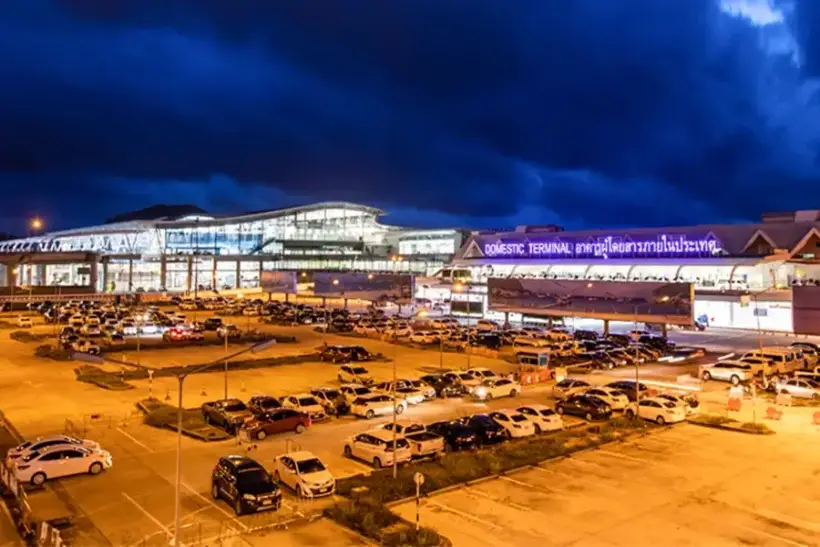
Installation of an automated passport control system will begin at Phuket International Airport on April 22. The implementation of the Automatic Border Control (ABC) system is scheduled to be completed by May 30, according to Thailand’s Immigration Bureau. During the installation period, restrictions may apply in certain areas of the international departures zone. Passengers are advised to arrive at the airport in advance.
What ABC is and why it is being introduced
Automated e-gates are designed to speed up passport control by scanning biometric data. Once the system is fully implemented, it is expected to reduce waiting times and increase airport capacity, according to immigration authorities.
Similar systems are already in operation at Bangkok’s Suvarnabhumi and Don Mueang airports. At Suvarnabhumi, automated channels have been used since 2012 for Thai nationals. Since December 2023, they have also been available to foreign passengers with ICAO-compliant biometric passports. Processing time through an automated gate is about 20 seconds, compared to approximately 45 seconds at a staffed counter. According to immigration police, the system can also identify individuals on watchlists, those banned from travel, or those who have overstayed their visas.
In Phuket, the automated gates will be available to both Thai citizens and international travelers holding chip-enabled passports.
Long-term modernization: the TIS system
The installation of automated e-gates in Phuket is part of a broader modernization program. As early as November 2024, Immigration Division 2 commander Choengron Rimpadee announced the development of the Thailand Immigration System (TIS), a new IT platform expected to be completed within two years. The system is intended to incorporate artificial intelligence technologies for data analysis.
At the time, Major General Choengron emphasized that the key objective of immigration services is to balance processing speed with national security. According to him, Suvarnabhumi Airport handles an average of 120,000 passengers per day, rising to 135,000 during peak seasons. The introduction of automated channels and the TIS system is aimed at increasing capacity without a proportional increase in staffing.
Reason for acceleration: March system failure at Phuket Airport
Discussions on modernizing passport control in Phuket intensified following an incident on March 28, 2026. From 8:55 a.m. to 1:40 p.m., a failure occurred in the immigration information system, as reported by The Phuket Express. During that period, 52 outbound flights carrying around 8,500 passengers were scheduled. The immigration hall has a capacity of approximately 600 people at a time.
Staff switched to offline procedures in line with established protocols, all available personnel were deployed, and 18 counters were opened. The average processing time per passenger was about 33 minutes, according to official data. By 2:00 p.m., after the system was restored, operations returned to normal. The Immigration Bureau also denied social media claims about a 200-baht fee for expedited processing.
Impact on passengers
During the installation period from April 22 to May 30, temporary delays may occur in the departure area. The Immigration Bureau advises passengers to arrive at the airport early.
Pavel Neon, owner of the Thai inbound company Travely and a member of the Russian Union of Travel Industry, noted that the installation of automated gates in Phuket is a logical step, as similar systems in Bangkok have already improved departure processing times. The work has been scheduled for the low tourist season to minimize disruption.
According to him, companies typically allocate about three hours for all pre-departure procedures. During the installation period, an additional 30 minutes is being added as a buffer.
After installation is completed, passengers with biometric passports will be able to use the automated gates. While the exact launch date has not been announced, based on the timeline, the system could become operational in June 2026. Until then, passengers are advised to allow extra time due to possible delays.
Conclusion
Analysts at International Investment note that the introduction of automated e-gates at Phuket Airport reflects a broader trend toward digitalization and faster border control procedures at busy airports in Thailand. Against the backdrop of growing passenger traffic and occasional technical disruptions, authorities are strengthening control infrastructure by combining automation with manual processes during the transition period. In the long term, such systems are expected to reduce staff workload, increase terminal capacity, and shorten processing times, especially during peak travel periods.
At present, the issue is less acute due to reduced flight volumes linked to the conflict in the Middle East. In addition, 2025 saw a decline in tourist arrivals due to earthquakes, flooding, tensions with Cambodia, and other негатив factors, including the widely reported kidnapping of a Chinese actor, which also affected travel demand.