







 Vietnam Mortgage Surge Pushes Homes Out of Reach
 Lithuanian Apartment Prices Accelerate Across Major Cities
 London Flats Lose Value Ahead of Leasehold Reform
 Construction of the Batumi–Sarpi Highway Begins in Georgia
 Baltic Property Investment Accelerates in 2026
 Hong Kong and Singapore Renew Their Expat Rivalry
Hotels Scale Back World Cup Expectations
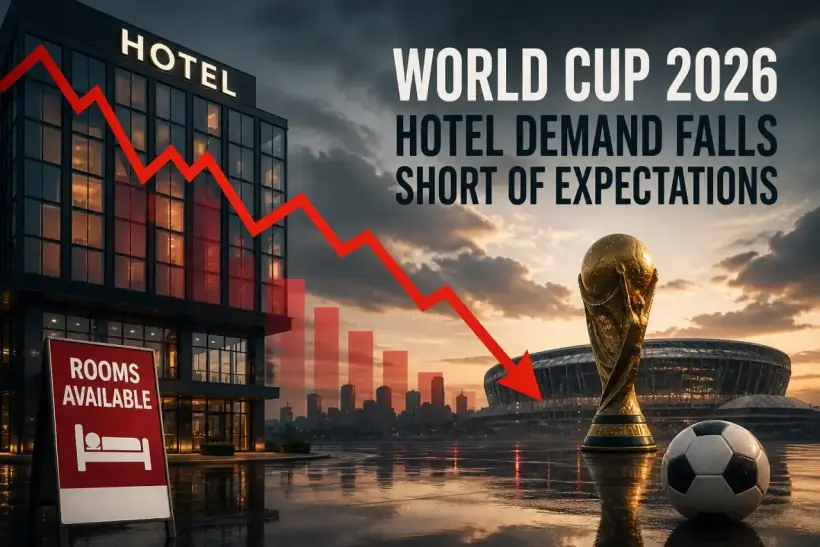
Booking trends fall short of projections
The North American hotel industry is revising expectations for the 2026 FIFA World Cup as booking data shows demand tracking closer to normal seasonal levels rather than the anticipated surge.
According to Hospitality Net, forward bookings in major host cities are not showing the strong uplift previously forecast, forcing hotels to shift from long-term projections to real-time demand strategies .
Pricing adjustments reflect softer demand
Hotels initially raised room rates sharply in anticipation of high demand, but have since begun lowering prices as booking momentum came in weaker than expected. In some markets, rates that surged dramatically have declined significantly in response to slower demand .
This shift highlights a gap between early optimism and actual traveler behavior, particularly as international visitor numbers lag behind initial projections .
Room cancellations add pressure
The outlook has been further complicated by cancellations of previously reserved hotel room blocks linked to the tournament. Thousands of room nights have been released back into the market, reducing occupancy forecasts and increasing uncertainty for operators .
These changes make revenue forecasting more difficult and weaken expected occupancy rates.
External headwinds limit travel demand
Several external factors are weighing on demand, including higher airfare costs, visa barriers and geopolitical tensions. These conditions are limiting international travel, a key driver of World Cup-related tourism spending.
International arrivals to the United States declined by approximately 6.3% in 2025, reducing the potential pool of inbound visitors ahead of the tournament .
Demand shifts toward late bookings
Hotels are also observing a shift in booking behavior. Demand is becoming more price-sensitive and concentrated around specific matches, with many travelers waiting until closer to the event to finalize plans.
Industry data suggests a more compressed booking curve, making traditional long-range forecasting less reliable .
Economic impact expectations reduced
Early projections estimated a significant economic boost from the tournament, but updated forecasts are more modest. Revenue per available room (RevPAR) is expected to increase by around 1.7% during the event, a relatively limited gain compared to past World Cups .
As a result, the tournament is increasingly viewed as an enhanced seasonal demand period rather than a transformational revenue event.
As experts at International Investment report, the current data signals a structural shift in global tourism: even large-scale events no longer guarantee demand spikes, and outcomes increasingly depend on travel accessibility, pricing flexibility and geopolitical conditions.
FAQ
Why are hotel bookings below expectations?
Demand is affected by high travel costs, visa restrictions and weaker international tourism.
Are hotel prices falling?
Yes, many hotels have reduced rates after initial increases due to slower bookings.
Will demand increase later?
Some analysts expect a late surge closer to match dates, especially during knockout stages.
What is RevPAR?
Revenue per available room, a key metric used to measure hotel performance.