







 Vietnam Mortgage Surge Pushes Homes Out of Reach
 Lithuanian Apartment Prices Accelerate Across Major Cities
 London Flats Lose Value Ahead of Leasehold Reform
 Construction of the Batumi–Sarpi Highway Begins in Georgia
 Baltic Property Investment Accelerates in 2026
 Hong Kong and Singapore Renew Their Expat Rivalry
Former Italian ambassador in Uzbekistan arrested for selling visas to Russians
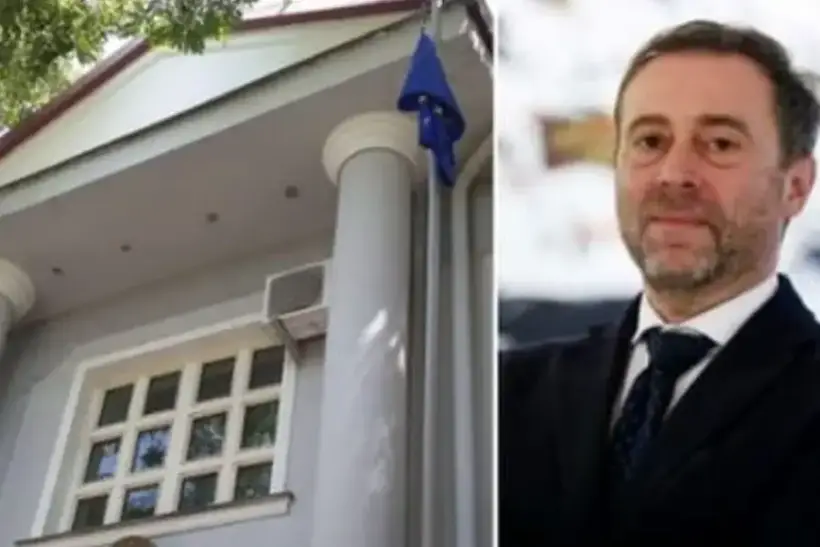
The former Italian ambassador to Uzbekistan has been detained in Rome over allegations of corruption and the sale of Schengen visas to Russian citizens. According to investigators, illegal entry permits were issued through the embassy in Tashkent in violation of established rules. The cost of the service reportedly reached up to €16,000, La Repubblica reports.
Corruption case defendants
Italy’s financial police arrested Piergabriele Papadia de Bottini di Sant’Agnese in Rome, who headed the Italian embassy from late 2024 until December 2025. His former associate Tatiana Tarakanova, a 53-year-old Russian citizen with an Italian passport who lived in Bulgaria, is also under investigation. She previously worked with Papadia at the Italian consulate in Moscow and was later transferred to the visa section of the embassy in Uzbekistan after his appointment.
The indictment states that, under Papadia’s leadership and with the involvement of his assistant, a system was created for issuing long-term tourist Schengen visas to Russian citizens who did not meet legal requirements. The cost of the “services” ranged from €4,000 to €16,000 per person, compared with an official visa fee of €45–€90. The case files also mention a so-called “VIP tariff”.
How the visa scheme allegedly worked
According to investigators, the system was built through intermediaries and pre-arranged application channels. At least three Moscow-based travel agencies — Happy travel, Visa4you, and Park lane — were involved. They reportedly operated from the same address and acted as an intermediary link between applicants and the embassy’s visa department.
Through these agencies, Russian nationals applied for Schengen visas valid for one to three years. Many applicants did not meet mandatory requirements, including personal appearance at the consulate and proof of residence within the consular district, in this case Uzbekistan.
Some cases, according to the investigation files, involved procedural violations: documents lacked proper signatures, and personal data did not match passport information. In addition, some applications were submitted informally via Telegram — these applicants were referred to in the files as “off-list”.
Another intermediary identified was Visa Concord travel, which had cooperated with Papadia since 2014. Between January and June 2025, €23,600 was transferred from Bulgaria to an account linked to Tatiana Tarakanova. The payments were recorded as a “profit-bearing loan,” which investigators consider a fictitious designation.
Launch of the investigation and MFA inspection in Tashkent
The investigation began after an inspection on 23 July 2025 by Italy’s Ministry of Foreign Affairs and International Cooperation Inspectorate General. The audit identified irregularities in visa issuance, which investigators link to actions taken by the head of mission, Papadia.
The report states that visa applications contained approval notes signed by Papadia, while procedures in several cases did not comply with established rules. Investigators emphasize the systemic nature of the violations.
Out of 92 reviewed cases, 81 had no record of applicants physically appearing at the embassy, despite this being a mandatory requirement. After the inspection began, the suspects reportedly started rapidly dismantling the scheme. Papadia allegedly stated that he needed money during a conversation with his deputy. Investigators are now reviewing around 400 visa files and examining Papadia’s assets, estimated at approximately €3 million. He claims the funds come from inheritance. It was also established that the diplomat had shown interest in obtaining a visa to travel to Russia, which influenced the decision on pre-trial detention.
Schengen visas for Russian citizens
Russian citizens increasingly applied for European travel in 2025, submitting over 670,000 applications, an 8% increase compared to 2024. More than 620,000 visas were issued (+10.2%), according to Euractiv data. Around 77% of the total (477,000) were tourist visas. Applications for family visits and business travel were also recorded. Nearly three-quarters of applications and approvals were concentrated in France, Italy, and Spain.
The EU remains divided on visa policy. Southern and Western European states continue to accept a significant number of applicants, while eastern members — including Poland and the Baltic states — advocate stricter restrictions due to the war in Ukraine.
Since 2022, EU countries have been advised to deprioritise Russian visa applications and, in some cases, restrict issuance. The visa facilitation agreement with Russia was suspended the same year. In 2025, multiple-entry visas for Russian citizens were abolished. In May 2026, European Commission representative Markus Lammerth called for further restrictions, although the total number of Schengen visas has already fallen sharply from 4 million in 2022.
Conclusion
Analysts at International Investment note that restrictions for Russian citizens in Europe continue to tighten, while demand for travel remains high. The Tashkent visa case highlights a persistent structural gap between unified EU rules and their implementation at the level of individual diplomatic missions. Even under stricter formal requirements, room remains for intermediaries, informal channels, and corruption risks, especially where high application volumes intersect with the high value of visa access.