







 Asunción Property Market Accelerates as Construction Booms
 Egypt Expands Aviation for Tourism Growth
 Latvia’s Residence Permits for Real Estate to Be Abolished from September 15
 Egypt Prepares New Law for Property Developers
 Young Japanese Buyers Turn to 50-Year Mortgages
 Argentina Narrows Tourism Gap as Arrivals Rise
Ebola outbreak in Africa declared an international threat
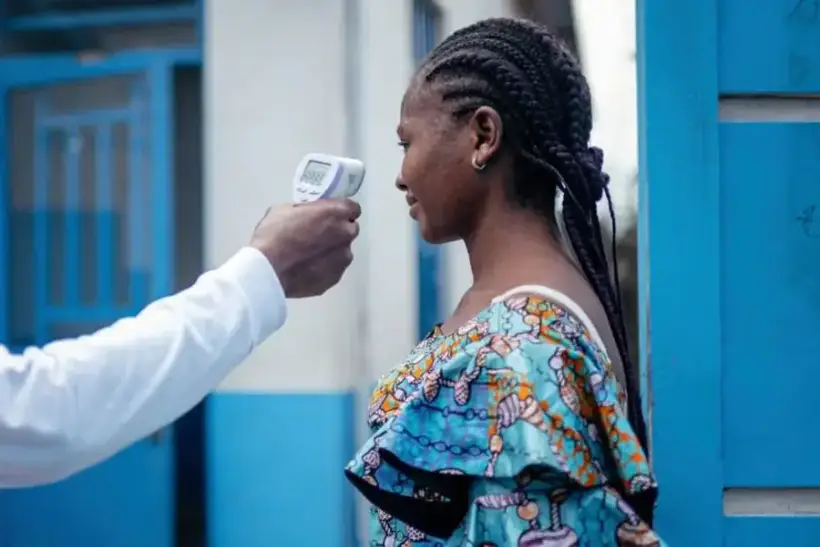
The World Health Organization has declared the Ebola outbreak in the Democratic Republic of the Congo and Uganda a Public Health Emergency of International Concern. More than 300 cases and at least 80 deaths have been reported in the region, The Guardian reports.
Risk assessment of viral spread
WHO Director-General Tedros Adhanom Ghebreyesus declared an emergency status for the spread of the Ebola Bundibugyo strain. There are currently no approved vaccines, specific treatments, or widely available diagnostic tests for this variant. The organization notes that the virus is transmitted through bodily fluids, including blood and vomit, and can have a high fatality rate, particularly in settings with limited healthcare capacity.
Significant uncertainty remains regarding the true number of infections and the geographic spread. Available data suggest that the outbreak may be substantially larger than currently confirmed, with a high risk of further regional transmission.
It is noted that the situation does not yet meet the criteria for a pandemic emergency; however, the declaration of a global health emergency is intended to mobilize resources and international support.
Geography of the Ebola outbreak
Ituri Province
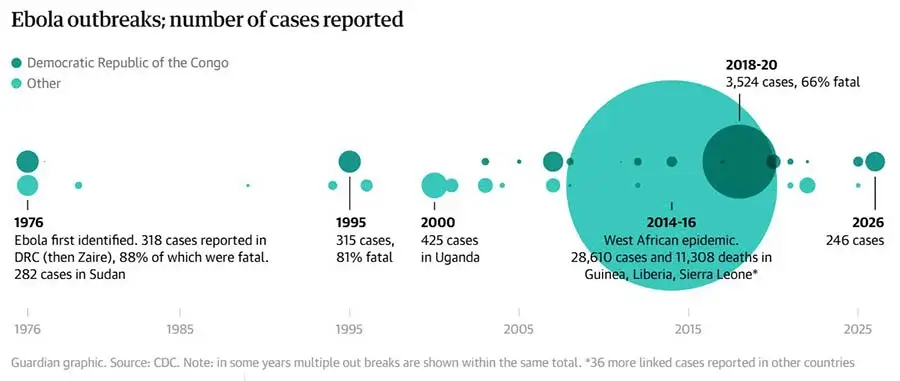
The main outbreak has been recorded in Ituri province in eastern DRC, near the borders with Uganda and South Sudan. The region has reported 80 deaths and 246 cases of illness. The virus has also spread to Uganda, where a fatal case was recorded in the capital Kampala in a person believed to have arrived from the DRC.
In the city of Goma, a new patient has been laboratory-confirmed in another part of the country, which is also affected by conflict and population movement. Residents report rising death tolls and mass burials, increasing concern over the true scale of the outbreak.
Latest WHO updates
WHO reports that on 17 May, a US citizen exposed while working in patient care in the Democratic Republic of the Congo tested positive for Ebola Bundibugyo disease. The US Centers for Disease Control and Prevention (CDC), together with the US State Department, is coordinating the patient’s transfer to Germany for treatment. Germany was chosen due to shorter flight time and prior experience in treating Ebola patients. High-risk contacts linked to this exposure are also being transferred to Germany.
According to the Ministries of Health of the DRC and Uganda as of 19 May, the region has recorded 536 suspected infections, 105 probable diagnoses, 34 confirmed cases, and 134 deaths. In the last 24–48 hours, 24 additional confirmations and 143 cases under investigation were reported. These figures include two confirmed cases in Uganda, including one death, in individuals who traveled from the DRC. No further spread has been detected in Uganda.
When treatments may become available
Head of the Africa Centres for Disease Control and Prevention (Africa CDC), Jean Kaseya, said he is “in panic mode” as deaths are being recorded while medicines and vaccines are not available. He also emphasized the need to build vaccine and drug manufacturing capacity in Africa, calling the situation an issue of equity in access to medical technologies. Negotiations are currently underway with companies developing tests and potential treatments, with hopes that some solutions may become available in the coming weeks.
Social situation and international response
WHO links the spread risk to the ongoing conflict in Ituri, high population mobility, and dense living conditions in urban and suburban areas. The US CDC said it is supporting international coordination efforts and expanding its presence in the DRC and Uganda, while also facilitating the evacuation of a limited number of US citizens affected by the situation. Preventive measures are also being taken to prevent Ebola from entering the United States. Authorities stress that the situation is evolving rapidly and case numbers may change.
Former New Zealand Prime Minister and co-chair of the Independent Panel for Pandemic Preparedness and Response, Helen Clark, said the WHO decision to declare an emergency is justified and reflects the seriousness of the threat. She added that the international response must include resources, coordination, and rapid deployment of diagnostic capacity in the most affected areas.
Implications for the tourism sector
A series of viral outbreaks across different regions is once again placing infectious disease risks at the center of global concern. Recently, cases of hantavirus and norovirus were reported on cruise ships, along with localized outbreaks in Indonesia and South Africa. The Ebola outbreak in Africa has now been added to this list and has already been declared a global health emergency.
This pattern highlights the growing attention to viruses capable of crossing borders through human movement and spreading unnoticed in the early stages. Experts increasingly emphasize the need for faster diagnostics, stronger healthcare systems, and improved international coordination, as outbreaks are emerging in different parts of the world with little pause.
Travelers are advised to closely monitor WHO updates and national health advisories before traveling, especially to regions with active outbreaks. Alternative destinations may be worth considering. Basic preventive hygiene measures remain essential. In case of symptoms after travel, medical attention should be sought immediately, along with disclosure of travel history.