







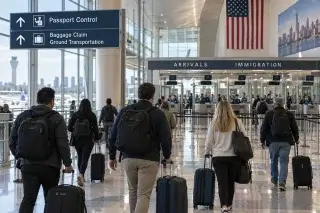
 US Introduces Visa Bonds of Up to $20,000 for Tourists From 50 Countries
 Portugal Secures €1.5 Billion for Social Housing
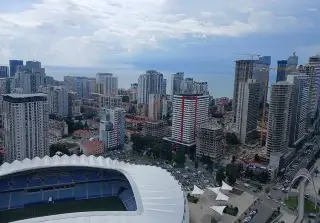 Mortgage Lending in Georgia Increased by Nearly 50%
 Irish Homes Are 17% Overvalued as Supply Lags
 Buses from Latvia to Russia and Belarus May Be Cancelled
 Egypt’s Economy Accelerates to 5.1%
ETIAS Reshapes Sea Travel to Europe

From late 2026, ferry and cruise travel to Europe will become part of a new digital entry regime: visa-exempt nationals will need ETIAS, the European Travel Information and Authorisation System, before short stays in 30 European countries. For sea passengers, the change is less about a new visa than about a pre-boarding check where missing authorisation or incorrect passport data may lead to denied transport.
ETIAS brings pre-boarding checks to sea routes
The European Travel Information and Authorisation System is scheduled to start operating in the last quarter of 2026. The official European Union portal says travellers do not need to take any action yet and that the exact launch date will be announced in advance. The system will apply to nationals of countries that currently enjoy visa-free short-stay access to Europe, including the United States, the United Kingdom, Canada, Australia, Japan and many Latin American states.
For ferry and cruise passengers, the central point is that arrival by sea will not be a loophole. If the itinerary leads to a country requiring ETIAS, the carrier will have to verify the authorisation before departure. This matters for ferry routes from the United Kingdom to France, the Netherlands or Spain, and for cruises where a European port is the first point of entry into the external border-control area.
A cruise port can become an entry point
ETIAS.com’s article on sea passengers highlights a practical issue many travellers overlook: a short cruise stop in a European port may be more than a sightseeing call; it can be an entry into a country covered by the short-stay control system. Passengers from visa-exempt countries therefore need to check in advance whether their itinerary includes ports in ETIAS countries.
For the cruise industry, this changes the way passengers should think about documentation. Previously, many travellers treated the ship as the main travel space and shore stops as secondary. Once ETIAS is operational, the port of call will determine whether authorisation is required. If a vessel sails only between countries outside the ETIAS framework, no such authorisation will be needed. If the route includes France, Spain, Italy, Greece, Norway or another participating country, documentation must be settled before boarding, not at the gangway.
The authorisation will cost 20 euros
Applications will be filed online through the official website or mobile application. The fee is set at 20 euros, although some travellers will be exempt. According to the European portal, most applications should be processed within minutes, but some cases may take longer.
ETIAS will not replace a passport and will not be a visa. It authorises travel to the border, while the final entry decision remains with border guards. Travellers may still be asked about the purpose of their trip, length of stay, return arrangements, available funds and itinerary. For cruise passengers, this distinction is important because boarding a ship and being admitted at a port are two separate legal steps.
Validity will depend on the passport
ETIAS will be linked to a specific travel document. If the passport expires, is replaced or contains data that does not match the application, the authorisation may become unusable for travel. Sea passengers with multi-country itineraries and transfers will need to pay close attention to the spelling of names, passport numbers and document validity across bookings, applications and carrier records.
The system is designed for short stays of up to 90 days in any 180-day period. That rule already governs visa-free travel in the Schengen area, but digital screening will make it more visible for passengers combining a cruise with flights, hotel stays before embarkation or additional travel after disembarkation.
Carriers will have a direct obligation
Frontex, the European Border and Coast Guard Agency, states in its carrier guidance that the query through the carrier interface must be submitted no earlier than 48 hours before the scheduled departure time. This means ETIAS checks will become part of the operational cycle for airlines, sea carriers and some coach operators, rather than only a border procedure on arrival.
For passengers, the check may appear during online check-in, at the port terminal or at boarding. If the system does not confirm valid authorisation, the carrier may refuse transport. The risk will be higher for travellers who replace passports late, book tickets with spelling errors, use different documents for the booking and the application, or rely on unofficial websites.
Ferry routes may expose documentation gaps
Ferries may become one of the most sensitive categories because many passengers see them as short regional journeys rather than full external-border crossings. DFDS, in its border regulation updates, reminds passengers that they are responsible for having the correct documents and completing the relevant formalities.
This will matter particularly for car ferry passengers. Documents are often checked quickly, and families or groups may be booked under one reservation. ETIAS, however, will be an individual authorisation linked to each traveller’s passport. Correct documents for the driver will not solve the problem of a passenger without valid authorisation.
Cruise companies will adjust embarkation
For cruise lines, ETIAS will become part of pre-departure logistics alongside passport data, visas, health declarations and insurance information where required by a specific itinerary. The most likely scenario is verification before embarkation or during passenger registration. For travellers, this means that leaving documentation until arrival at the port will become a riskier habit.
The most complex routes may be those involving several entry regimes. A cruise may start in the United Kingdom, call at a Schengen port, continue to a non-Schengen country and then return to a European port. In such cases, ETIAS will not cancel other requirements, including national visas, UK rules, or entry procedures for Turkey, Egypt, Morocco or Balkan states if they are part of the itinerary.
ETIAS will not remove border control
ETIAS should be distinguished from a visa and from the Entry/Exit System, which is intended to digitally register external-border crossings. ETIAS is a pre-travel authorisation for visa-exempt nationals. It is checked before departure, but it does not guarantee automatic entry. Border officers retain the authority to refuse entry if short-stay conditions are not met.
For sea passengers, the difference is practical. A valid authorisation may allow boarding, but on arrival the traveller must still meet entry conditions. If a passenger has already exhausted the 90-days-in-180-days allowance, cannot justify the purpose of travel or has document problems, ETIAS will not protect them from refusal.
The market faces a new source of delays
For the travel industry, ETIAS does not look like a major price barrier: 20 euros is modest compared with the cost of a cruise, air travel and accommodation. The operational risk is more important than the fee. Mass embarkations, group bookings, family travel and short ferry crossings all depend on fast document checks. One passenger’s error may disrupt boarding for an entire group or force an itinerary change.
The most exposed travellers will be those who book cruises far in advance and replace passports shortly before departure. Since the authorisation is tied to the passport, a new document will require a new application. Similar risks arise from name transliteration, dual citizenship, booking with one passport and boarding with another.
As experts at International Investment report, ETIAS is unlikely to reduce demand for European cruises and ferry routes, but it will make the market less forgiving of documentation errors. The main risk for passengers is not the procedure itself but the false assumption that visa-free travel means no pre-travel formalities. For carriers and tour operators, the new system will test digital readiness: companies that integrate ETIAS checks early into booking flows will have an advantage over those leaving documentation to the final day.
FAQ
What is ETIAS?
ETIAS is the European Travel Information and Authorisation System, an electronic travel authorisation for visa-exempt nationals visiting 30 European countries for short stays.
When will ETIAS start?
The system is officially expected to start operating in the last quarter of 2026. Applications are not required before launch.
Will cruise passengers need ETIAS?
Yes, if the itinerary includes a country where ETIAS is required and the passenger enters its territory, including through a port call and shore visit.
Will ETIAS be needed for ferries from the UK to Europe?
Once the system starts, visa-exempt nationals travelling by ferry to participating European countries will need ETIAS where the route falls within the system’s scope.
Is ETIAS a visa?
No. It is a pre-travel electronic authorisation. It does not guarantee entry, because the final decision remains with border authorities.
How much will ETIAS cost?
The application fee will be 20 euros, with exemptions for some traveller categories.
How long will ETIAS remain valid?
It will be valid for up to three years or until the passport expires, whichever comes first.
Can ETIAS be obtained at the port before boarding?
Relying on last-minute approval is risky. Carriers will check authorisation before departure, so travellers should apply in advance through the official channel.
What happens if the passport number is wrong?
The authorisation may fail carrier verification, and the passenger may be denied boarding.
Do travellers need a new ETIAS after renewing a passport?
Yes. ETIAS is linked to the passport, so a new travel document requires a new application.