







 US Introduces Visa Bonds of Up to $20,000 for Tourists From 50 Countries
 Portugal Secures €1.5 Billion for Social Housing
 Mortgage Lending in Georgia Increased by Nearly 50%
 Irish Homes Are 17% Overvalued as Supply Lags
 Buses from Latvia to Russia and Belarus May Be Cancelled
 Egypt’s Economy Accelerates to 5.1%
Europe Moves Toward One Rail Ticket
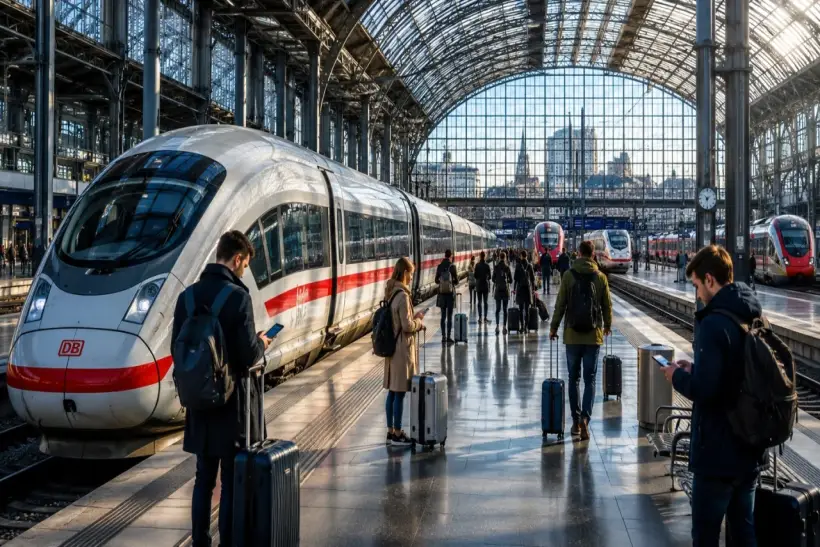
The European Commission has proposed rules that would let passengers buy one ticket for cross-border rail journeys involving multiple operators while keeping rights to assistance, rerouting, compensation and reimbursement when disruption occurs. For Europe’s travel market, the plan targets one of rail’s biggest weaknesses against short-haul aviation: fragmented booking systems, uneven carrier rules and unclear liability when a missed connection involves more than one company.
One ticket would replace fragmented bookings
Brussels presented three legislative proposals on May 13, 2026, to simplify planning and booking for regional, long-distance and cross-border travel, with a particular focus on rail journeys involving several operators. The core goal is to allow passengers to find, compare and buy services from different railway companies as one ticket in a single transaction on the platform of their choice. The European Commission links the measure to the EU’s climate objectives and to making rail a more credible alternative to short-haul flights.
Today, an international rail journey across Europe can require several separate purchases: one ticket from a national operator, another from a neighbouring country’s website and a third through an intermediary. That model creates risk for the traveller. If the first train is delayed, the next operator may not treat the journey as one protected trip. The new rules are designed to close that gap.
Passenger rights would cover the whole journey
A central part of the reform is liability during disruption. If a passenger holding a single ticket misses a connection on a multi-operator rail journey, they should be entitled to assistance, rerouting, reimbursement or compensation. The Commission also proposes obligations for ticketing platforms and operators to ensure fair access to ticket sales and neutral presentation of travel options, including sorting by greenhouse gas emissions where feasible.
That matters for routes where passengers depend on coordination between several companies. A trip from Amsterdam to Milan, Berlin to Barcelona or Vienna to Paris may involve different national systems, websites and service rules. Under the current model, travellers often carry the risk themselves even when the missed connection was caused by a delay outside their control.
Operators would have to open sales to rivals
The reform also targets the structure of the rail market. The Guardian reported that major European railway companies, including Deutsche Bahn, SNCF and Trenitalia, could be required to sell competitors’ tickets on their own websites and share data with booking platforms, enabling single-ticket purchases for long cross-border journeys. The plan still needs approval from EU member states and the European Parliament before becoming law.
For national operators, this is commercially sensitive. Their websites are not merely ticket offices; they are customer-retention channels. If the rules pass, large railway companies will have to compete not only on timetable and price, but also on data quality, transfer transparency and ticket availability through third-party platforms.
The target is implementation before 2029
The timeline depends on the legislative process. EU Transport Commissioner Apostolos Tzitzikostas said the new system should be working before the end of the current Commission’s mandate, which runs to 2029. That does not mean instant deployment across all countries: once adopted, the market will still need technical integration, data-sharing arrangements and updated conditions of carriage.
For passengers, the change will matter only when the single ticket appears in ordinary booking channels. These include national operators’ websites, independent platforms, mobile applications and, potentially, routes combining rail with coaches, ferries or urban transport.
ETIAS frames the plan as mobility reform
ETIAS.com, in its analysis of the Brussels proposal, says the Commission wants one ticket to cover cross-border rail journeys with full passenger-rights protection. In that sense, the rail initiative fits into a broader reshaping of European mobility, alongside digital entry systems, border modernisation, climate policy and the push to shift some passenger traffic from air to rail.
For tourists and business travellers, this points to closer links between transport policy and digital regulation. Europe wants a cross-border journey to look like one service, even when it is legally and technically delivered by different companies, infrastructure networks and national regulators.
The core problem is fragmentation, not tracks
Europe’s rail network already has clear advantages: stations are often central, pre-boarding procedures are simpler than at airports, and high-speed lines connect major cities in France, Germany, Italy, Spain, Belgium and the Netherlands. But international rail still faces barriers that passengers may not see before booking: incompatible sales systems, different website languages, no single fare calendar, complex refund rules and limited protection for multi-operator transfers.
That is why the single ticket may be more consequential than another marketing promise about green travel. As long as travellers must open several websites and assess transfer risk on their own, rail remains less convenient than an airline booking where a connecting journey is usually sold as one product.
Lower prices are possible, not guaranteed
The Commission expects transparency and competition to put downward pressure on prices. The logic is straightforward: if passengers can see more options in one place and compare offers from several operators, fare competition should increase. Rail companies, however, fear that stronger booking platforms could raise distribution costs and shift control toward technology intermediaries.
The market risk is that the reform simplifies purchase without solving infrastructure constraints. If there are too few trains, insufficient capacity or poorly coordinated timetables, one ticket will not create new routes. It will make existing connections more visible and better protected, but not automatically more frequent or cheaper.
Cross-border routes would get a new standard
The clearest impact could come on popular corridors between major cities: Paris-Brussels-Amsterdam, Berlin-Prague-Vienna, Milan-Zurich-Munich and Barcelona-Lyon-Paris. These are routes where passengers often compare rail with air travel, not just one railway company with another.
For tourism, the reform may support multi-stop trips. Travellers could more easily plan an itinerary as one journey rather than a stack of separate tickets: arrive in one city, cross several countries by train and return from another airport. For regions, that could bring more visitors without adding pressure to airport infrastructure.
The legal work is not finished
For now, this is a proposal, not a law in force. The package must go through the ordinary legislative procedure, including scrutiny by the Council of the EU and the European Parliament. Amendments, softer obligations, delayed deadlines or exemptions for certain operators and routes remain possible.
The key issue will be liability. If a passenger misses a connection because the first operator was delayed, the new regime must clearly define who pays for the next train, accommodation, meals and compensation. Without a clear formula, the single ticket risks becoming a convenient interface without full protection behind it.
As experts at International Investment report, the EU initiative is a logical move for a market that has spent decades building high-speed lines but has failed to create an equally convenient digital sales system. The critical risk is that Brussels is again solving the rules problem rather than the capacity problem: if trains remain scarce, tickets expensive and transfers poorly timed, a single purchase will not make rail a full substitute for aviation. But if the reform delivers mandatory data-sharing, clear liability and real access for independent platforms, Europe will move closer to a model where cross-border rail is sold as simply as a flight.
FAQ
What is the EU proposing for rail tickets?
The EU is proposing rules that would allow passengers to buy one ticket for journeys involving several railway operators while keeping passenger rights across the full route.
When could one-ticket rail travel start in Europe?
The target is before 2029, but timing depends on approval by the Council of the EU and the European Parliament.
What would change for passengers?
Passengers could compare and buy complex cross-border routes through one platform and receive assistance, rerouting, reimbursement or compensation if a protected connection fails.
Would the single ticket apply across all of Europe?
The proposal concerns EU rules. Its practical scope will depend on the final law, participating countries, operators and routes.
Why is cross-border rail booking difficult now?
The market is fragmented between national operators, different websites, fare systems and liability rules for missed connections.
Would rail companies have to sell rivals’ tickets?
The plan would require major operators to provide access to their tickets and data so passengers can buy combined journeys through their chosen platform.
Will rail tickets become cheaper?
The Commission expects transparency and competition to help lower prices, but there is no guarantee. Platform fees, capacity and infrastructure constraints will still matter.
What happens if a passenger misses a connection?
With a single ticket, the passenger should receive protection across the journey, including help, rerouting, reimbursement or compensation depending on the case.
Is the reform linked to EU climate policy?
Yes. The EU wants rail to become a more convenient alternative to short-haul flights and to support the shift to more sustainable transport.
Is this already law?
No. It is a European Commission legislative proposal that still needs approval through the EU legislative process.