







 How Ukraine’s New-Build Housing Market Has Changed Over Four Years
 European Prime Rents Rise as Property Yields Turn Higher
 The Most Expensive Airlines in Europe in 2026
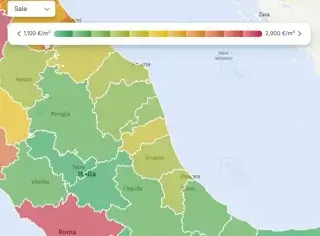 Housing Prices in Italy Reach a Two-Year High
 Travellers Increasingly Choose Cooler Scandinavia
 Serbia Property Sales Decline as Transaction Value Rises
UAE Extends Airspace Restrictions Until June 23

wikipedia
UAE aviation authorities have extended the existing restrictions on flights in the country’s airspace until June 23. The decision is linked to a renewed escalation of the conflict in the Middle East. Six air corridors have been designated for flight operations, along with specific locations for crossing the national air boundary.
How Flight Operations in the UAE Changed in Spring 2026
Since the beginning of the Middle East conflict, the UAE has repeatedly suspended airport operations or introduced flight restrictions. During the April ceasefire, air traffic partially recovered and operations temporarily returned closer to normal levels. However, on May 4, a missile and drone strike hit UAE territory, prompting aviation and regulatory authorities to shift to an enhanced air traffic control regime.
On May 5, the UAE General Civil Aviation Authority (GCAA) announced partial restrictions. Flights were allowed only through four approved air corridors, with limits on traffic intensity. The restrictions applied to passenger, cargo, business, and transit flights.
The changes affected major airports, including Dubai and Abu Dhabi, where temporary capacity constraints and schedule disruptions were recorded. During the restriction period, airlines operated alternative routes, including corridors through Saudi Arabia and the eastern Mediterranean. As a result, average flight times between Europe and Asia through the region increased by 40–60 minutes.
Carriers temporarily suspended certain routes or reduced flight frequencies. Route adjustments also became necessary. The initial regime was planned at least until May 11, with the possibility of extension depending on the regional security assessment. The restrictions were later extended until June 6. Airlines were advised to independently assess risks, submit requests, and obtain clearance from UAE aviation authorities.
Escalation of the Middle East Conflict
The regional situation escalated following a series of mutual strikes between Israel and Iran. On June 6, Israeli Air Force carried out intensive strikes on Lebanon’s Nabatieh province and the Western Beqaa region. The following day, strikes targeted Hezbollah positions in the suburbs of Beirut. These actions were carried out in response to shelling attributed to the Shiite group.
On the evening of June 7, Iran launched 11 rockets toward northern regions of Israel. In addition, Iranian Parliament Speaker Mohammad Bagher Ghalibaf described US bases and facilities in the Middle East as “legitimate targets.” Israel then carried out strikes on Iranian military infrastructure. Facilities at a petrochemical plant in Khuzestan province were damaged. Iran responded with further attacks.
Iran and Israel Announce Suspension of Strikes
On the evening of June 8, Iran and Israel announced a pause in mutual attacks following an appeal from US President Donald Trump. However, Tehran warned it could resume actions if Israel continues strikes against Hezbollah forces in Lebanon.
Reuters reported that no fatalities were recorded in the latest exchanges. At the same time, financial markets saw sharp fluctuations: oil prices rose by up to 5% before falling after Iran’s military announced the end of the first wave of strikes. The US dollar also weakened after reaching a nearly two-month high.
US President Donald Trump stated that both sides are interested in an immediate ceasefire and said progress is being made toward a potential peace agreement.
What This Means for Tourism and Business
Analysts at International Investment note that the situation in the Middle East remains unstable and continues to affect aviation and transport infrastructure across the region. The escalation between Israel and Iran confirms the fragile nature of current de-escalation arrangements. The extension of airspace restrictions in the UAE reflects ongoing risks for business travel and tourism.
Route limitations, schedule changes, and additional clearance requirements are contributing to higher operating costs and reduced predictability of flights. This is especially evident on transit routes through the region, where even short-term disruptions lead to cascading delays and rescheduling of connections.
An additional factor is security uncertainty, which affects travel planning and airline decisions. As a result, the business and tourism sectors are operating in an environment of heightened sensitivity to any changes in the regional situation, reducing the overall attractiveness of the region.