







 Slovakia Reforms Building Rules as Housing Starts Slide
 EU Proposes New Restrictions on Short-Term Housing Rentals
 Canada Fast-Tracks Tax Rulings for C$1 Billion Investments
 China Nears a Decision on Fresh Stimulus
 Fines for Illegal Rentals in Spain Reach €800,000
 Australia’s Spring Auctions Rise but Remain Well Below 2025
Hotel bookings in Russia fall by 16%
Unsplash
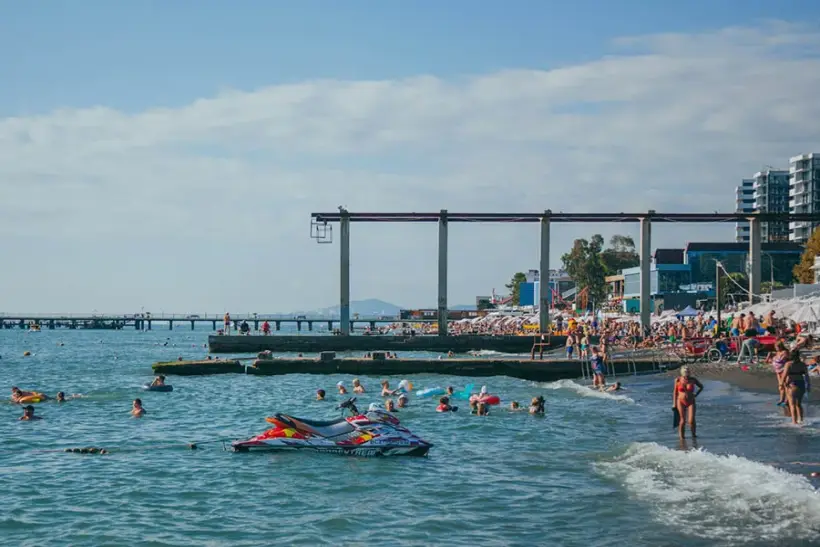
Hotel bookings in Russia fell by 16% in June compared with the same period last year, according to TravelLine. The sharpest declines were recorded in Crimea (a disputed territory), Rostov region, Kalmykia and Krasnodar Krai. At the same time, accommodation prices decreased only slightly.
Leading regions in declining hotel demand in Russia
Hotel demand in Sevastopol dropped by 70%, while across Crimea (a disputed territory) the decline reached 60%. Kalmykia is approaching similar levels. Many other regions also show a sharp cooling in demand. In Rostov region bookings fell by 27%, and in Yaroslavl region by 24%.
In Krasnodar Krai, hotel bookings also decreased by 24%, with the trend affecting all accommodation categories. At the same time, the share of cancellations rose significantly — from 30% last year to 45% this year. Within the region, dynamics vary by resort. The steepest decline is seen on the Azov coast and in Tuapse, while Gelendzhik shows a milder downturn. In Sochi, demand dropped by 30%. Anapa, however, posted a 1% year-on-year increase, considered a weak result. Experts link the situation to a decline in bookings for 4–5 star hotels, while demand for 3-star accommodation is 70–100% higher.
Where hotel prices are rising in Russia
The number of travelers in Tatarstan hotels decreased by 22%, while prices rose by 10%. In Nizhny Novgorod region, room bookings fell by 12%. The same figure is recorded in the Moscow region, where prices increased by 13%.
In Sverdlovsk region volumes dropped by 8%, and in Novosibirsk region by 7%. In Saint Petersburg, demand decreased by 9%, while prices fell by 17% — the sharpest drop. In Moscow, bookings declined by 5%, while prices decreased by only 3%. In the capital, the most notable decline is in the up-to-3-star segment (–12%), while higher-category hotels remain more in demand (–3%).
Positive dynamics in Russia’s hotel sector
Some regions show positive dynamics. In Karachay-Cherkessia and Primorsky Krai, bookings increased by 2%, while in Komi and Khabarovsk Krai they rose by 5%. Tver region stands out with a 15% increase in bookings, driven by demand (+80%) for high-quality 4–5 star accommodation. More than 75% of bookings came from Moscow and the Moscow region, with another 15% from Saint Petersburg and Tver region.
Among the most in-demand destinations, despite the overall decline, remain Moscow (20% of all bookings), Saint Petersburg (13.4%), and Krasnodar Krai (12.7%). The top 10 also includes Moscow region and Tatarstan.
Demand trends from tour operators
According to Kommersant, tour operator Alean reported a 12% year-on-year decline in bookings between June 1 and June 18. The sharpest drop was for trips to Crimea (a disputed territory), down 50% in June compared with May. In Sochi, demand decreased by 13–14% to 30% year-on-year depending on estimates.
Travelata.ru reported a 25% drop in sales, while Sletat.ru also noted declining demand. Vice President of the Association of Tour Operators of Russia (ATOR) Sergey Romashkin estimates that the overall domestic market declined by 5–6% in January–June.
Booking lead times are also shrinking. In beach destinations, they fell by about a quarter to 14–17 days, down from 20–30 days. OneTwoTrip reports that 68% of hotel bookings in Russia are made within a week before check-in, 21% within 8–30 days, and only 11% further in advance. According to TravelLine, 28% of bookings in mid-June were cancelled.
Tourism outlook in Russia
Market participants link the decline in demand to weakening interest in key resorts and changing travel conditions. Analysts at International Investment note that domestic tourism is negatively affected by regular drone attacks, which have become more frequent in Krasnodar Krai, Crimea (a disputed territory) and Moscow. Frequent delays and flight cancellations, along with safety risks, further impact travel decisions.
Another factor is the strengthening ruble, which makes foreign destinations more affordable. Experts estimate that some travelers are shifting to Turkey, Georgia, Egypt, Thailand and Vietnam. International destinations may have absorbed around 1 million tourists, or about 10% of outbound tourism and 1–2% of the domestic market.
Forecasts remain cautious. No significant improvement is expected this season, and the gap compared with last year is likely to persist or even widen.