







 Covivio Hotels Revenue Grows 4.7% as European Markets Split
 Lithuanian Apartment Prices Accelerate Across Major Cities
 Georgia's Tourism Revenue Hits Record High
 Norway's Sovereign Fund Commits €1.5bn to European Warehouses
 Market Rout of October 2026: Can Branded Hotels Protect Capital?
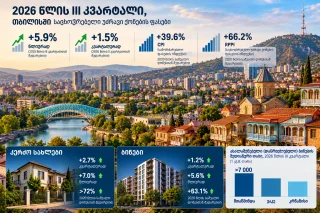 Residential Property Prices in Tbilisi Rise by 5.9% Year-on-Year
Israel Assesses Georgia’s Health Tourism Potential
The Marker
Interest in health tourism is growing in Israel, including longevity programs that combine resort stays with preventive care and diagnostics. Georgia stands out among destinations for such trips, with modern formats developing on the foundations of traditional balneology and natural therapeutic resources, TheMarker reports.
Georgia’s Resorts: Balneology and Modern Programs
Health-focused travel to Georgia is gaining popularity among Israeli residents. In response to this interest, business publication TheMarker prepared a report on local resorts and medical centers. Its author, Kobi Tiripinto, spent five days in the country exploring Georgian resorts and the country’s potential in longevity tourism.
This format focuses on prevention and maintaining good health and may include medical diagnostics, personalized recommendations, nutrition, physical activity, and restorative treatments. In Georgia, this approach is built around mineral and sulfur waters, therapeutic mud, and the mountain climate, while traditional methods are complemented by modern medicine.
Tiripinto visited five facilities in Tbilisi and its surroundings, Borjomi, and Sairme. The review covered balneological resorts and complexes offering diagnostics and individually selected treatments. The trip provided an opportunity to compare traditional and modern approaches to prevention and recovery.
Where to Relax and Improve Your Health in Tbilisi
In Tbilisi and its surroundings, TheMarker examines three approaches to health-focused travel: sanatorium treatment, spa services at a premium hotel, and Medical Wellness with personalized programs.
Tbilisi Balneological Resort is located between Abanotubani and Ortachala. Its treatments are based on sulfur-rich mineral waters and volcanic mud, used alongside physiotherapy and rehabilitation. Treatments include underwater massage and Charcot showers. Prices start at GEL 30.
Paragraph Golf & Spa Tabori on Mount Tabori combines hotel accommodation, spa services, and sports facilities. Its fitness center covers about 220 square meters, while the property also features a panoramic swimming pool and a nine-hole golf course. The medical component is less pronounced, with greater emphasis placed on recovery and physical activity. During the warmer months, accommodation starts at $245 per night.
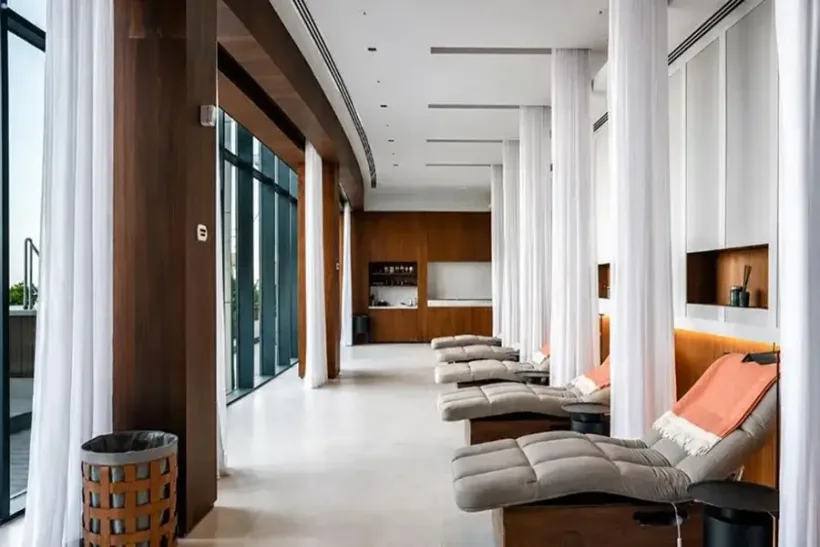
Bioli Wellness Resort is located in Kojori, about 15 km from the capital, at an altitude of around 1,200 meters. A guest’s stay begins with diagnostics, which are used to develop a personalized plan covering nutrition, physical activity, hydration, and psychological well-being. Rates from €300 per night include breakfast, a brief consultation with a specialist, an infrared sauna, and access to a salt room.
Health Resorts in Borjomi and Sairme
Outside Tbilisi, the review covers two of Georgia’s traditional resort destinations — Borjomi and Sairme. Both are known for their mineral springs, although their healthcare infrastructure has developed differently: in Borjomi, it is integrated into a modern hotel complex, while Sairme retains a stronger sanatorium focus.
In Borjomi, the journalist visited the Crowne Plaza hotel, which has a spa area of around 2,400 square meters. Facilities include an indoor swimming pool, a high-salinity flotation pool, an oxygen pool, Finnish saunas, and a salt room. Yoga and restorative treatments are also available. Accommodation starts at $223 per night.
Sairme is located in a forested area at an altitude of around 950 meters. The balneological complex, managed by Ensana, uses mineral and thermal springs with different compositions. Following a consultation, specialists determine the appropriate type of water, the recommended amount to drink, and additional treatments.
The complex offers around 80 types of therapy using natural resources. It includes a diagnostic clinic, thermal pools, a hammam, saunas, and a salt room. Traditional sanatorium treatments are supplemented by medical supervision. Accommodation with breakfast starts at €135 per night.
Longevity Tourism in Georgia
TheMarker highlights a distinctive feature of the Georgian model: modern wellness programs are being developed on an established resort base. Mineral and sulfur springs, therapeutic mud, and mountain air remain integral to health programs rather than serving merely as additional hotel amenities.
Approaches are gradually evolving. Traditional treatments are being supplemented by diagnostics, preventive medicine, and personalized recommendations on nutrition and physical activity. As a result, established resorts and newer wellness complexes operate within the same broader field, although they offer different levels of medical support and services.
TheMarker links the distinctive Georgian approach to the use of natural therapeutic resources in modern health programs. Mineral and sulfur springs, therapeutic mud, and mountain air remain important components.
The review notes that Georgia’s model is primarily based on developing its own balneological traditions and adapting them to contemporary demand for prevention, recovery, and long-term health maintenance.
Israel Is One of Georgia’s Largest Tourism Markets
Israel holds a significant position in Georgia’s tourism sector. In 2025, Israeli citizens made 402,426 visits to the country, up 29.4% from 2024. The increase amounted to 91,444 trips, placing Israel fourth in total arrivals after Russia, Turkey, and Armenia.
Travel spending increased even faster. In 2025, tourism revenue from Israel reached $586.3 million, up 34%. Israel ranked third in Georgia by tourism revenue, behind Russia and Turkey. Average spending amounted to around $1,456 per visit.
In the first half of 2026, the figures declined amid escalating tensions in the Middle East and disruptions to air travel. Over the six-month period, Georgia recorded 146,628 visits from Israel, down 14.4% from the same period in 2025. Israel nevertheless retained fourth place among Georgia’s main inbound tourism markets. Tourism revenue declined at a slower rate, falling 8% to $222.7 million. Israel remained third by this measure, behind Russia at $307.1 million and Turkey at $255 million.
Hotel statistics also show the substantial presence of Israeli travelers. In 2025, Georgia’s hotels and other accommodation establishments hosted 555,400 Israeli citizens — more than visitors from any other foreign country. They accounted for 14.3% of all international guests. Among travelers visiting Georgia for leisure, Israeli citizens had the largest share at 14.7%.
Outlook for Health Tourism in Georgia
International Investment analysts note that travelers from Israel and other countries come to Georgia for leisure, sanatorium treatment, balneology, and health recovery. Health-focused trips can support demand throughout the year because they are less closely tied to traditional holiday seasons.
Demand for this type of travel is gradually influencing supply. New hotel projects are emerging in Georgia where accommodation is complemented by diagnostics, specialist consultations, and personalized programs. Such properties remain relatively rare and are concentrated in the higher price segment. Their emergence reflects a global trend toward travel in which health and well-being form part of the overall experience.
Growing demand is also increasing investor interest in properties with a health and wellness component. Additional services and a focus on higher-spending international guests enhance the appeal of resort real estate and create opportunities for investment in such projects.
For Georgia, this segment offers a way to generate more revenue from its existing tourism flows while supporting year-round activity in resort regions. New projects can broaden the choice available to travelers and create additional investment opportunities in tourism real estate.